Main features and benefits
Clinically Relevant – Outline the human DTH response with T cell-mediated inflammation, Th1 cytokine profile, and local swelling.
Multiple antigen – hapten (OXA) and protein antigen (OVA) models are available for different research applications.
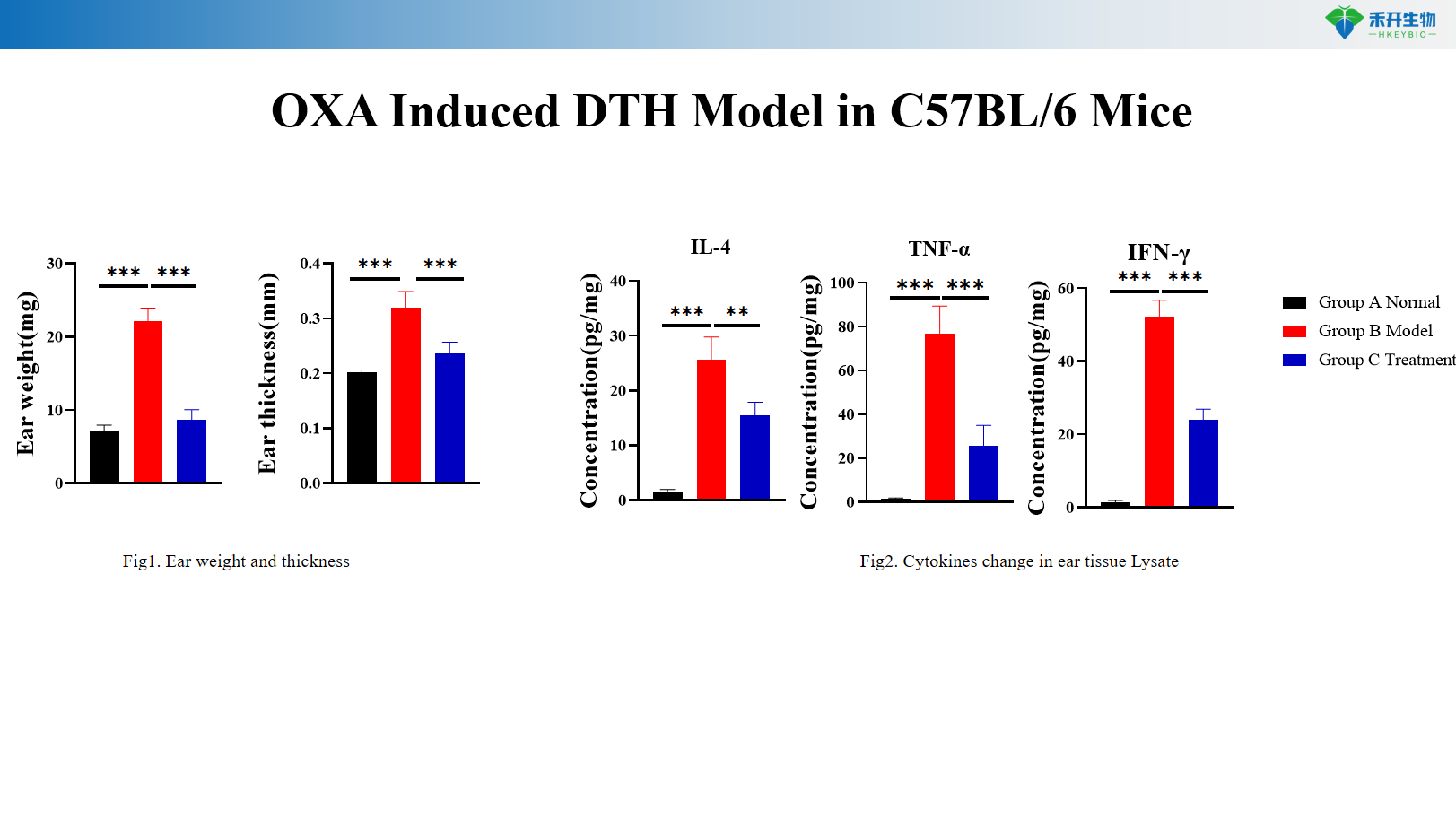
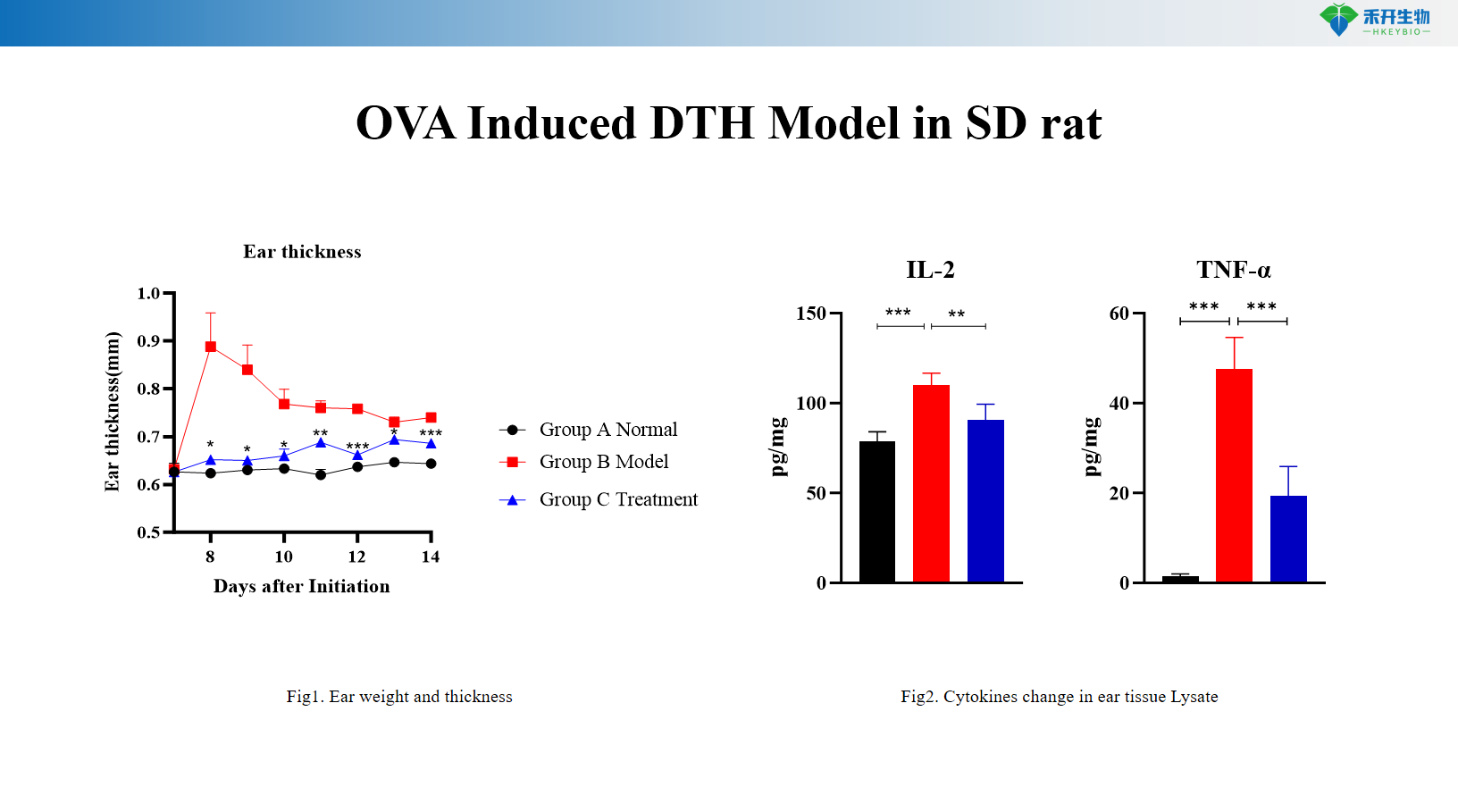
Quantifiable endpoints – ear weight and thickness measurements, cytokine analysis (IFN-γ, TNF-α, IL-4) in ear tissue lysates.
Translational value – Ideal for testing immunomodulators targeting T cell responses, including immunosuppressants (corticosteroids, calcineurin inhibitors) and biologics.
IND Ready Packet – Research can be conducted in accordance with GLP principles.
Technical data and verification
OXA induces DTH model in C57BL/6 mice
OVA induces DTH model in SD rats
Application areas
• Testing of the efficacy of immunosuppressive agents (corticosteroids, calcineurin inhibitors, methotrexate) in T cell-mediated diseases
• Evaluation of biologics targeting T cell activation, costimulation, or Th1/Th17 pathways
• Target validation of cell-mediated immune and inflammatory responses
• Biomarker discovery (Th1/Th2 cytokine profile, T cell activation markers)
• Pharmacology and toxicology studies to support IND
Model specifications
scope | OXA-induced DTH model (mouse) | OVA induced DTH model (rat) |
Species/Strain | C57BL/6 mouse | Sprague-Dawley Rat |
sensitization | Abdominal Oxazolone (OXA) (Day 0) | OVA + CFA (Day 0) |
challenge | OXA ear patch (Day 5) | OVA on the ears (Day 7) |
critical endpoint | Ear weight and thickness, cytokine levels in ear tissue lysates (IFN-γ, TNF-α, IL-4), optional: histopathology, immune cell infiltration |
packet | Raw data, analysis reports, behavioral data, histological sections (LFB, IHC), image analysis files, bioinformatics (optional) |
❓ FAQ
Q: What is the difference between OXA and OVA-induced DTH models?
A: OXA is a hapten that induces contact hypersensitivity and directly activates T cells upon skin contact. OVA is a protein antigen that requires processing and presentation, making it more suitable for studying classical DTH responses to protein antigens. The choice depends on your research focus and desired immunization route.
Q: What are the main similarities to human DTH?
A: Both models exhibit antigen-specific T cell-mediated inflammation, peak responses at 24-48 hours, Th1 cytokine profiles (IFN-γ, TNF-α), and local swelling that correlate well with human DTH responses such as tuberculin skin testing.
Q: Can these models be used for IND support studies?
Answer: Yes. Studies can be conducted according to GLP principles for regulatory submissions (FDA, EMA).
Q: Do you offer customized study protocols (e.g., different sensitization/challenge schedules, antigen doses)?
Answer: Of course. Our scientific team tailors sensitization protocols, challenge plans, and endpoint analyzes for your specific drug candidate.


