Main features and benefits
Clinically relevant - PHN replicates human membranous nephropathy; UUO models the progressive renal fibrosis commonly seen in obstructive nephropathy.
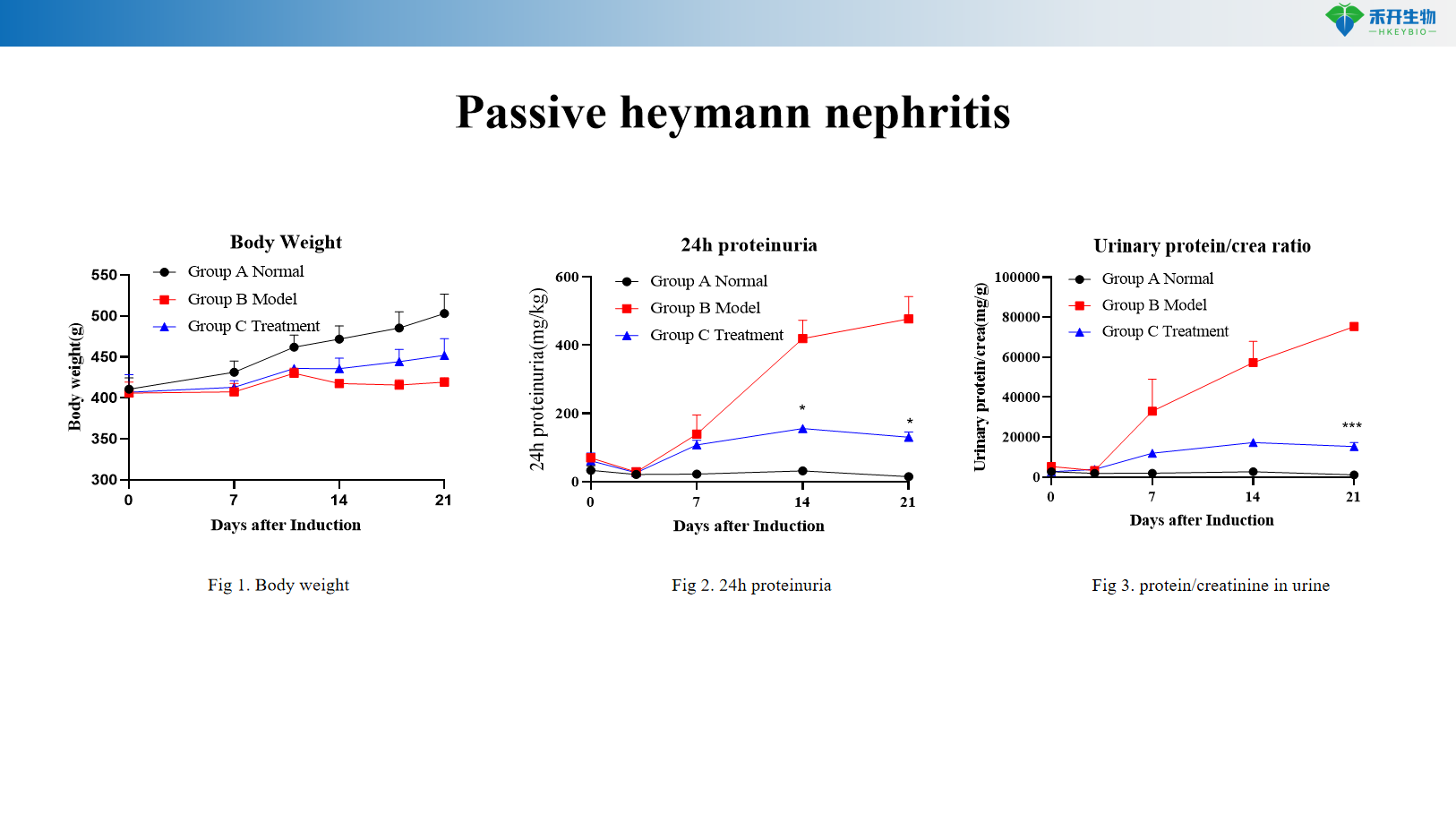
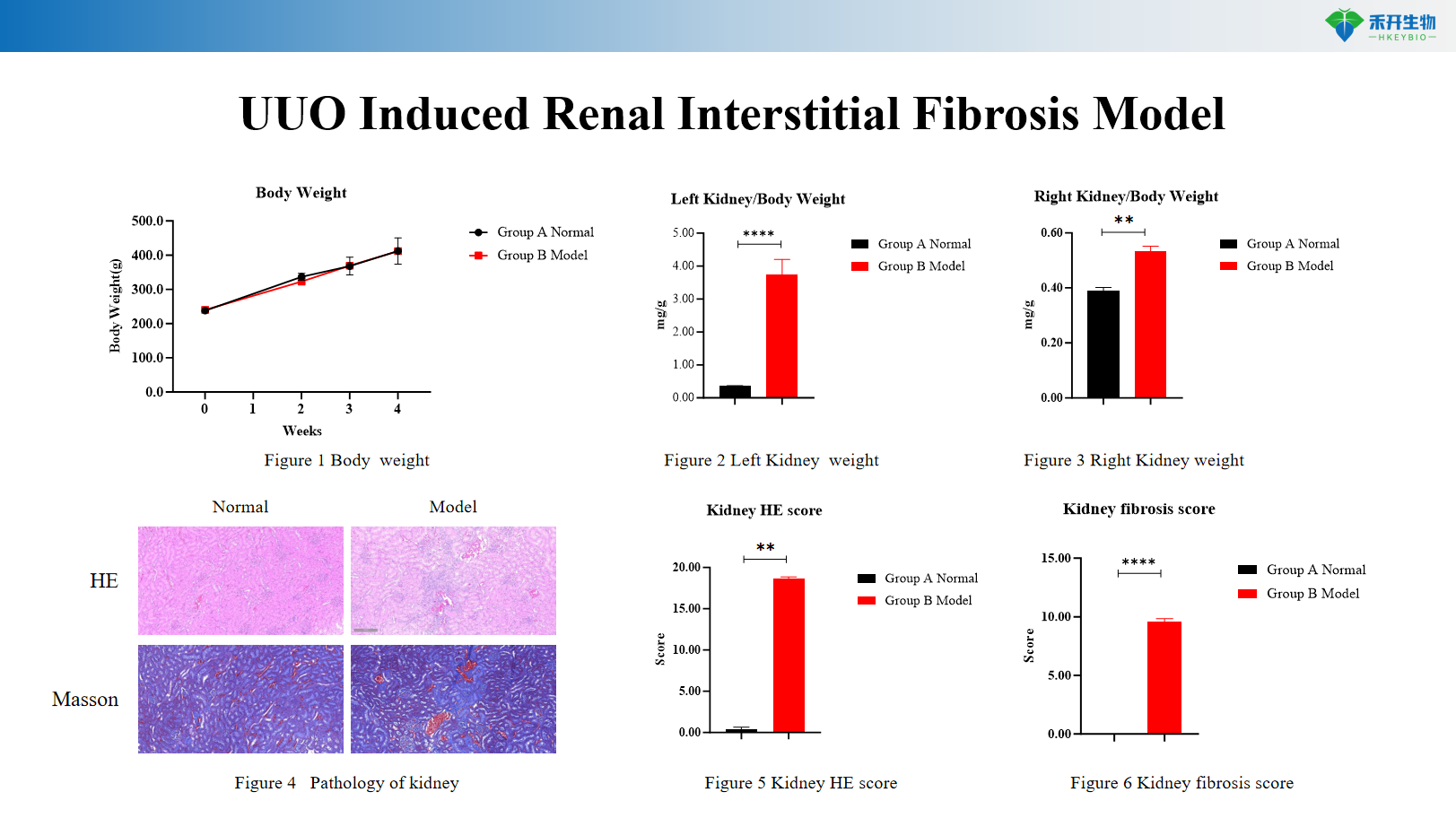
Composite endpoint – serum biochemistry (BUN, CREA, ALB), urine protein (24 hours, protein/creatinine ratio), renal histopathology (H&E, Masson, IHC), kidney weight, fibrosis score.
Well characterized – both models are widely used and accepted by regulators of kidney disease research.
Translational value – ideal for testing immunosuppressants, anti-fibrotic drugs and renoprotective compounds.
IND Ready Packet – Research can be conducted in accordance with GLP principles.
Technical data and verification
passive Heyman nephritis
UUO-induced renal interstitial fibrosis model
Application areas
• Testing the efficacy of immunosuppressants (cyclosporine, tacrolimus, mycophenolate mofetil) in the treatment of membranous nephropathy
• Evaluation of antifibrotic drugs (pirfenidone, nintedanib, TGF-β inhibitors) in the treatment of renal fibrosis
• Target validation of complement, podocyte injury and fibrosis pathways
• Biomarker discovery (proteinuria, KIM-1, NGAL, fibrosis markers)
• Pharmacology and toxicology studies to support IND
Model specifications
scope | Passive Hyman nephritis (PHN) model
| UUO-induced renal interstitial fibrosis model |
tension | Sprague-Dawley (SD) rat | Sprague-Dawley (SD) rat |
induction method | Single intravenous injection of anti-Fx1A serum (0.5–1.0 mL/rat) | Complete left ureteral ligation under anesthesia |
study time | 2-4 weeks after induction | 7-21 days after ligation |
critical endpoint | Body weight, 24-hour proteinuria, urine protein/creatinine ratio, serum BUN, CREA, ALB, renal histopathology (H&E, IgG/complement IHC) | Body weight, left and right kidney weight, renal histopathology (H&E, Masson trichrome), HE score, fibrosis score (collagen area), α-SMA, TGF-β, fibronectin immunohistochemistry |
packet | Raw data, analysis reports, histology slides, clinical chemistry, bioinformatics (optional) | Raw data, analysis reports, histology slides, IHC images, bioinformatics (optional) |
❓ FAQ
Q: What is the difference between PHN and UUO models?
A: PHN is an autoimmune model of membranous nephropathy characterized by subepithelial immune complex deposition and proteinuria, primarily affecting the glomerulus. UUO is a surgical model of obstructive nephropathy that results in tubulointerstitial fibrosis without overt glomerular involvement.
Q: Which model is more suitable for testing anti-proteinuric drugs?
A: PHN is ideal for evaluating drugs targeting proteinuria and podocyte damage. UUO is better suited to study anti-fibrotic interventions.
Q: Can these models be used for IND support studies?
Answer: Yes. Studies can be conducted according to GLP principles for regulatory submissions (FDA, EMA).
Q: Do you offer customized study protocols (e.g., different rat strains, dosing regimens)?
Answer: Of course. Our scientific team tailors induction protocols, treatment plans and endpoint analyzes for your specific drug candidate.


