Main features and benefits
Complementary Models —Inducible models for rapid disease progression; spontaneous NOD models for studying natural disease progression.
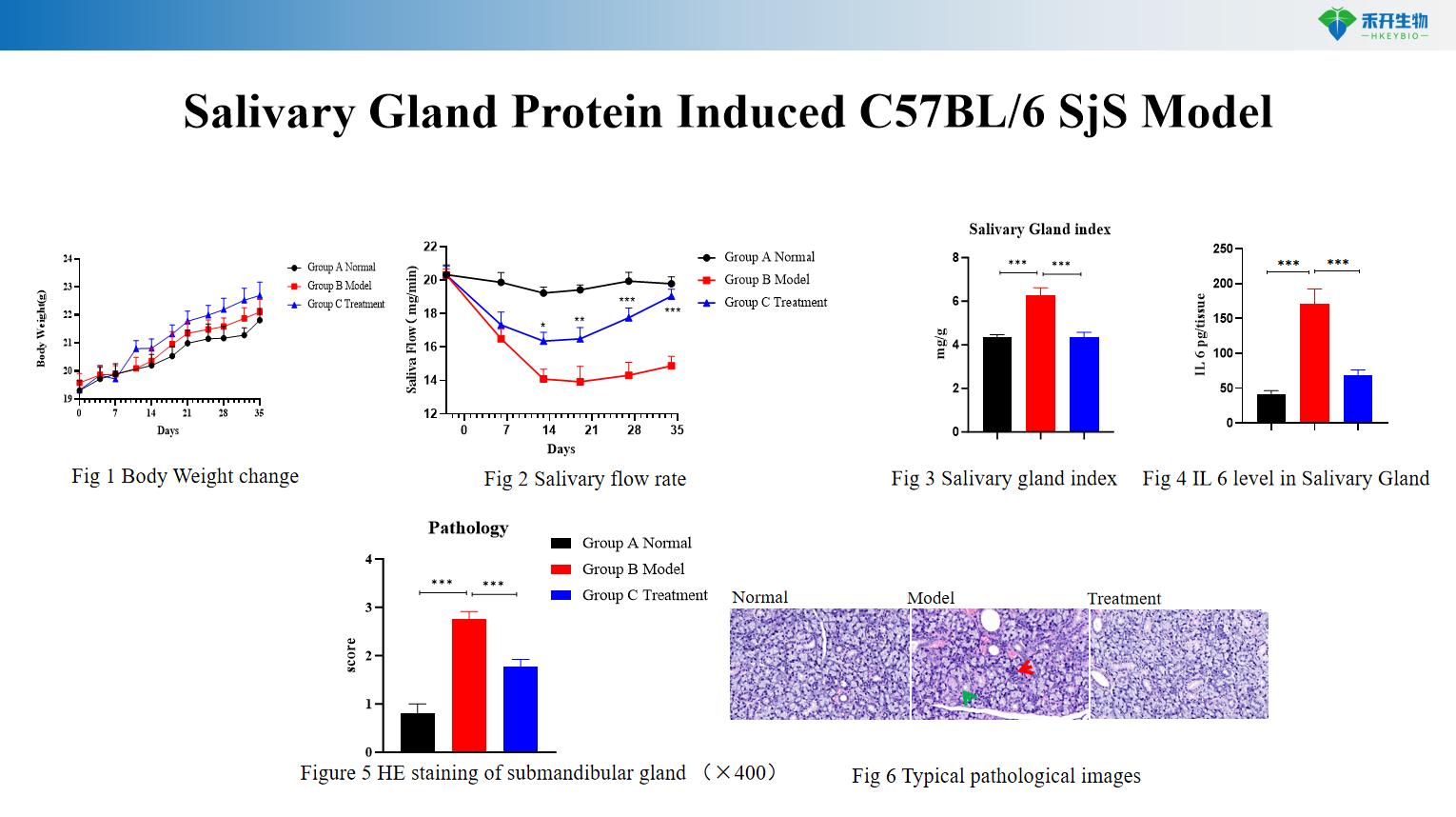
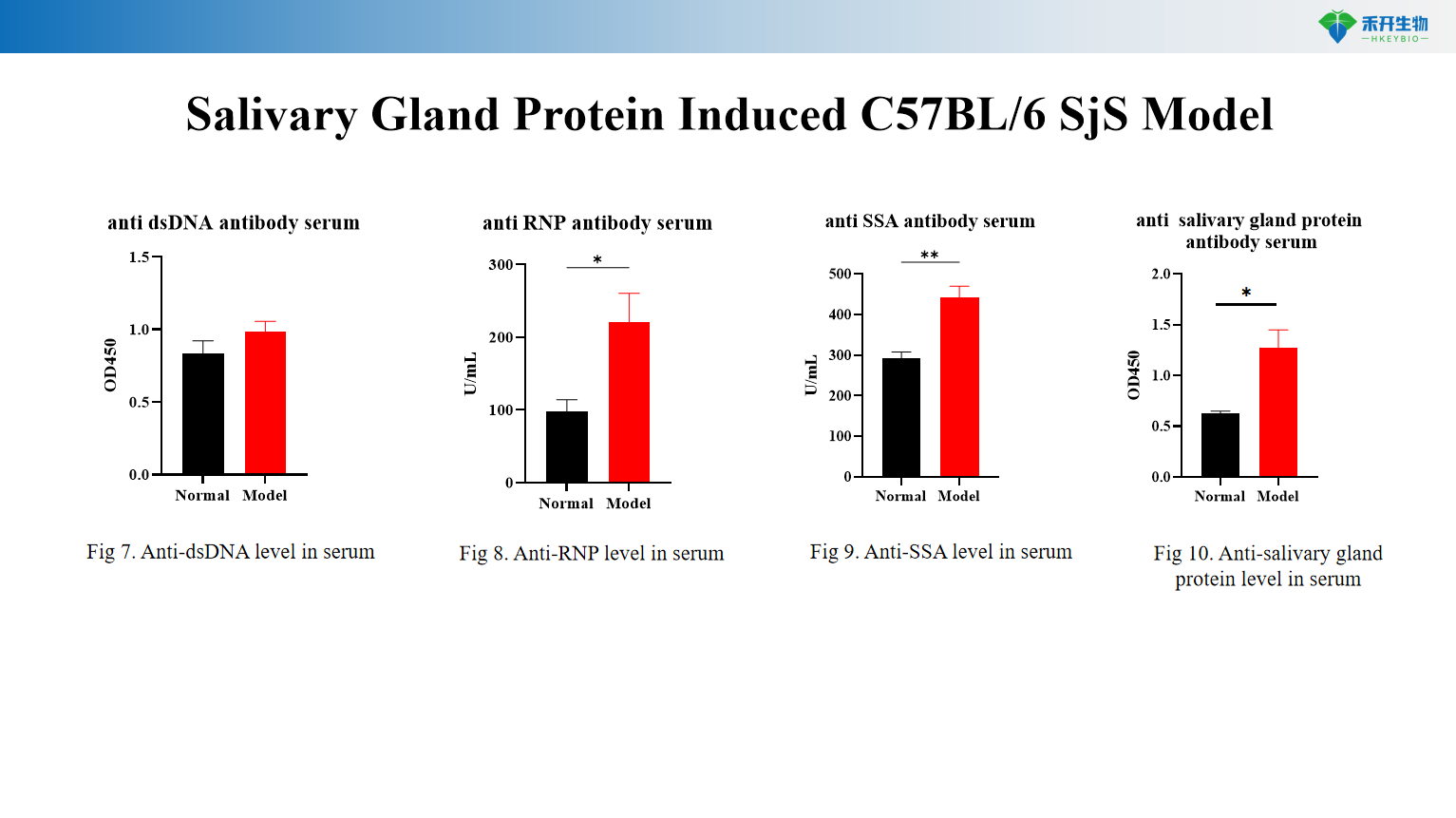
Comprehensive endpoints – body weight, salivary flow rate, salivary gland index, autoantibody profile (anti-SSA, anti-RNP, anti-dsDNA, anti-sialoprotein), cytokine levels (IL-6), histopathology (HE).
Clinical Relevance – Both models exhibit hallmark features of SjS: lymphocyte infiltration, reduced secretory function, and autoantibody production (anti-SSA, anti-Ro/La).
Translational Value – Ideal for testing immunomodulators (corticosteroids, mycophenolate mofetil), biologics targeting B cells (rituximab), and novel autoimmune therapies.
IND Ready Packet – Research can be conducted in accordance with GLP principles.
Technical data and verification
C57BL/6 SjS model induced by salivary gland proteins
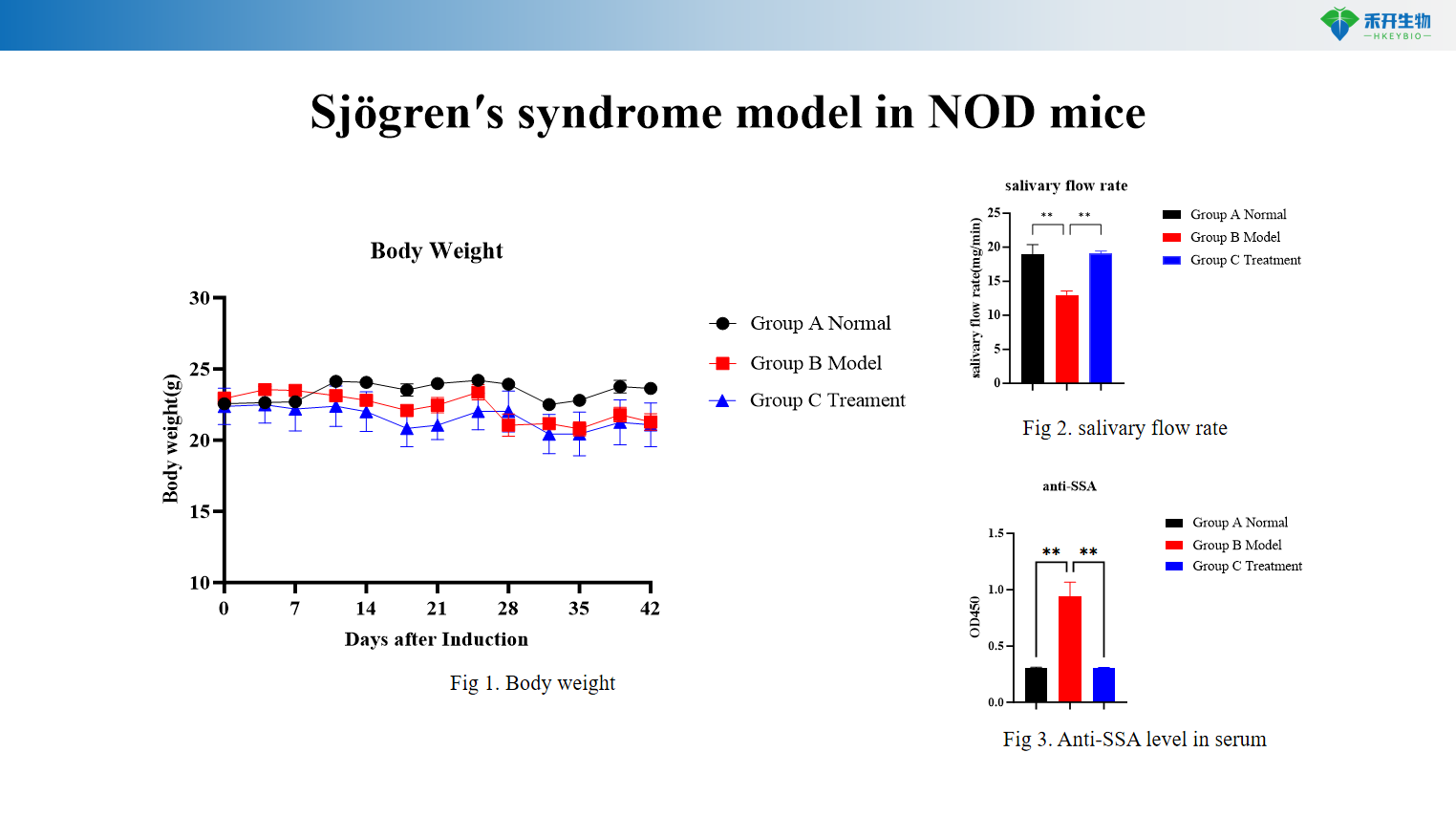
NOD mouse Sjögren's syndrome model
Application areas
• Efficacy testing of immunomodulators (corticosteroids, hydroxychloroquine, mycophenolate mofetil, leflunomide)
• Evaluation of B-cell targeting biologics (rituximab, belimumab) and T-cell modulators (abatacept)
• Target validation of autoantibody production and exocrine gland dysfunction
• Biomarker discovery (autoantibody profile, inflammatory cytokines)
• Pharmacology and toxicology studies to support IND
Model specifications
scope | Induction C57BL/6 SjS model | NOD spontaneous SjS model |
Species/Strain | C57BL/6 mouse | Nord mouse |
induction method | Salivary Gland Protein Extract + CFA Immunization | Spontaneity (genetic predisposition) |
study time | 4-8 weeks after vaccination | 8–20 weeks (depending on age at onset) |
critical endpoint | Body weight, saliva flow rate, salivary gland index, autoantibodies (anti-dsDNA, anti-RNP, anti-SSA, anti-sialoprotein), salivary gland IL-6, histopathology (HE) | Body weight, salivary flow rate, anti-SSA antibodies, optional: salivary gland histopathology |
| positive control | Corticosteroids (e.g. prednisolone) or rituximab may serve as reference compounds |
packet | Raw data, analysis report, ELISA results, histological sections, bioinformatics (optional) |
❓ FAQ
Q: What is the difference between the induced SjS model and the spontaneous SjS model?
A: The inducible model (C57BL/6) provides rapid, synchronized disease onset and is ideal for efficacy studies with defined timelines. Spontaneous NOD models better represent disease progression in humans with genetic susceptibility and are suitable for studying natural pathogenesis and early intervention strategies.
Q: What are the key similarities to Sjögren's syndrome in humans?
A: Both models exhibit reduced salivary flow, salivary gland lymphocyte infiltration, and the production of signature autoantibodies (anti-SSA, anti-Ro, anti-La) that are closely related to human SjS pathology.
Q: Can these models be used for IND support studies?
Answer: Yes. Studies can be conducted according to GLP principles for regulatory submissions (FDA, EMA).
Q: Do you offer customized study protocols (e.g., different immunization schedules, treatment times)?
Answer: Of course. Our scientific team tailors induction protocols, treatment plans and endpoint analyzes for your specific drug candidate.
Q: What is the typical timeline for a pilot efficacy study?
A: Induced model studies typically take 4-8 weeks; spontaneous NOD model studies may last 8-20 weeks, depending on age of onset and duration of treatment.


