Main features and benefits
Multiple etiological – chemical (BLM) and occupational (silica) induced models cover different pathogenic mechanisms of IPF.
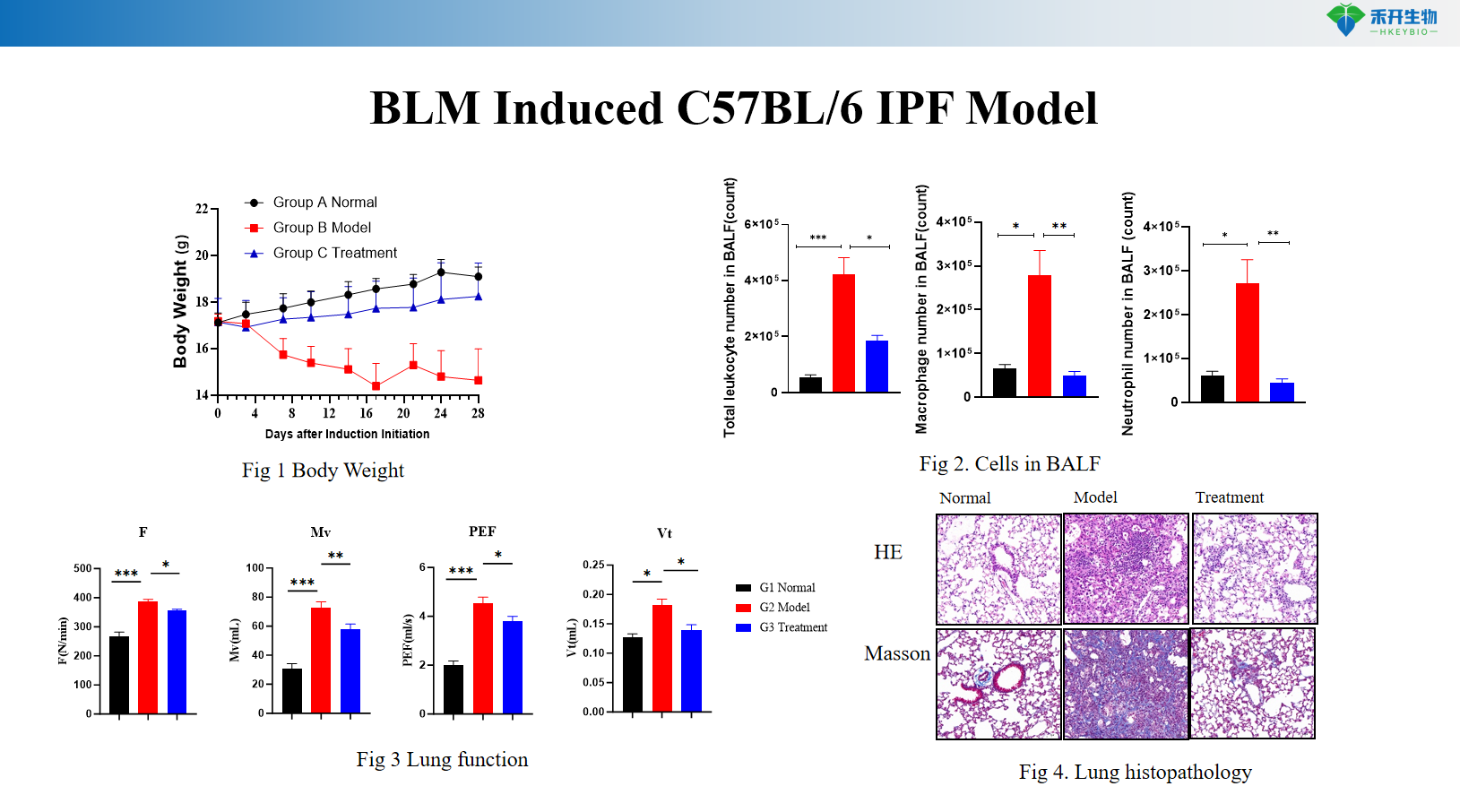
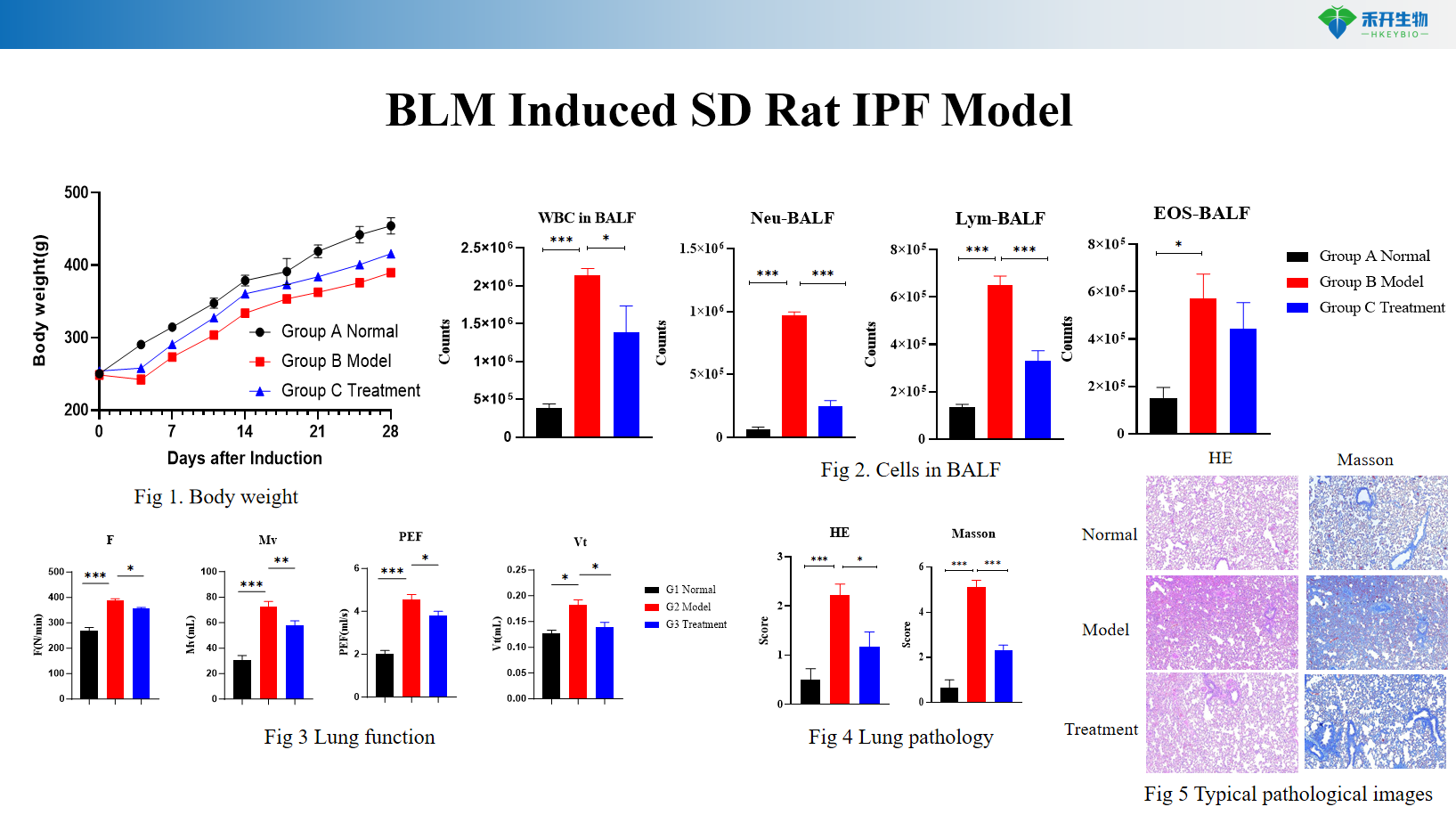
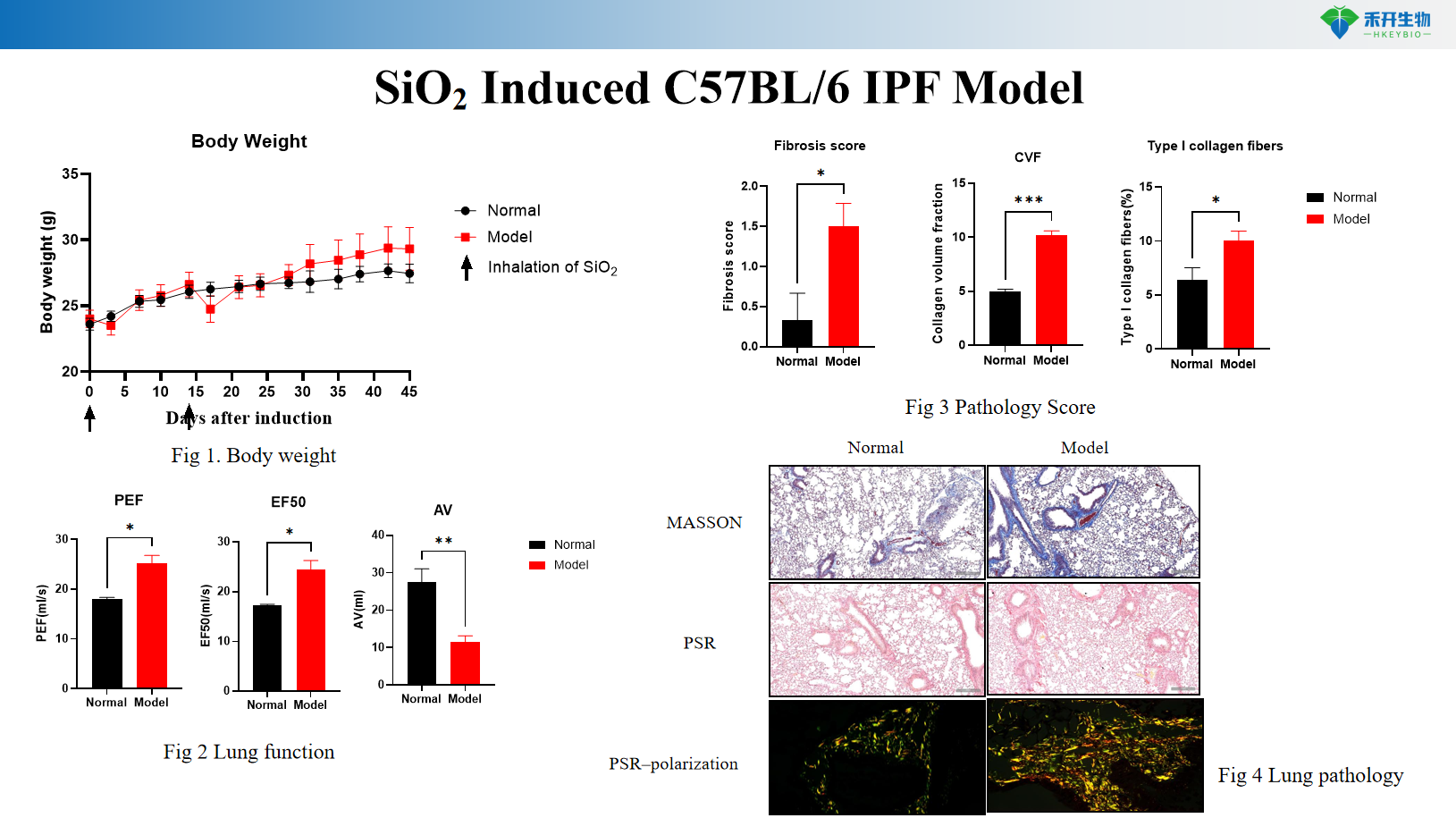
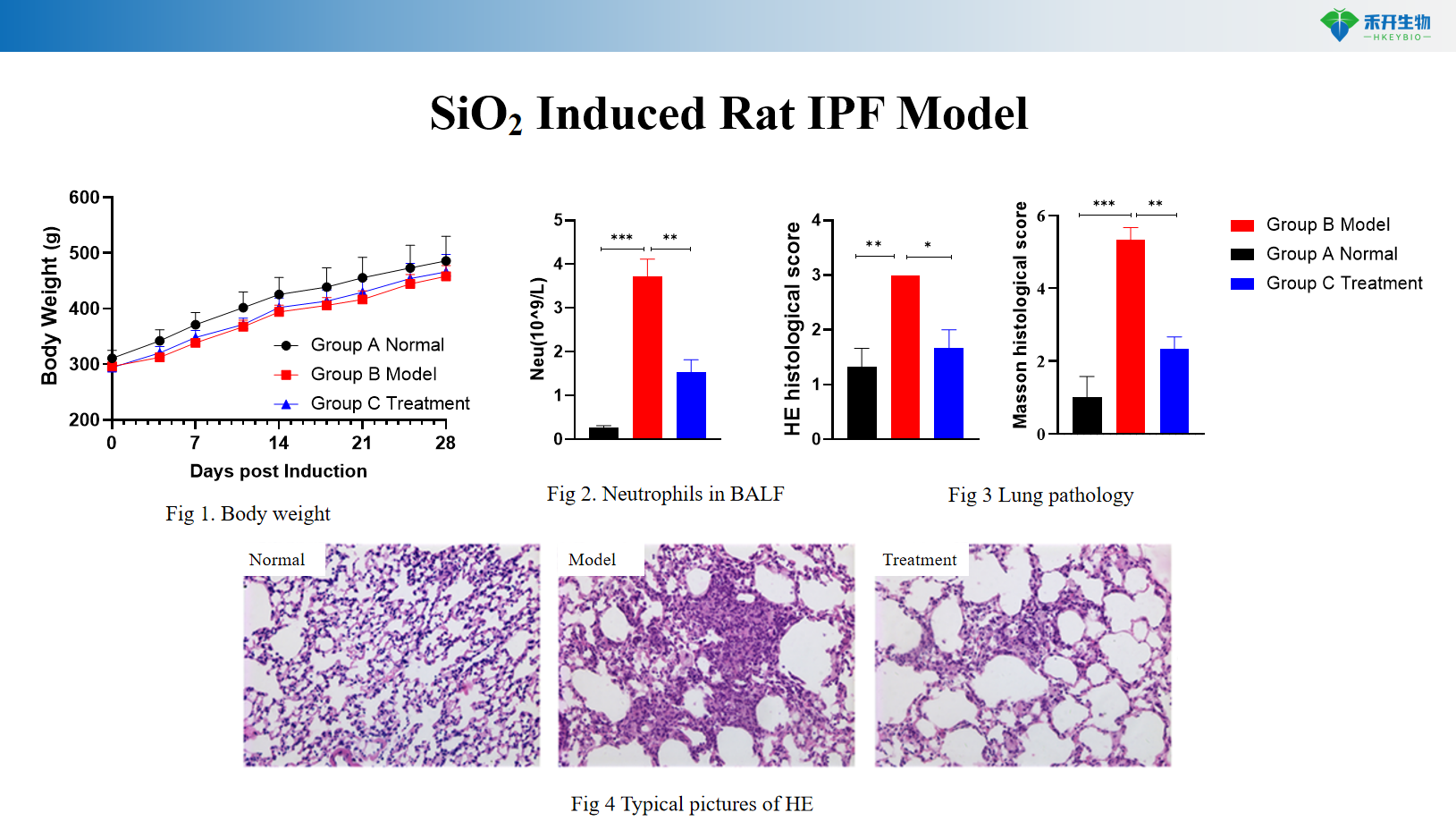
Comprehensive endpoint - body weight, BALF cytology (inflammatory cells), lung function, histopathology (HE, Masson, PSR), pathology score.
Translational Value – Ideal for testing antifibrotic drugs (nintedanib, pirfenidone), TGF-β inhibitors, and novel therapeutic candidates.
Species options – Rat and mouse models are available to meet different experimental requirements.
IND Ready Packet – Research can be conducted in accordance with GLP principles.
Technical data and verification
Representative data from our NHP atopic dermatitis (AD) model:
BLM induction C57BL/6 IPF model
SiO 2 -induced C57BL/6 IPF model
SiO 2 induced rat IPF model
Application areas
• Efficacy testing of antifibrotic drugs (nintedanib, pirfenidone, TGF-β inhibitors, lysyl oxidase inhibitors)
• Target validation of fibrotic pathways (TGF-β, CTGF, PDGF)
• Biomarker discovery (collagen deposition markers, inflammatory mediators)
• Mechanism of action (MOA) studies
• Pharmacology and toxicology studies to support IND
Model specifications
scope | BLM induces IPF in rats | SiO2 induces IPF in mice | SiOx-induced IPF in rats |
Species/Strain | Sprague-Dawley Rat | C57BL/6 mouse | Sprague-Dawley Rat |
induction method | Intratracheal bleomycin (single dose) | Intratracheal SiO2 (single dose) | Intratracheal crystalline silica (SiOx) |
study time | 14–28 days | 45 days | 28–56 days |
critical endpoint | Body weight, BALF cytology (total number of cells, classification), lung function, histopathology (HE, Masson), pathology score | Weight, lung function, pathology score, histopathology (HE, Masson, PSR) | Body weight, BALF neutrophils, histopathology (HE, Masson, PSR) |
packet | Raw data, analysis report, BALF cytology, histology sections (HE, Masson, PSR), lung function data, bioinformatics (optional) |
❓ FAQ
Q: What is the difference between BLM and silica-induced IPF models?
A: BLM induces acute lung injury followed by fibrosis, similar to drug-induced IPF. Silica models (SiO2, SiOx) represent occupational/environmental exposures, slower progression and chronic inflammation, and better reflect human silicosis and some forms of IPF.
Q: Which model is best for testing anti-fibrotic drugs?
A: The BLM rat model is the most widely accepted for antifibrotic drug screening due to its rapid onset of action and good reproducibility. The silica model is the first choice for studying interventions in chronic fibrosis and occupational lung disease.
Q: Can these models be used for IND support studies?
Answer: Yes. Studies can be conducted according to GLP principles for regulatory submissions (FDA, EMA).
Q: Do you offer customized study protocols (e.g., different doses, time points, combination therapies)?
Answer: Of course. Our scientific team tailors induction protocols, treatment plans and endpoint analyzes for your specific drug candidate.


