Main features and benefits
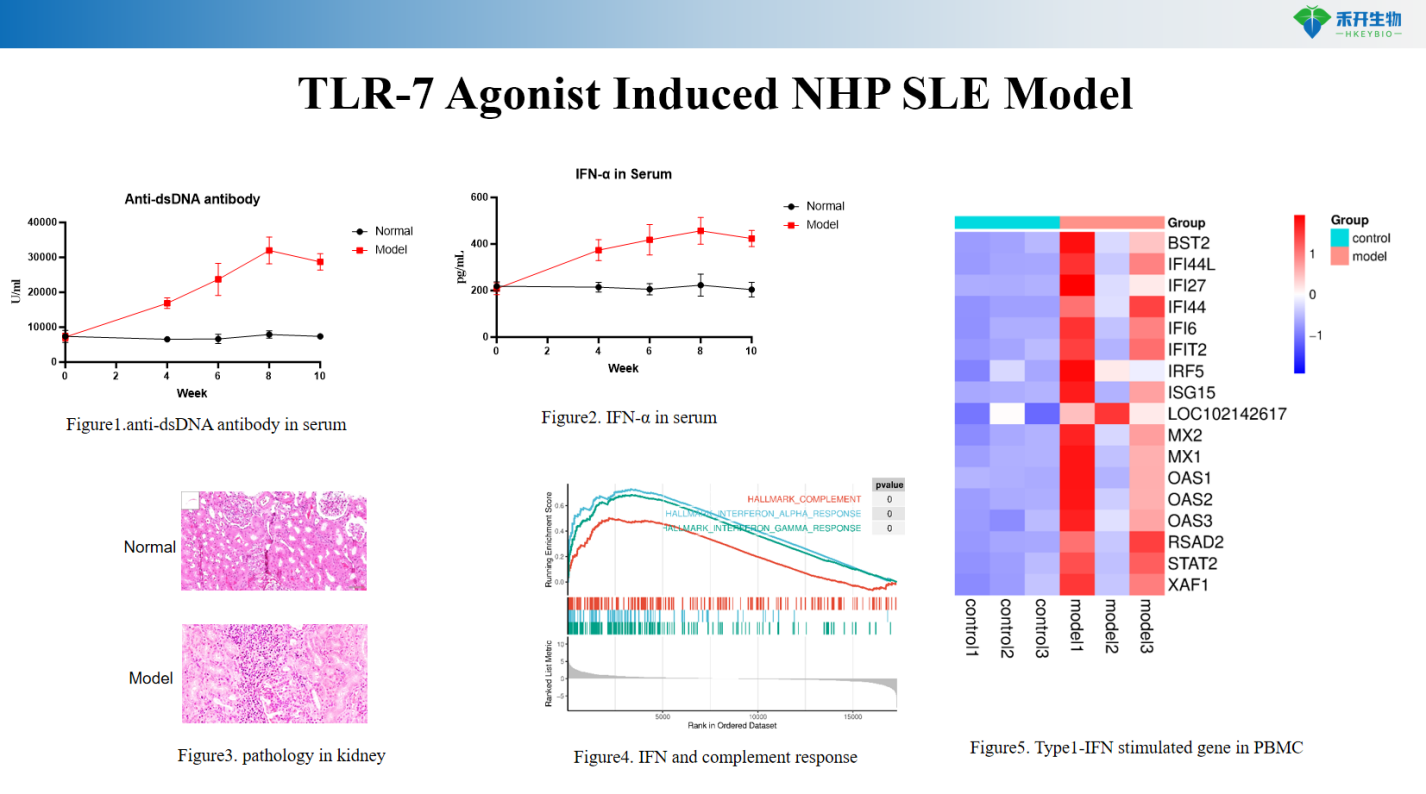
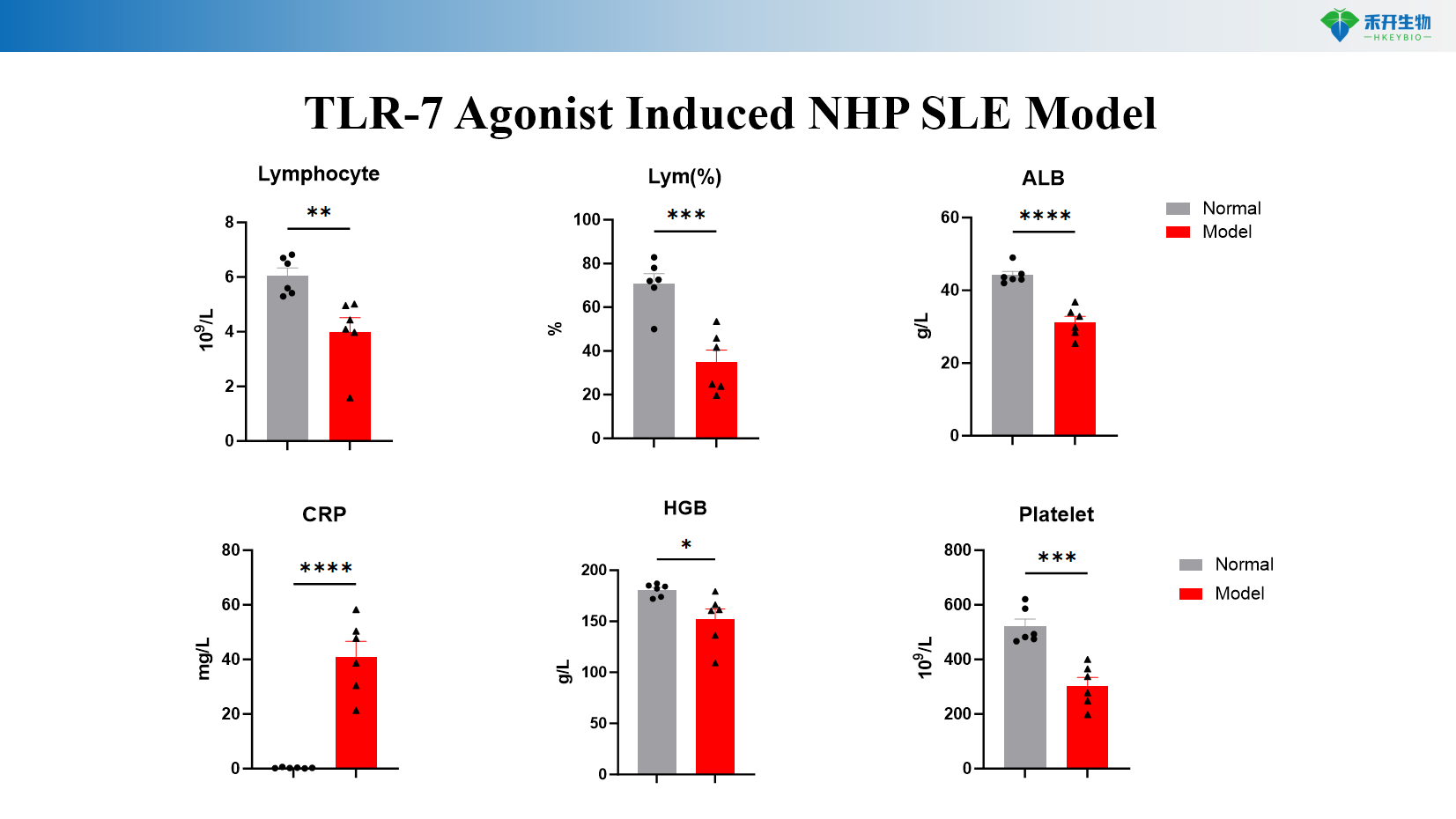
Clinically relevant modeling of human SLE pathogenesis: autoantibodies, interferon signature, glomerulonephritis.
TLR-7 agonists induce reliable, reproducible models with well-defined kinetics (anti-dsDNA, IFN-α).
Multi-endpoint analysis included anti-dsDNA, IFN-α, complement, renal histology, and transcriptomics.
IND-ready packet studies can be conducted in accordance with GLP principles.
Provides customizable regimen dose optimization, combination therapy and biomarker exploration.
Technical data and verification
Representative data for our NHP SLE model:
TLR-7 agonist-induced NHP SLE model
Application areas
• Efficacy testing of immunomodulatory drugs (biologics, small molecules, nucleic acid therapies)
• Target validation in SLE and lupus nephritis
• Biomarker discovery and validation (anti-dsDNA, IFN signature, complement factors)
• Toxicology and safety pharmacology studies to support IND
• Mechanism of action (MOA) investigation
Model specifications
scope | Specification |
Species | cynomolgus monkey ( Macaca fascicularis ) |
induction method | TLR-7 agonist (imiquimod) topical + repeated administration |
study time | 4–12 weeks (depending on endpoint) |
critical endpoint | Anti-dsDNA, ANA, IFN-α, complement C3/C4, renal histology (H&E, IF), RNA-seq |
packet | Raw data, analysis reports, IHC slides, bioinformatics (optional) |
❓ FAQ
Q: How is the SLE model induced?
A: Systemic autoimmunity, production of autoantibodies and renal involvement occurs through repeated topical applications of TLR-7 agonists such as imiquimod.
Q: Can this model be used for IND support studies?
Answer: Yes. We can conduct studies in compliance with GLP principles; data packages are designed to support regulatory submissions (FDA, EMA).
Q: Do you offer customized research plans?
Answer: Of course. Our scientific team customizes induction regimens, dosing regimens, and endpoint analyzes based on your drug candidate and MOA.
Q: What is the typical timeline for a pilot efficacy study?
A: Pilot studies (n=3-4/group) can be completed in 8-10 weeks, including model induction, treatment, and initial data analysis.


