Main features and benefits
Broad disease coverage —Xenogeneic (human PBMC), allogeneic MHC-mismatched acute and chronic lupus-like GVHD models available.
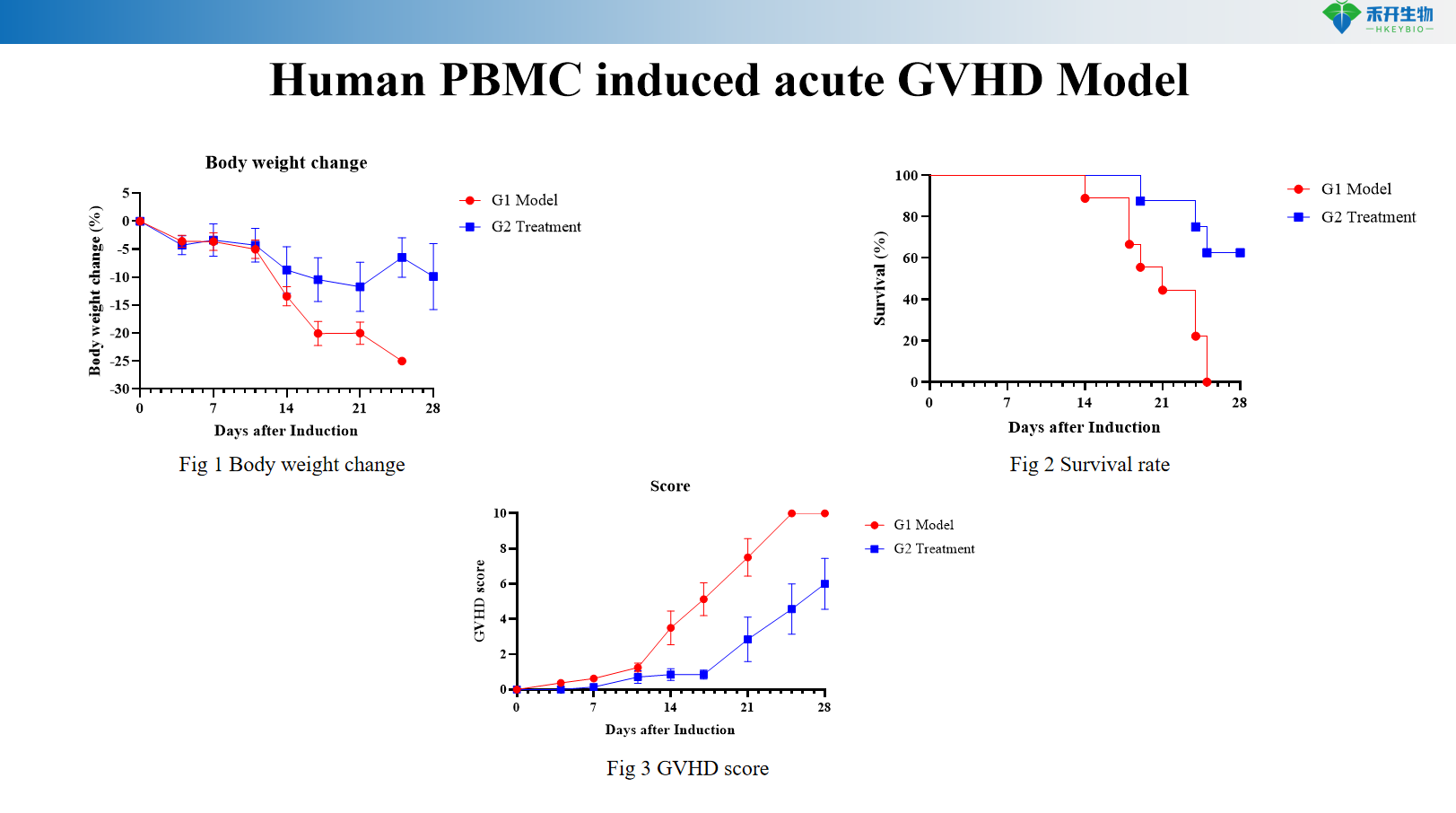
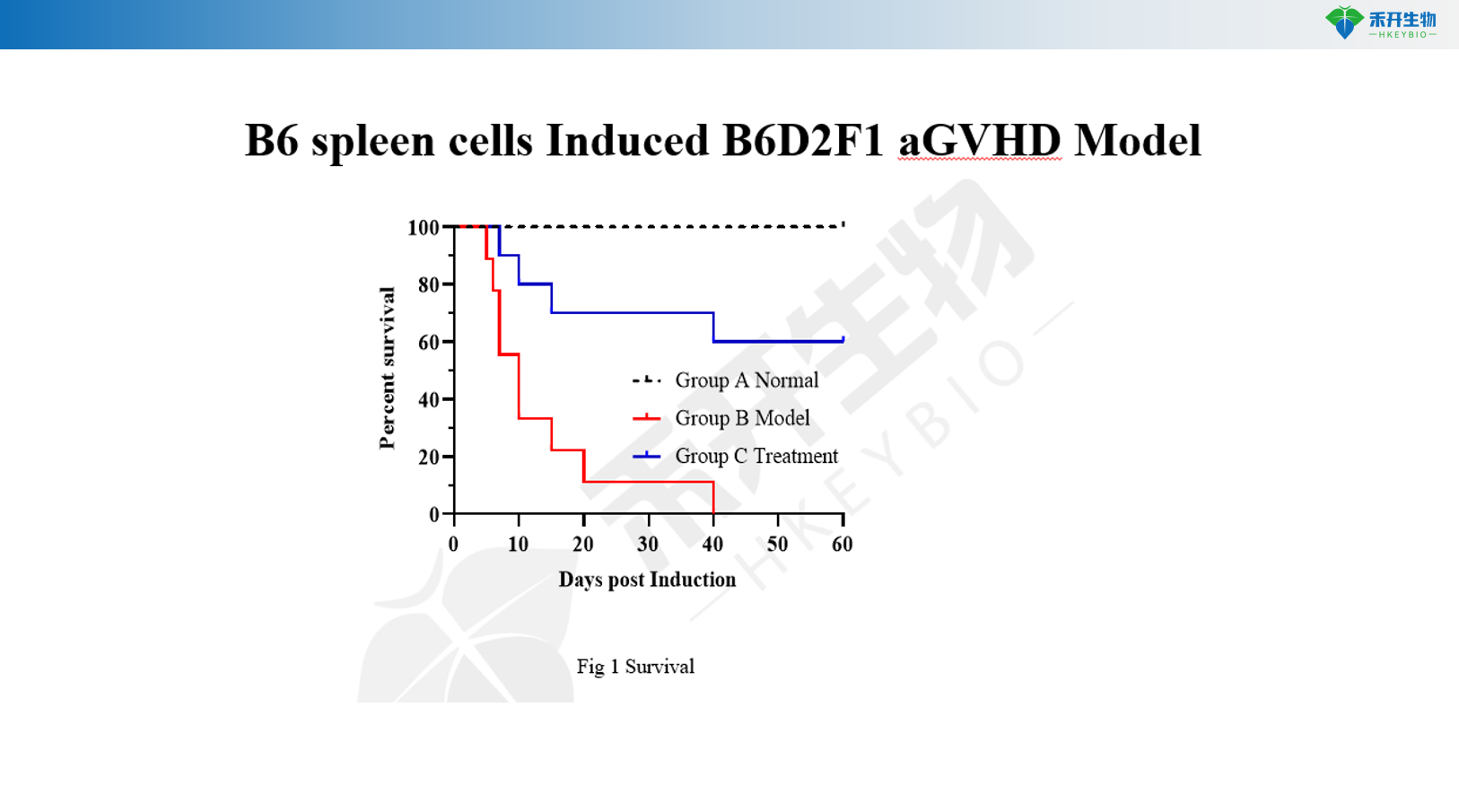
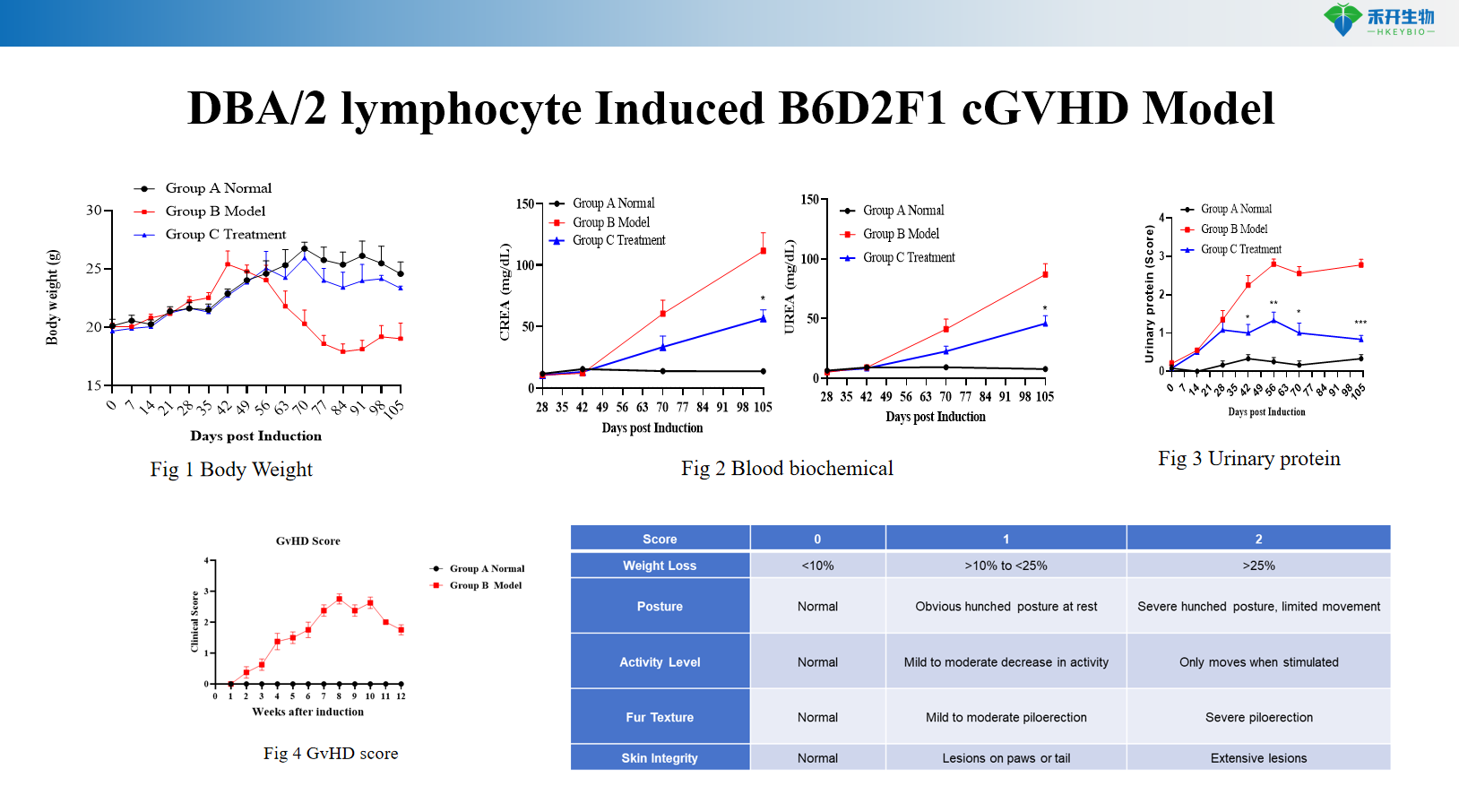
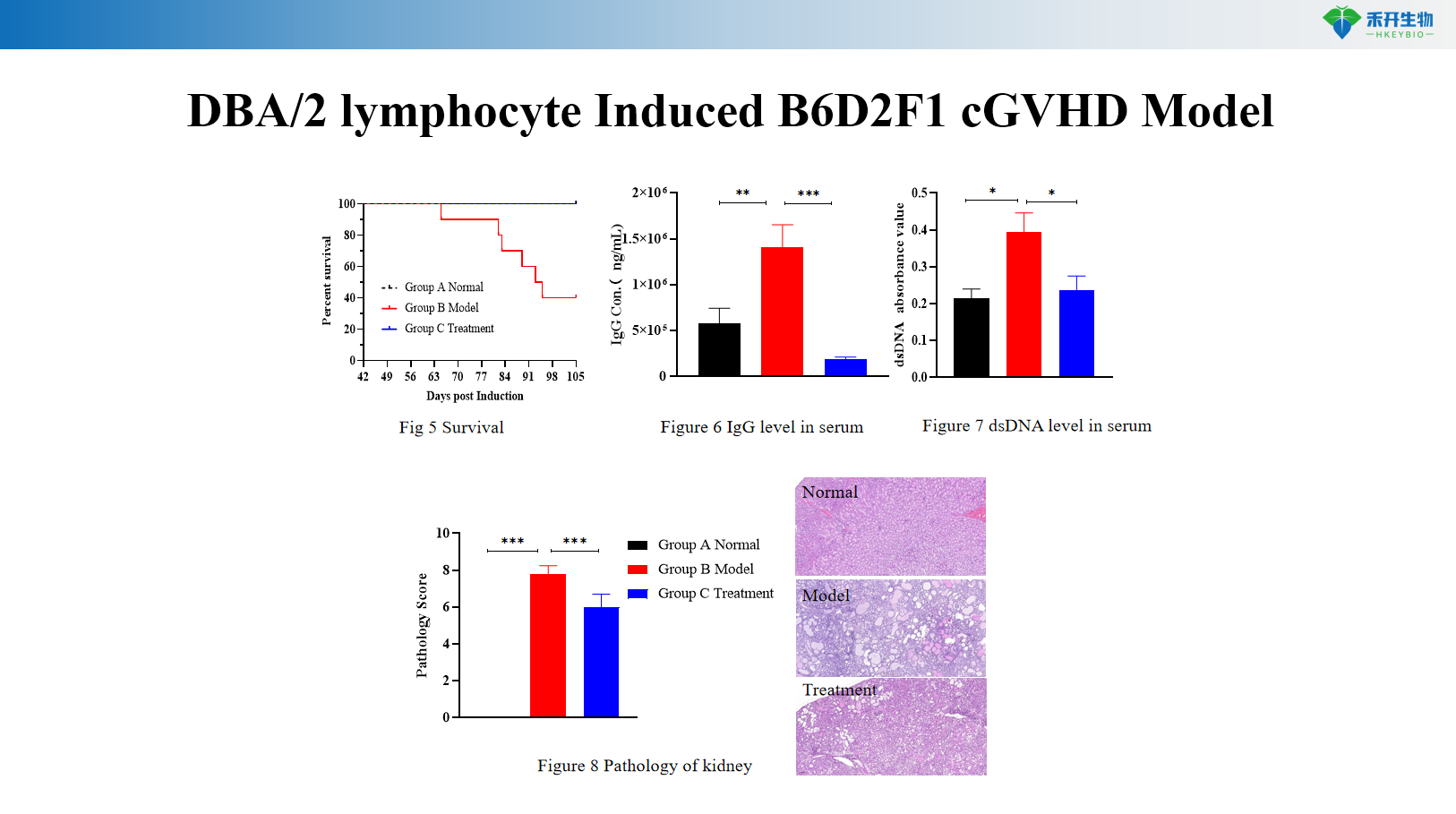
Quantifiable endpoints - body weight, survival, GVHD clinical score (0-10 including posture, activity, fur, skin), serum autoantibodies (anti-dsDNA, IgG), proteinuria, histopathology.
Mechanism-driven – human PBMC models for human-specific therapies; allogeneic models of T cell-mediated GVHD; chronic models of autoantibody-mediated pathology.
Translational Value – Ideal for testing immunosuppressants (calcineurin inhibitors, mTOR inhibitors), biologics (anti-TNF, anti-IL-6R) and cell therapies.
IND Ready Packet – Research can be conducted in accordance with GLP principles.
Technical data and verification
Human PBMC-induced acute GVHD model
B6D2F1 aGVHD model induced by B6 splenocytes
B6D2F1 cGVHD model induced by DBA/2 lymphocytes
Application areas
• Efficacy testing of immunosuppressants (tacrolimus, cyclosporine, mycophenolate mofetil, mTOR inhibitors) in preventing and treating GVHD
• Evaluate biologics targeting T cells (anti-CD3, anti-CD4), cytokines (anti-IL-6R, anti-TNF), and costimulatory pathways (CTLA-4-Ig)
• Test cell-based therapies (Treg, MSC) and antibody depletion strategies
• Target validation of T cell activation, autoantibody production and multi-organ pathology
• Pharmacology and toxicology studies to support IND
Model specifications
scope | Human PBMC aGVHD model | B6 → B6D2F1 aGVHD model | DBA/2 → B6D2F1 cGVHD model |
Species/Strain | NSG mice (recipient) | B6 → B6D2F1 | DBA/2 → B6D2F1 |
disease type | Acute (Xenogeneic) | Acute (allogeneic) | Chronic (lupus-like) |
critical endpoint | Weight, survival rate, GVHD score | Survival rate, GVHD score | Body weight, survival rate, GVHD score, serum IgG, anti-dsDNA, proteinuria, blood biochemistry, renal pathology |
❓ FAQ
Q: What are the differences between the three GVHD models?
A: Human PBMC models are xenogeneic and ideally suited for testing human-specific therapies. The B6 → B6D2F1 model is MHC-mismatched allogeneic acute GVHD. The DBA/2 → B6D2F1 model is a chronic lupus-like GVHD with autoantibody production, nephritis, and multiorgan fibrosis.
Q: Which model is best for testing anti-human biologics?
A: The human PBMC-induced aGVHD model in NSG mice is the first choice for evaluating human-specific antibodies (eg, anti-CD3, anti-CD4, anti-IL-6R) because the donor T cells are human.
Q: Can these models be used for IND support studies?
Answer: Yes. Studies can be conducted according to GLP principles for regulatory submissions (FDA, EMA).
Q: Do you offer customized study protocols (e.g., different donor cell numbers, treatment times)?
Answer: Of course. Our scientific team tailors induction protocols, treatment plans and endpoint analyzes for your specific drug candidate.
Q: What is the typical timeline for a pilot efficacy study?
A: Acute GVHD studies are typically performed 4-6 weeks after transplantation; chronic GVHD studies may be extended to 8-12 weeks to allow for full autoantibody and organ pathology development.


