Main features and benefits
Supplementary Mechanism - IL-31/wound model simulates itch associated with wound healing; AEW model simulates itch caused by dry skin and barrier disruption.
Quantifiable endpoint – The number of scratches (scratching behavior) recorded and quantified over a defined period of time.
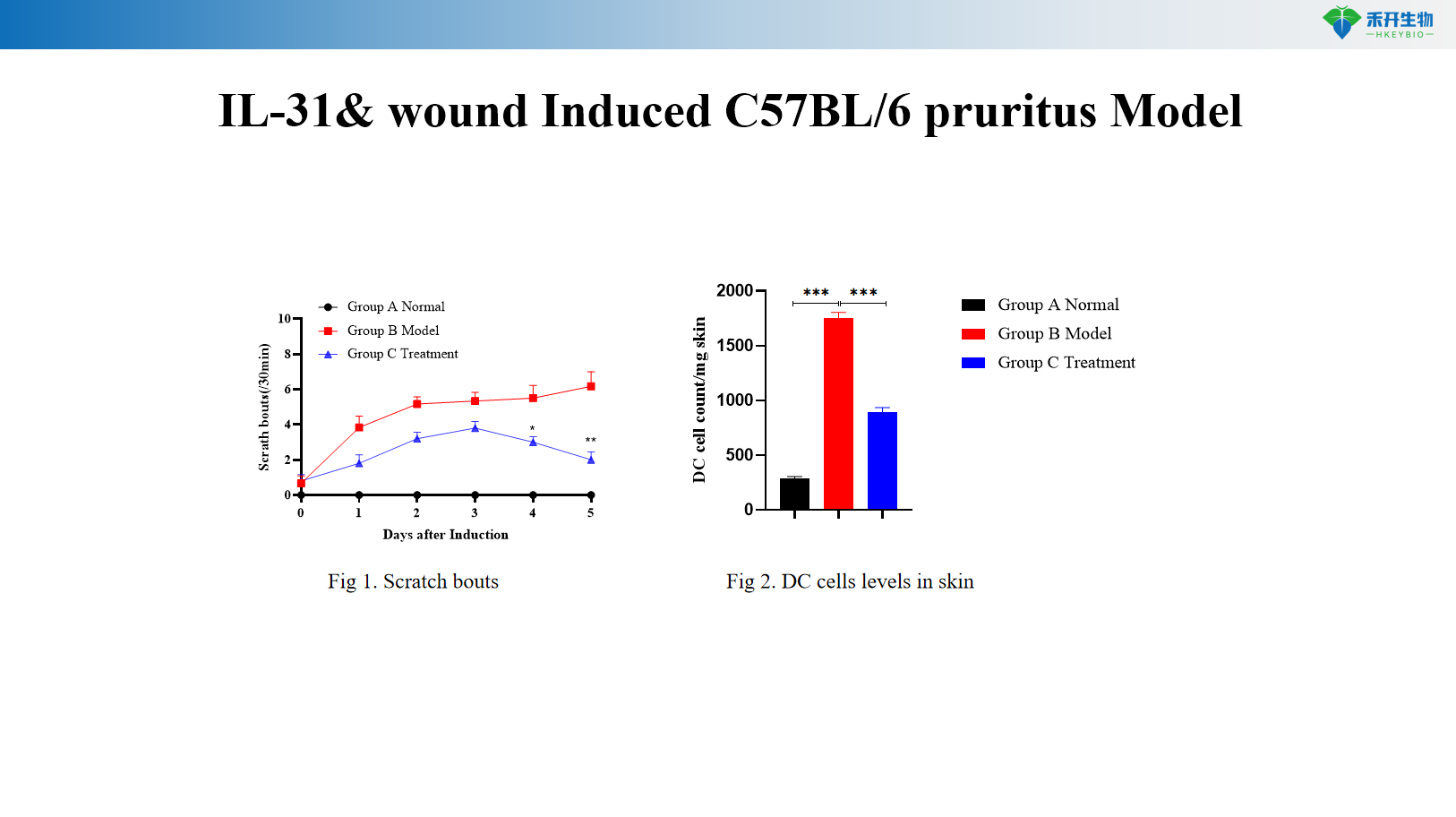
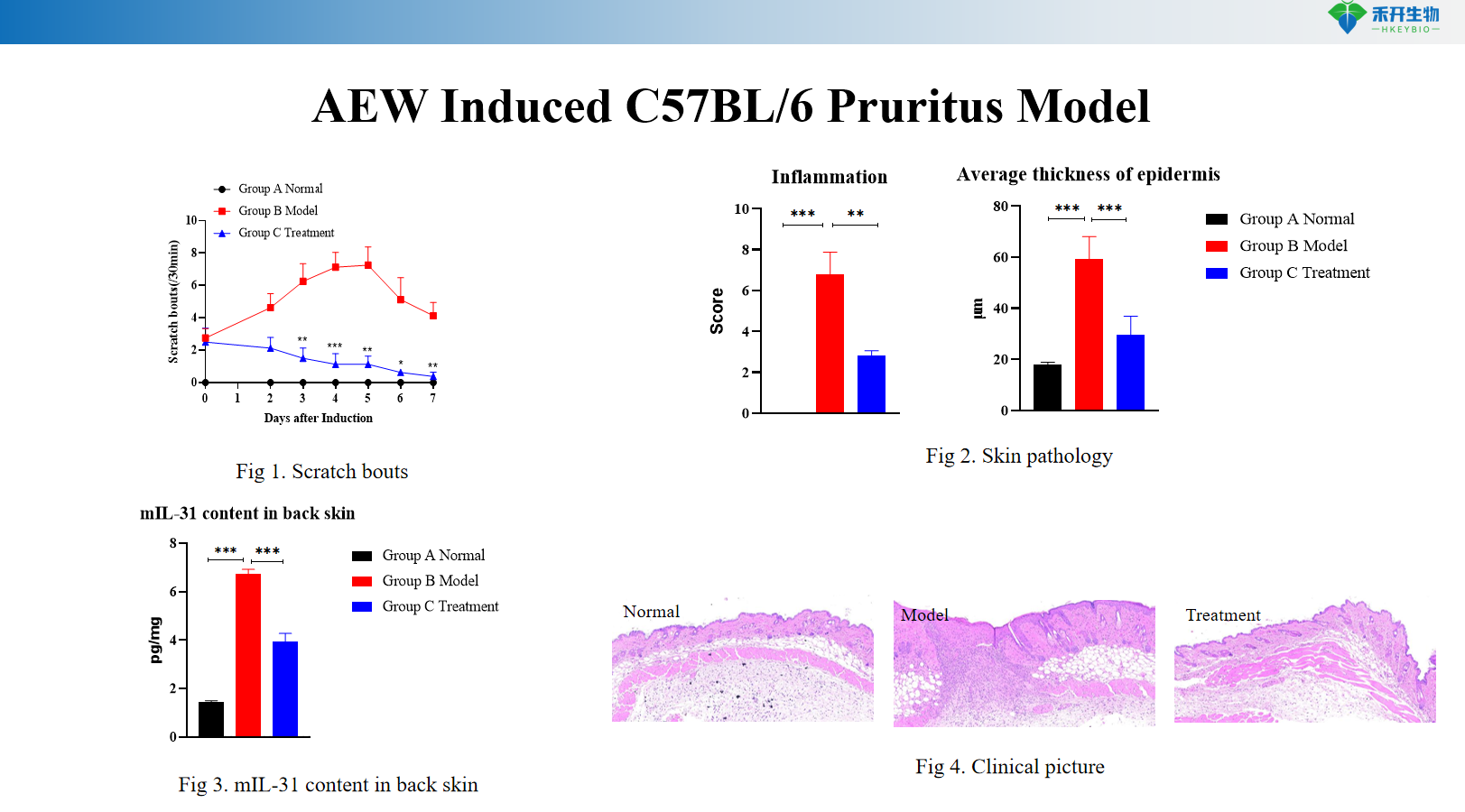
Comprehensive endpoints – scratching behavior, dendritic cell infiltration (IL-31 model), skin histopathology, IL-31 levels in skin (AEW model).
Translational Value – Ideal for testing antihistamines, IL-31 blockers, JAK inhibitors, TRPV1 antagonists, and other antipruritic agents.
IND Ready Packet – Research can be conducted in accordance with GLP principles.
Technical data and verification
IL-31& wound induced C57BL/6 pruritus model
AEW-induced C57BL/6 pruritus model
Application areas
• Efficacy testing of antipruritic drugs: antihistamines (cetirizine, fexofenadine), IL-31 blockers (nemolizumab), JAK inhibitors (tofacitinib, baricitinib), TRPV1 antagonists
• Target validation of the IL-31 pathway, skin barrier function, and neuroimmune interactions
• Biomarker discovery (IL-31, scratch count, skin barrier markers)
• Mechanism of action (MOA) studies for pruritus treatments
• Pharmacology and toxicology studies to support IND
Model specifications
scope | IL-31 and wound induction model | AEW induced model |
Species/Strain | C57BL/6 mouse | C57BL/6 mouse |
induction method | Skin wound + intradermal IL-31 injection | Topical acetone/ether/water (AEW) on back skin (once daily for 2-5 days) |
study time | 1–7 days after injury/IL-31 | 2-7 days after AEW treatment |
critical endpoint | Scrape (30-60 minutes), skin dendritic cell infiltration (flow cytometry/IHC) | Number of scratches, skin histopathology (HE), skin IL-31 levels (ELISA), clinical photographs |
packet | Raw data, analysis report, behavioral data (draft video), histology slides, ELISA results, bioinformatics (optional) |
❓ FAQ
Q: What is the difference between the two itch models?
A: IL-31 and wound models simulate wound healing-related itch, driven by IL-31 and inflammatory cell infiltration. The AEW model causes skin dryness and barrier disruption, leading to pruritus through xerosis and increased IL-31 production. Choose based on your treatment goals (IL-31 pathway vs. skin barrier repair).
Q: How do you quantify scratching behavior?
A: Scratch matches are recorded using a video surveillance system (manual or automatic). Typically, a scratch episode is defined as one or more scratching movements directed at the affected area (wound or back skin) within a defined period of time (e.g., 30-60 minutes).
Q: Can these models be used for IND support studies?
Answer: Yes. Studies can be conducted according to GLP principles for regulatory submissions (FDA, EMA).
Q: Do you offer customized study protocols (e.g. different IL-31 doses, AEW treatment protocols)?
Answer: Of course. Our scientific team tailors induction protocols, treatment plans and endpoint analyzes for your specific drug candidate.
Q: What is the typical timeline for a pilot efficacy study?
A: Both models are acute (1-7 days) and allow rapid screening of antipruritic compounds. Studies are usually completed within 5-7 days of induction.


