Main features and benefits
Clinical Relevance —Summary of human radiation dermatitis with acute erythema, desquamation, and chronic fibrosis using standardized RTOG scores.
Mechanistically driven —X-ray-induced DNA damage, ROS production, and TGF-β-mediated fibrosis mirror radiation therapy-induced skin damage in humans.
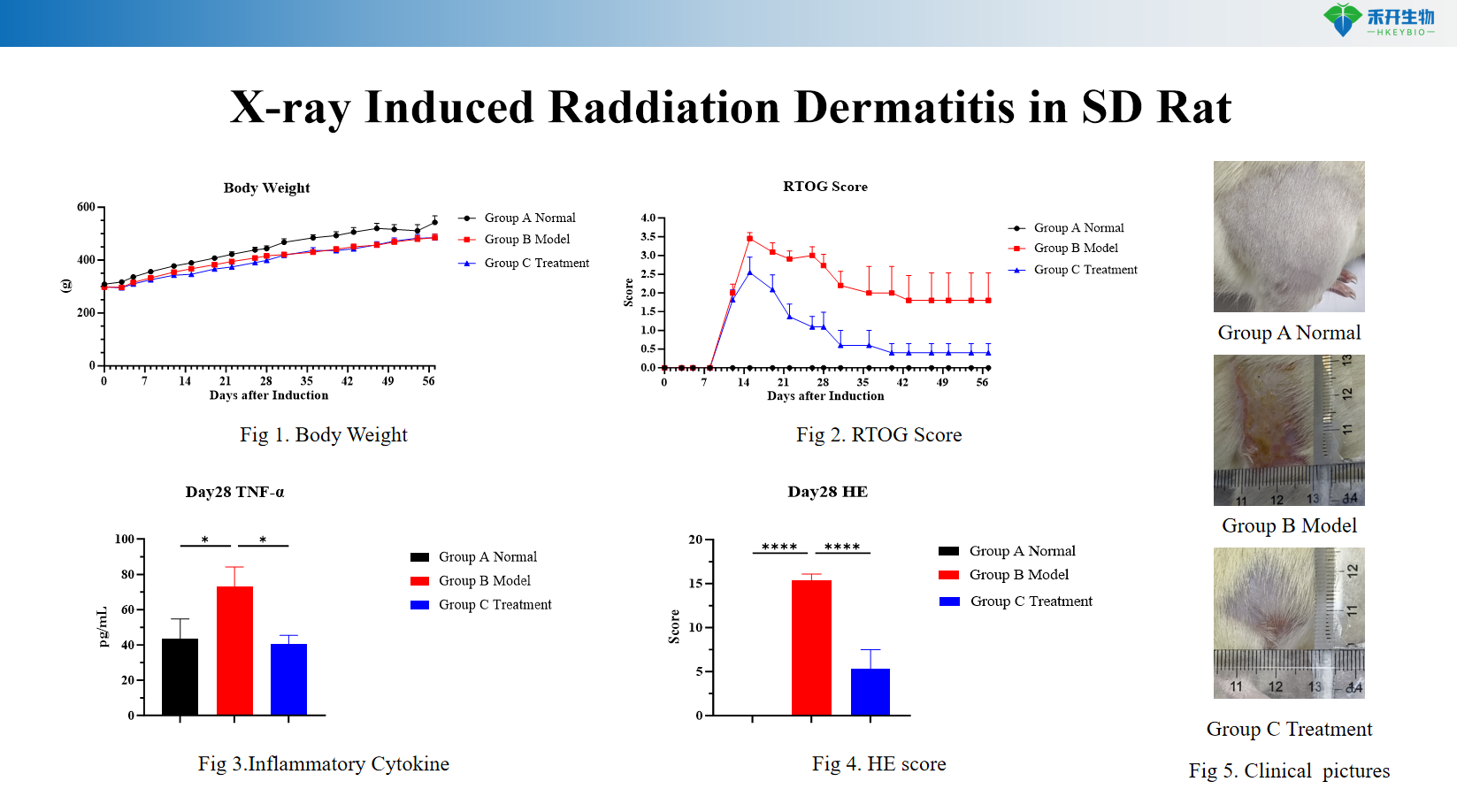
Comprehensive endpoint - body weight, RTOG clinical score (grade 0-4), serum TNF-α level, skin histopathology (HE score), inflammatory cell infiltration, and dermal fibrosis.
Translational value – ideal for testing radioprotectants, anti-inflammatory agents, antioxidants and wound healing therapies.
IND Ready Packet – Research can be conducted in accordance with GLP principles.
Technical data and verification
X-ray induced radiation dermatitis in SD rats
Application areas
• Efficacy testing of radioprotective agents (amifostine, superoxide dismutase) and anti-inflammatory agents (corticosteroids, NSAIDs)
• Evaluate the effects of wound healing agents, antioxidants, and TGF-β inhibitors on chronic radiation fibrosis
• Target validation of radiation-induced inflammation and fibrosis pathways
• Biomarker discovery (TNF-α, TGF-β, oxidative stress markers)
• Pharmacology and toxicology studies to support IND
Model specifications
scope | Specification |
Species/Strain | Sprague-Dawley Rat |
induction method | Local X-ray irradiation (single dose: 30–50 Gy or fractionated dose) on shaved back skin, usually over an area of 2–3 cm² |
study time | Acute: 1-4 weeks; Chronic: 4-12 weeks (for fibrosis research) |
critical endpoint | Body weight, RTOG clinical score (erythema, dry/wet desquamation, ulceration, fibrosis), serum TNF-α level (ELISA), skin histopathology (HE staining and scoring of inflammatory infiltrates, epidermal thickness, dermal fibrosis), optional: immunohistochemistry (TGF-β, α-SMA, collagen I), oxidative stress markers (MDA, SOD) Weight, RTOG clinical score (erythema, dry/wet desquamation, ulceration, fibrosis), serum TNF-α level (ELISA), skin histopathology (HE staining and scoring of inflammatory infiltrates, epidermal thickness, dermal fibrosis), optional: immunohistochemistry (TGF-β, α-SMA, collagen I), oxidative stress markers (MDA, SOD) |
| positive control | Amifostine or corticosteroids may be used as reference radioprotective/anti-inflammatory compounds |
packet | Raw data, analysis reports, clinical photos, RTOG score records, ELISA results, histological sections, bioinformatics (optional) |
❓ FAQ
Question: How does X-ray exposure induce radiation dermatitis?
A: X-rays cause direct DNA damage and ROS production in keratinocytes, endothelial cells, and hair follicle stem cells. This triggers apoptosis, DAMP release, inflammatory cytokine cascade (TNF-α, IL-1β, IL-6) and TGF-β-mediated fibrosis, recapitulating human radiation skin damage.
Q: What is an RTOG score and how is it evaluated?
A: The RTOG (Radiation Therapy Oncology Group) Acute Radiation Morbidity Rating Scale grades skin reactions from 0 (no change) to 4 (ulceration, necrosis). It evaluates erythema, dry desquamation, moist desquamation, and ulceration, providing a standardized clinical assessment of radiation dermatitis severity.
Q: Can this model be used for IND support studies?
Answer: Yes. Studies can be conducted according to GLP principles for regulatory submissions (FDA, EMA).
Q: Do you offer customized study protocols (e.g., different radiation doses, fractionation schedules, treatment times)?
Answer: Of course. Our scientific team tailors the radiation regimen (single vs. fractionated), treatment plan (preventive or therapeutic), and endpoint analysis to your specific drug candidate.
Q: What is the typical timeline for a pilot efficacy study?
A: Acute studies (erythema, scaling) typically last 2-4 weeks; chronic fibrosis studies may extend to 8-12 weeks post-irradiation.


