Main features and benefits
Clinical Relevance - Overview of human glucocorticoid-induced osteoporosis with inhibition of bone formation, enhanced resorption, and microarchitectural deterioration.
Multiple species - rat and mouse models are available to meet different experimental needs (larger size vs. genetic manipulation).
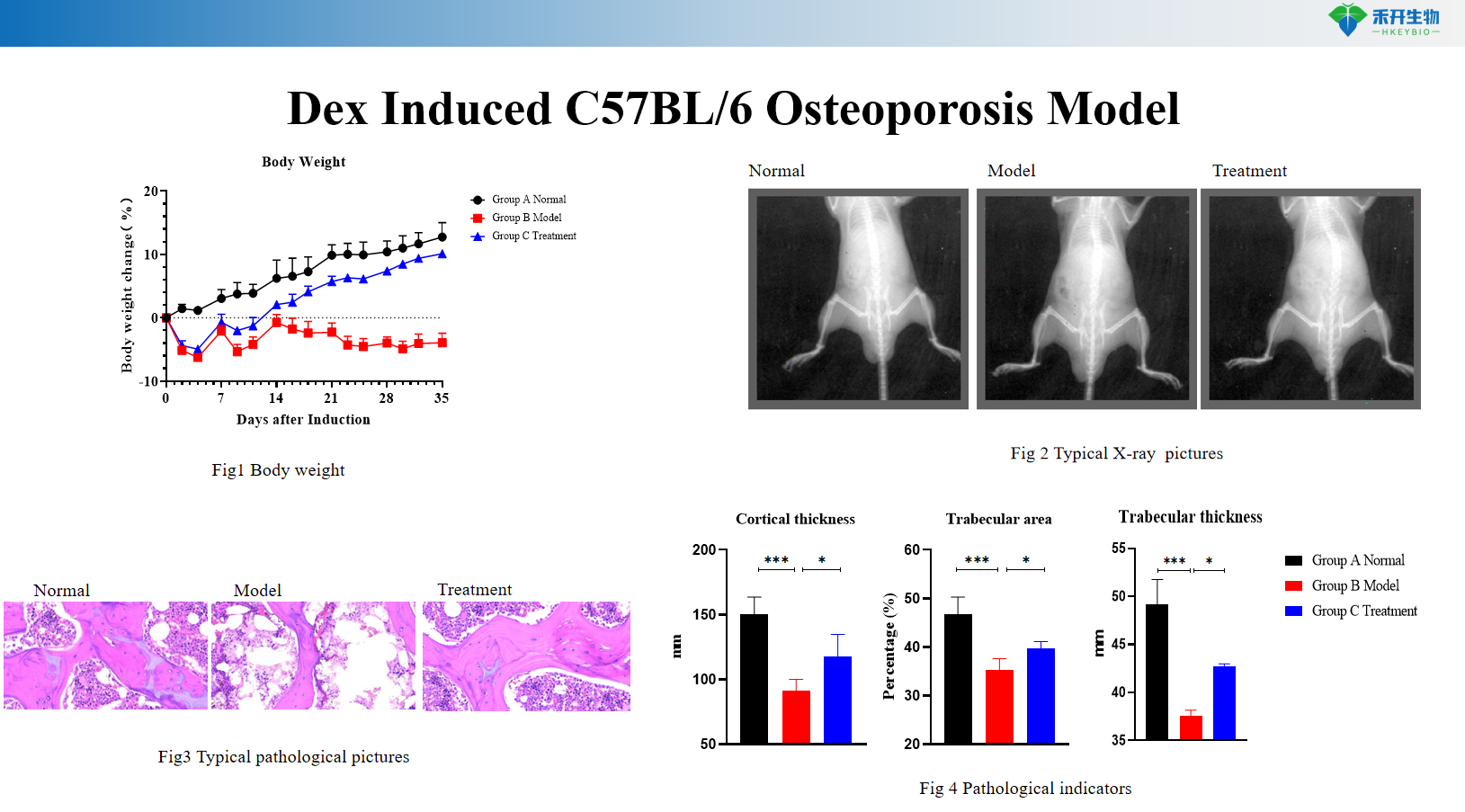
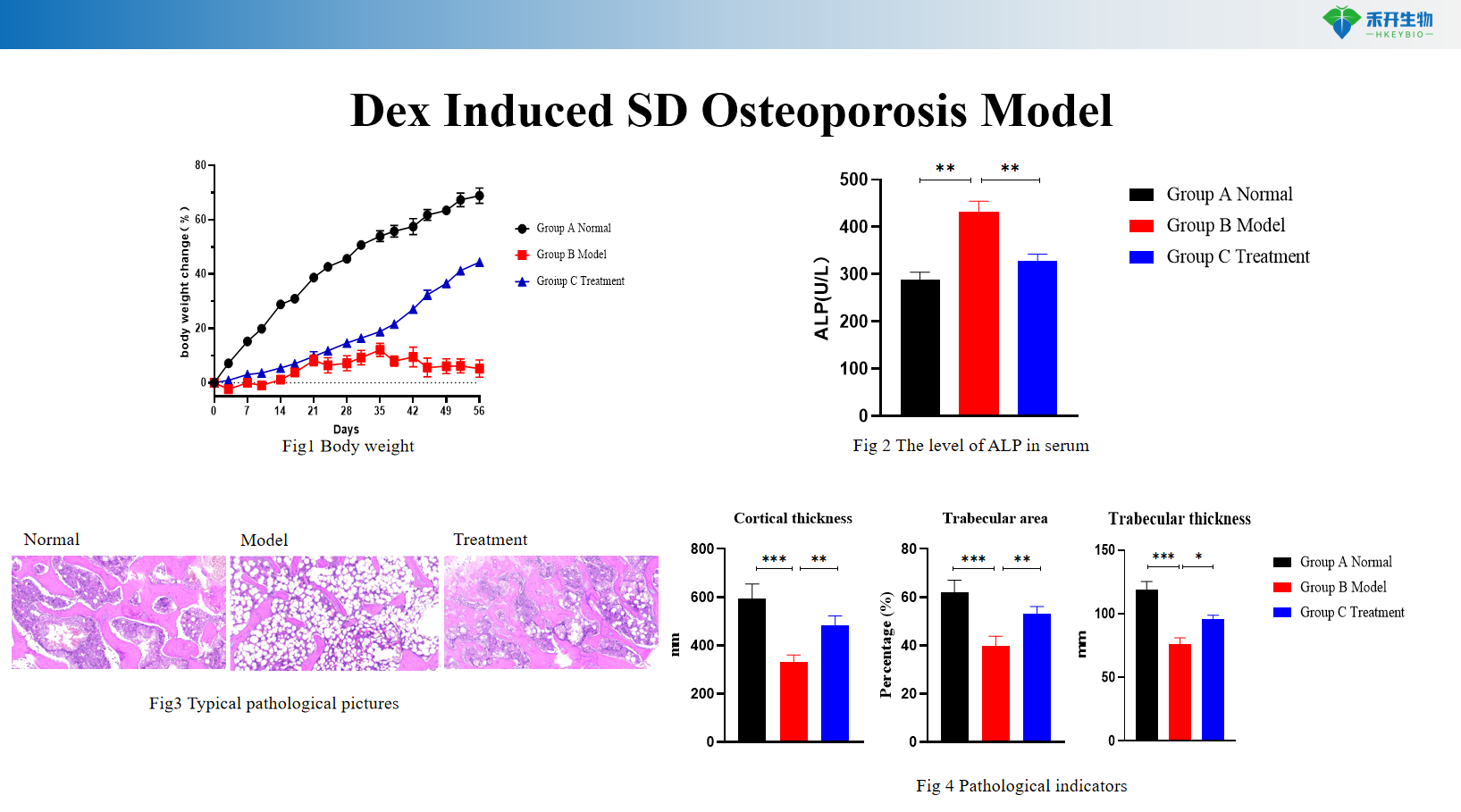
Composite endpoint – body weight, serum ALP, X-ray imaging, histopathology (H&E, TRAP staining), bone histomorphometry, micro-CT (optional).
Translational Value – Ideal for testing bisphosphonates (alendronate), SERMs (raloxifene), anabolic drugs (teriparatide), and RANKL inhibitors.
IND Ready Packet – Research can be conducted in accordance with GLP principles.
Technical data and verification
Dex-induced C57BL/6 osteoporosis model
Dex-induced SD osteoporosis model
Application areas
• Efficacy testing of anti-osteoporosis drugs: bisphosphonates (alendronate, zoledronic acid), SERMs (raloxifene), anabolics (teriparatide, romosolumab) and RANKL inhibitors (denosumab)
• Evaluation of new therapies targeting bone formation or bone resorption pathways
• Target validation of mechanisms of glucocorticoid-induced osteoporosis
• Biomarker discovery (bone turnover markers, ALP, osteocalcin, CTX-I)
• Pharmacology and toxicology studies to support IND
Model specifications
scope | SD rat OP model | C57BL/6 mouse OP model |
Species/Strain | Sprague-Dawley Rat | C57BL/6 mouse |
induction method | Dexamethasone (1–2.5 mg/kg) intramuscularly or subcutaneously 2–3 times weekly for 4–8 weeks |
study time | 4–10 weeks (induction + treatment phase) |
critical endpoint | Body weight, serum ALP, X-ray imaging, histopathology (H&E, TRAP), bone histomorphometry, micro-CT (optional) | Body weight, serum ALP, histopathology, micro-CT (optional) |
| positive control | Alendronate or teriparatide can be used as reference compounds |
packet | Raw data, analysis reports, X-ray images, histological sections, micro-CT data (optional), bioinformatics (optional) |
❓ FAQ
Q: How does dexamethasone induce osteoporosis in rodents?
Answer: Dexamethasone inhibits osteoblast differentiation and promotes osteoblast apoptosis, resulting in reduced bone formation. It also indirectly enhances osteoclast activity and survival, leading to net bone loss, trabecular thinning, and increased fracture risk, similar to glucocorticoid-induced osteoporosis in humans.
Q: What are the key similarities to human osteoporosis?
A: Both models exhibit reduced bone mineral density, microstructural deterioration, increased serum ALP, and histomorphological changes (trabecular thinning, bone marrow obesity) that are closely associated with secondary osteoporosis in humans.
Q: Can these models be used for IND support studies?
Answer: Yes. Studies can be conducted according to GLP principles for regulatory submissions (FDA, EMA).
Q: Do you offer customized study protocols (e.g. different dexamethasone doses, treatment durations)?
Answer: Of course. Our scientific team tailors induction protocols, treatment plans and endpoint analyzes for your specific drug candidate.
Q: What is the typical timeline for a pilot efficacy study?
A: Pilot studies typically last 6-8 weeks and include dexamethasone induction and treatment phases, with endpoint analysis at week 8.


