Main features and benefits
Clinical Relevance – R97-116 peptide-induced EAMG closely resembles human MG, with antibody-mediated pathology and muscle weakness.
Well-characterized endpoints – body weight, muscle strength (grip strength test), serum anti-AChR antibody levels (ELISA), muscle histopathology (H&E).
Translational Value – Ideal for testing immunomodulators, FcRn inhibitors, complement inhibitors, and antigen-specific therapeutics.
Species Options – Available in Lewis rat and C57BL/6 mouse strains.
IND Ready Packet – Research can be conducted in accordance with GLP principles.
Technical data and verification
R97-116 peptide-induced MG model
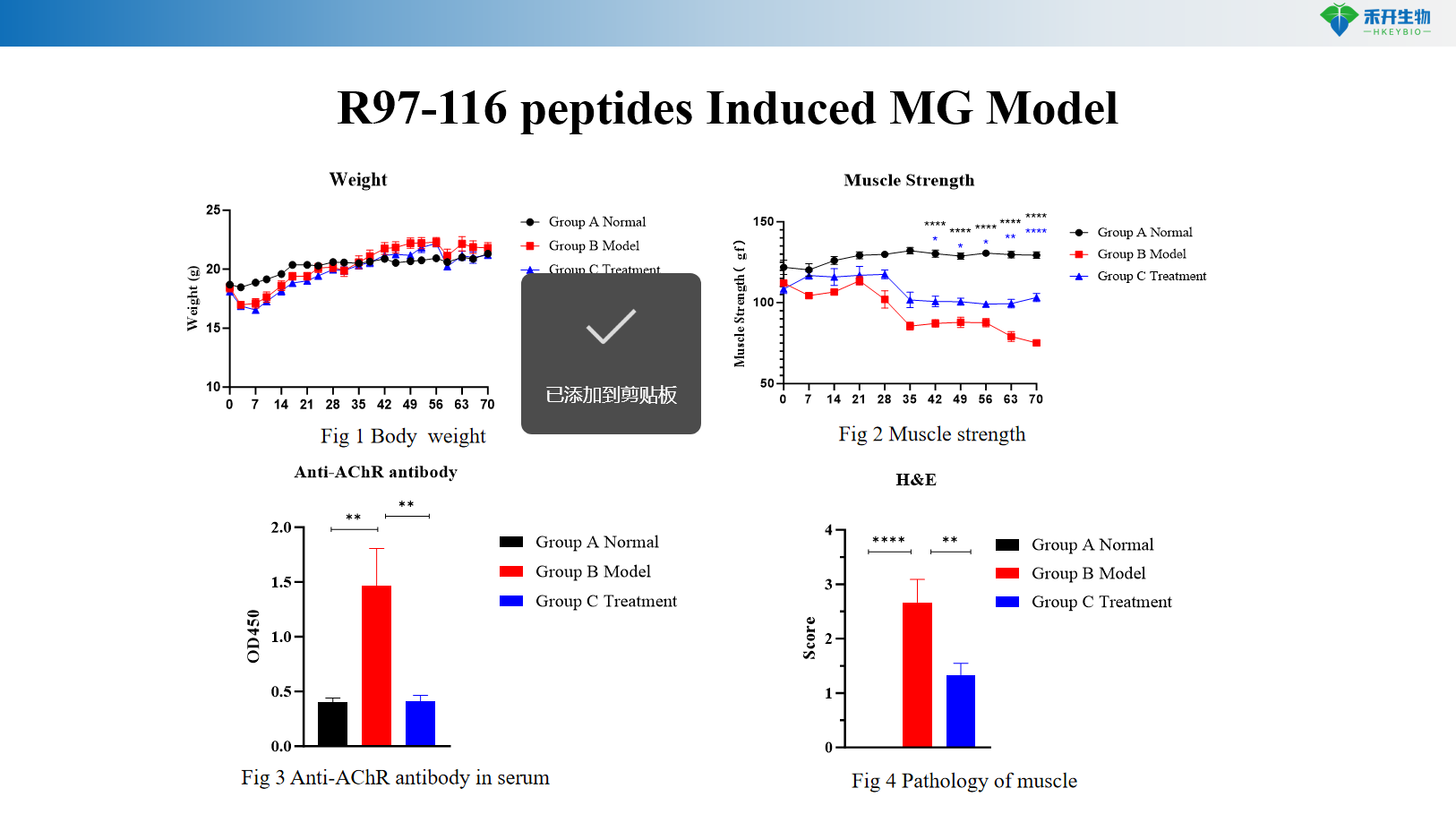
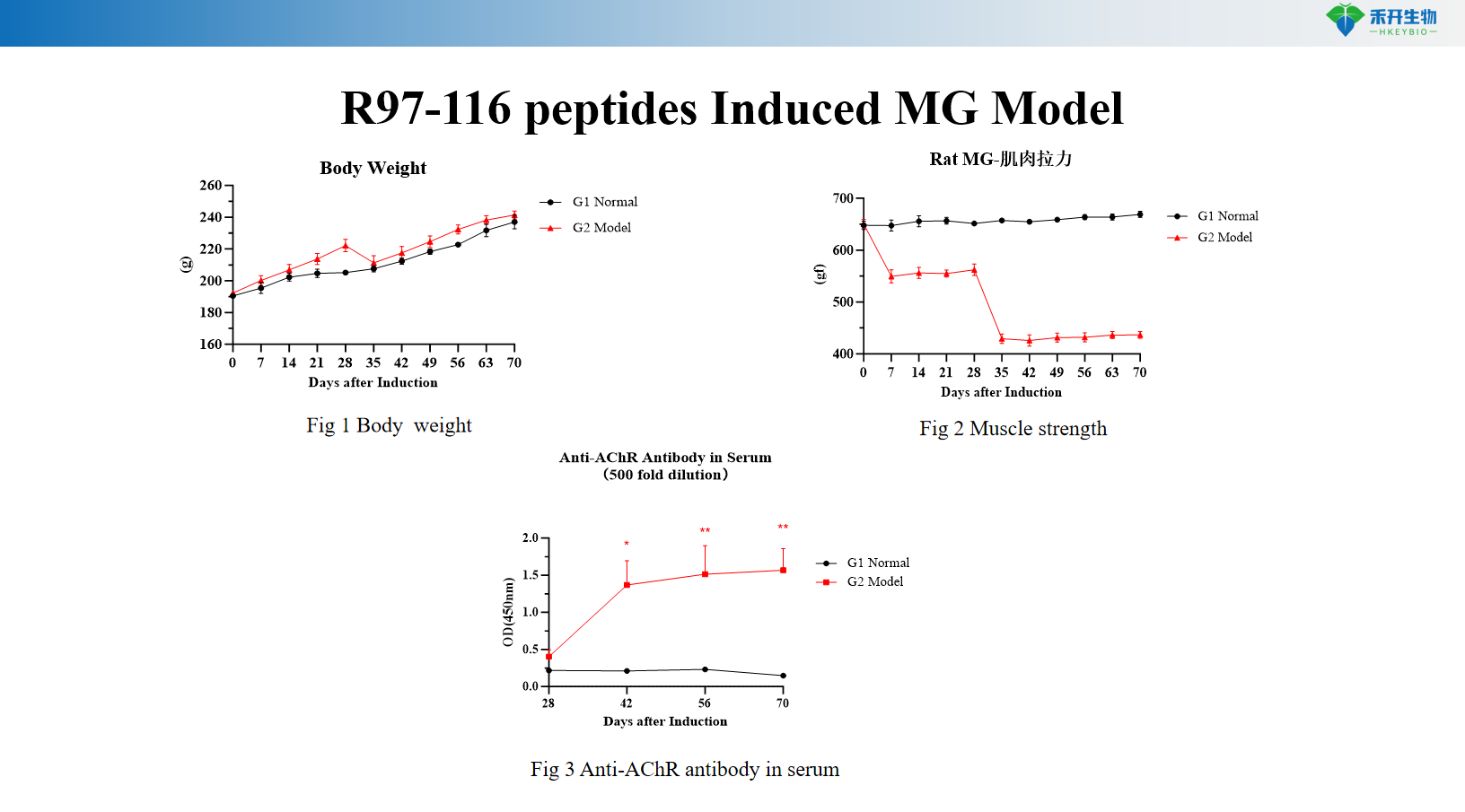
Application areas
• Efficacy testing of immunomodulators (corticosteroids, mycophenolate mofetil, cyclosporine), FcRn inhibitors, complement inhibitors (anti-C5) and biologics
• Target validation of AChR antibody-mediated pathology
• Biomarker discovery (anti-AChR antibodies, complement factors)
• Mechanism of action (MOA) research in autoimmune neuromuscular diseases
• Pharmacological studies to support IND
Model specifications
scope | Rat MG model | Mouse MG model |
Species/Strain | lewis rat | C57BL/6 mouse |
induction method | Immunization and boosting with R97-116 peptide (AChR alpha subunit 97-116) in CFA |
study time | 4-8 weeks | 4-8 weeks |
critical endpoint | Body weight, muscle strength (grip strength), serum anti-AChR antibody titer, muscle histopathology (H&E), neuromuscular junction analysis (optional) | Body weight, muscle strength, serum anti-AChR antibodies |
packet | Raw data, analysis reports, grip strength measurements, ELISA data, histology slides, bioinformatics (optional) |
❓ FAQ
Question: How does R97-116 peptide induce MG?
Answer: The R97-116 peptide corresponds to the major immunogenic region of the AChR alpha subunit. Immunization with this peptide in adjuvant triggers a T cell-dependent autoimmune response, leading to the production of pathogenic anti-AChR antibodies that disrupt neuromuscular transmission.
Q: What are the main similarities to human MG?
A: This model exhibits muscle weakness, elevated anti-AChR antibodies, and complement-mediated damage to the neuromuscular junction, very similar to human MG pathology.
Q: Can this model be used for IND support studies?
Answer: Yes. Studies can be conducted according to GLP principles for regulatory submissions (FDA, EMA).
Q: Do you offer customized study protocols (e.g. different adjuvants, dosing regimens)?
Answer: Of course. Our scientific team tailors immunization regimens, treatment plans and endpoint analyzes to your specific drug candidate.


