Main features and benefits
Clinical Relevance —LPS-induced ALI is very similar to human ALI/ARDS, with acute inflammation, leukocyte infiltration, and pulmonary edema.
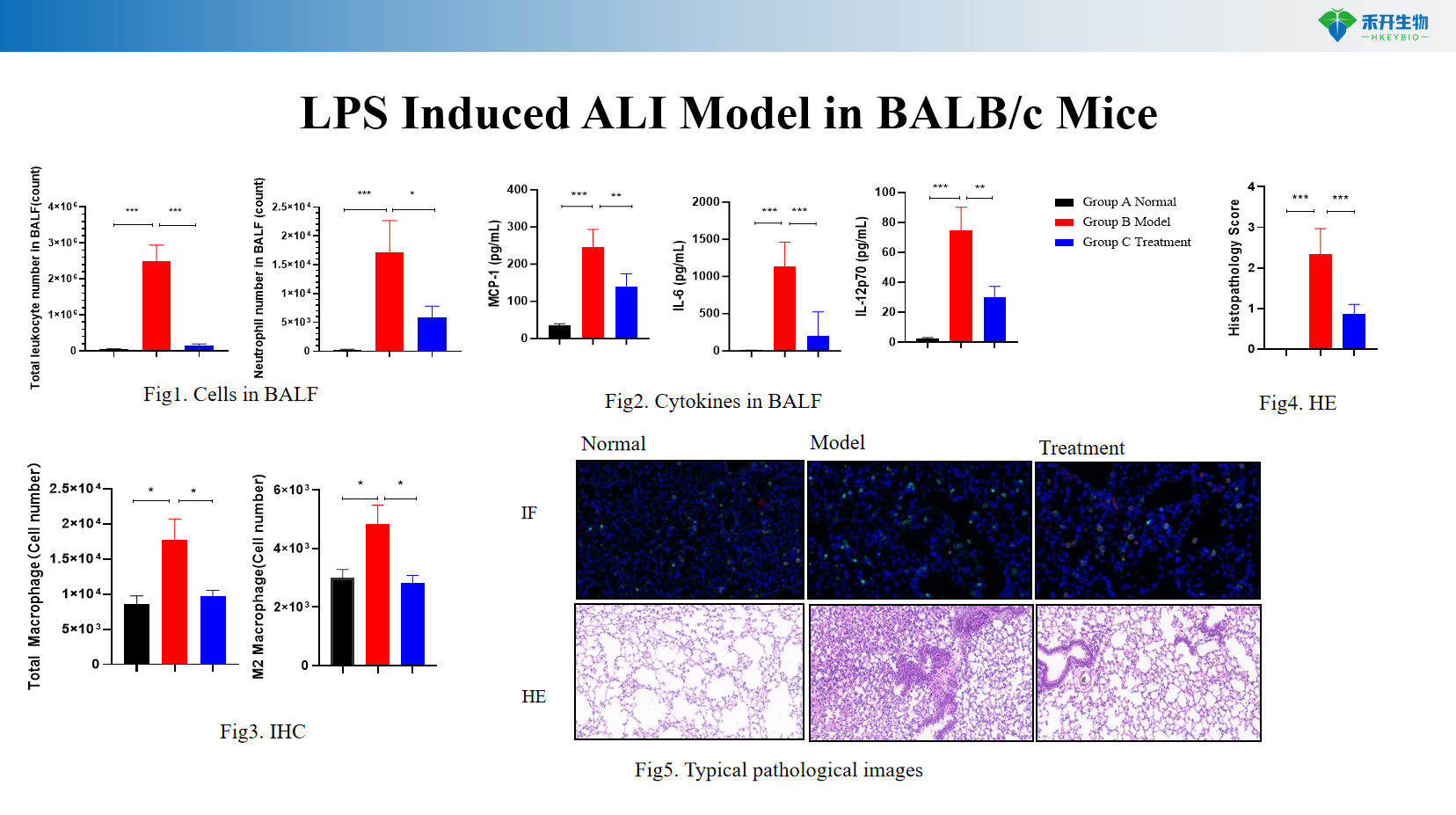
Composite endpoint – BALF cell count (lymphocytes, neutrophils, macrophages), cytokine analysis (MCP-1, IL-6, IL-10), lung histopathology (HE, IHC), pulmonary edema assessment (wet/dry ratio).
Mechanistically driven —LPS activates TLR4 signaling, triggering the NF-κB pathway and a strong inflammatory response, reflecting lung injury caused by Gram-negative sepsis.
Translational Value – Ideal for testing anti-inflammatory drugs, cytokine inhibitors, neutrophil elastase inhibitors, and cell therapies.
IND Ready Packet – Research can be conducted in accordance with GLP principles.
Technical data and verification
LPS-induced ALI model in BALB/c mice
Application areas
• Efficacy testing of anti-inflammatory drugs (corticosteroids, NSAIDs), cytokine inhibitors (anti-IL-6, anti-TNF-α) and neutrophil elastase inhibitors
• Evaluation of mesenchymal stem cell (MSC) therapies and extracellular vesicle-based therapies
• Target validation of TLR4 signaling, NF-κB pathway, and inflammatory cascade
• Biomarker discovery (BALF cell profile, cytokine profile, lung injury markers)
• Pharmacology and toxicology studies to support IND
Model specifications
scope | Specification |
Species/Strain | BALB/c mouse |
induction method | Administer lipopolysaccharide (LPS, 5–10 mg/kg) intratracheally, intranasally, or intraperitoneally |
study time | Acute: 6-48 hours after LPS administration |
critical endpoint | BALF cell count (total and differential: neutrophils, macrophages, lymphocytes), BALF cytokine levels (MCP-1, IL-6, IL-10, determined by ELISA), lung histopathology (HE staining and lung injury score), inflammatory markers immunohistochemistry (IHC), lung wet/dry weight ratio (pulmonary edema), optional: MPO activity, oxidative stress markers |
packet | Raw data, analysis report, BALF cell count, ELISA results, histology slides (HE, IHC), bioinformatics (optional) |
❓ FAQ
Question: How does LPS cause acute lung injury in mice?
Answer: LPS binds to TLR4 on immune cells and activates the NF-κB and MAPK pathways, leading to a strong inflammatory response accompanied by cytokine release (IL-6, TNF-α, MCP-1), neutrophil recruitment to the lungs, increased vascular permeability and alveolar damage, which is very similar to ALI induced by Gram-negative sepsis.
Q: What are the main similarities to human ALI/ARDS?
A: This model exhibits the same neutrophil infiltration, elevated pro-inflammatory cytokines, pulmonary edema, and histopathological features (alveolar thickening, hyaline membrane formation) as human ALI/ARDS.
Q: Can this model be used for IND support studies?
Answer: Yes. Studies can be conducted according to GLP principles for regulatory submissions (FDA, EMA).
Q: Do you offer customized study protocols (e.g., different LPS doses, routes of administration, time points)?
Answer: Of course. Our scientific team customizes LPS dosing regimens, routes of administration, and endpoint analysis based on your specific drug candidate.


