Main features and benefits
Clinically Relevant - Two models capture key features of human EoE: eosinophil infiltration, Th2 inflammation, and epithelial dysfunction.
Mechanistic diversity —IL-33 model reflects alarmin-driven Th2 response; OXA model represents hapten-induced allergic inflammation.
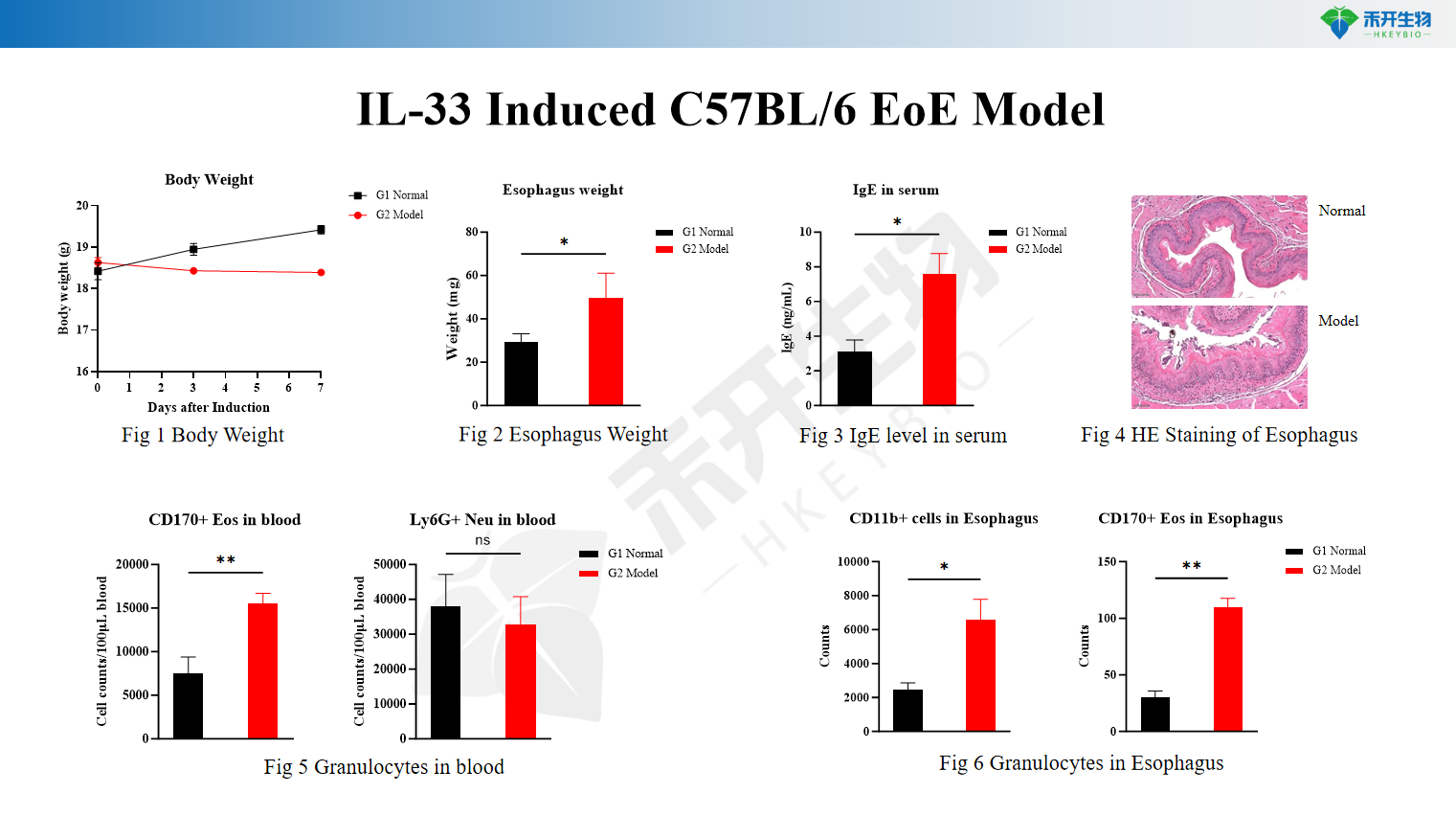
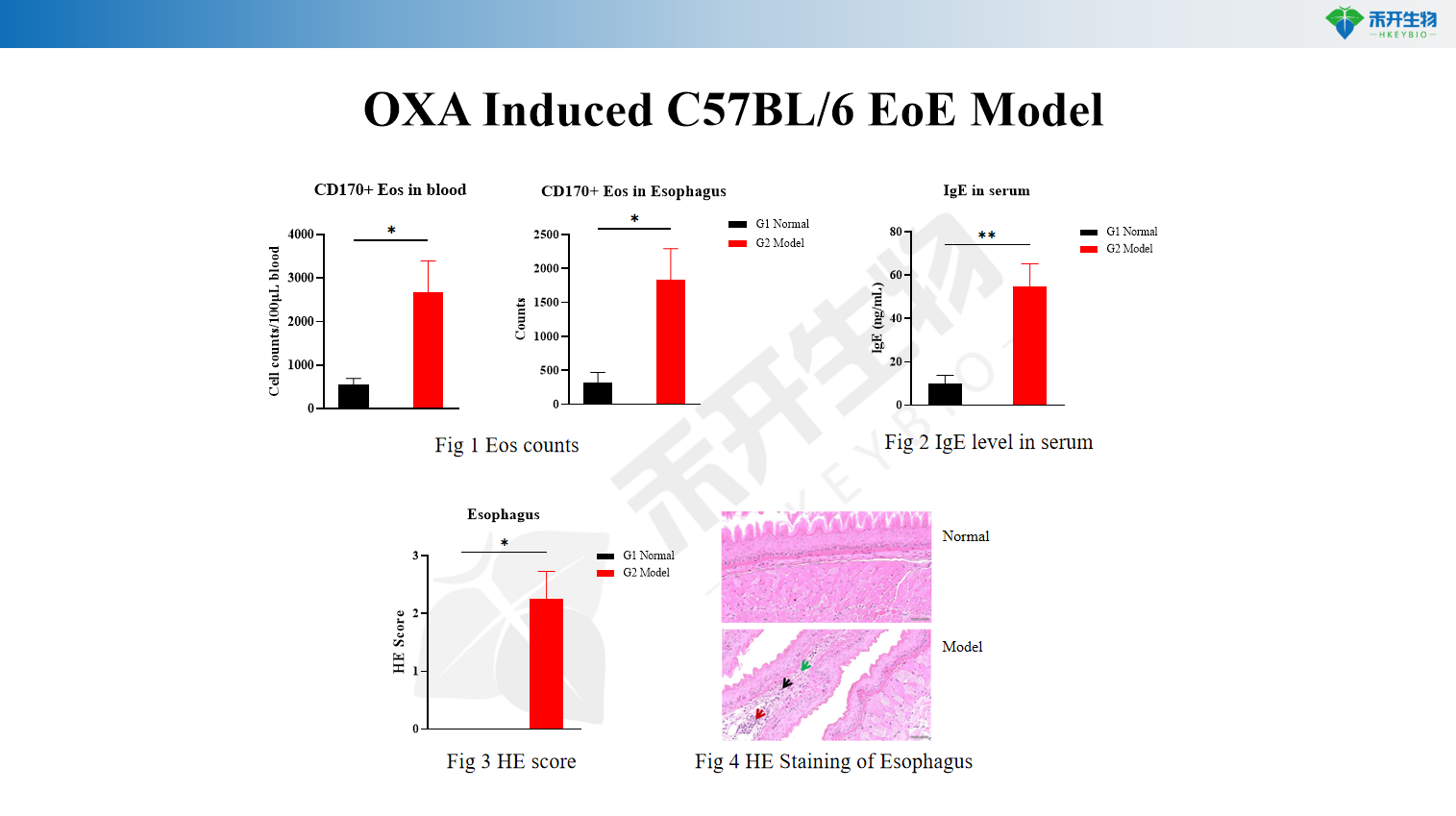
Quantifiable endpoints - body weight, esophageal weight, serum IgE, eosinophil counts in blood and esophagus, histopathological score (HE), granulocyte analysis.
Translational Value – Ideal for testing anti-IL-5, anti-IL-13, anti-IL-33, JAK inhibitors, and steroid-sparing therapies.
IND Ready Packet – Research can be conducted in accordance with GLP principles.
Technical data and verification
IL-33 induces C57BL/6 EoE model
OXA Induction C57BL/6 EoE model
Application areas
• Efficacy testing of biologics (anti-IL-5, anti-IL-13, anti-IL-33, anti-Siglec-8), JAK inhibitors, and corticosteroids
• Target validation of the Th2 pathway and eosinophil recruitment
• Biomarker discovery (IgE, eosinophil-derived mediators, cytokines)
• Mechanism of action (MOA) studies in eosinophilic diseases
• Pharmacological studies to support IND
Model specifications
scope | IL-33 induced EoE model | OXA-induced EoE model |
tension | C57BL/6 mouse | C57BL/6 mouse |
induction method | Recombinant IL-33 (intraperitoneal or intranasal), multiple doses over 5-14 days | OXA-induced skin sensitization followed by intraluminal OXA challenge |
study time | 7–21 days | 10–18 days (sensitization + challenge) |
critical endpoint | Body weight, esophageal weight, serum IgE, eosinophil count in blood and esophagus (flow cytometry), HE staining score, granulocyte analysis | Esophageal eosinophil count, serum IgE, HE staining score, esophageal histopathology, Th2 cytokine levels (IL-4, IL-5, IL-13) |
packet | Raw data, analysis reports, flow cytometry files, histology slides (HE), bioinformatics (optional) |
❓ FAQ
Q: What is the difference between IL-33 and OXA-induced EoE models?
A: The IL-33 model directly activates group 2 innate lymphocytes (ILC2) and drives Th2 inflammation through alarm signaling, mimicking epithelial-derived cytokine-driven EoE. The OXA model is a hapten-induced delayed-type hypersensitivity model that activates Th2 cells through antigen presentation and represents allergen-triggered EoE.
Q: Which model is best for testing anti-IL-33 therapies?
Answer: The IL-33 induction model is the most direct choice for evaluating IL-33/ST2 pathway inhibitors. The OXA model is more suitable for testing a broader range of immune modulators targeting T cell activation and Th2 cytokines.
Q: Can these models be used for IND support studies?
Answer: Yes. Studies can be conducted according to GLP principles for regulatory submissions (FDA, EMA).
Q: Do you offer customized study protocols (e.g., different dosing regimens, combinations with food allergens)?
Answer: Of course. Our scientific team tailors induction protocols, treatment plans and endpoint analyzes for your specific drug candidate.


