Key Features & Benefits
Clinically relevant – MSU crystal-induced inflammation mimics human gout pathogenesis, including NLRP3 inflammasome activation and IL-1β release.
Two strain options – BALB/c and C57BL/6 models available to suit different genetic backgrounds and experimental needs.
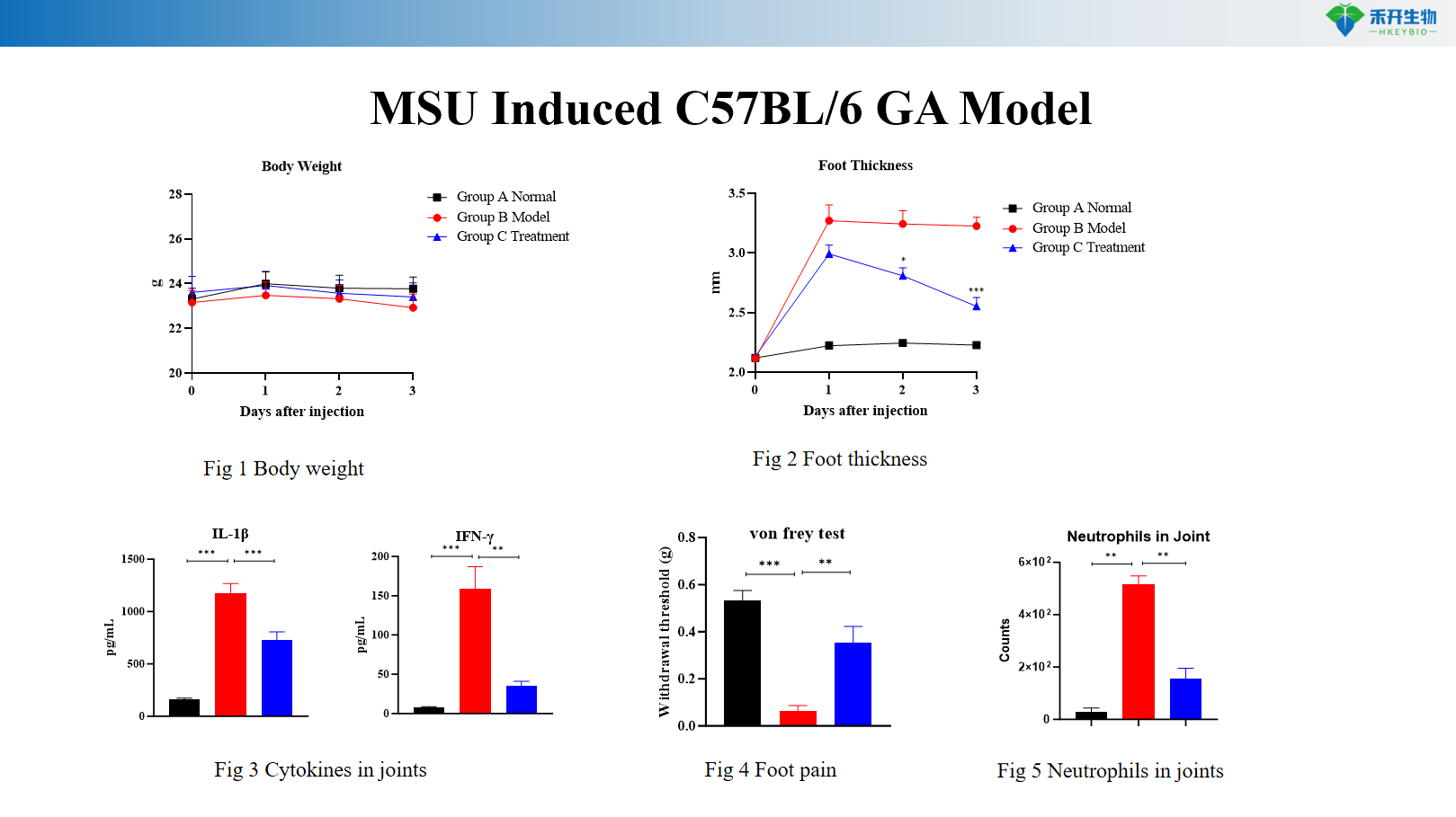
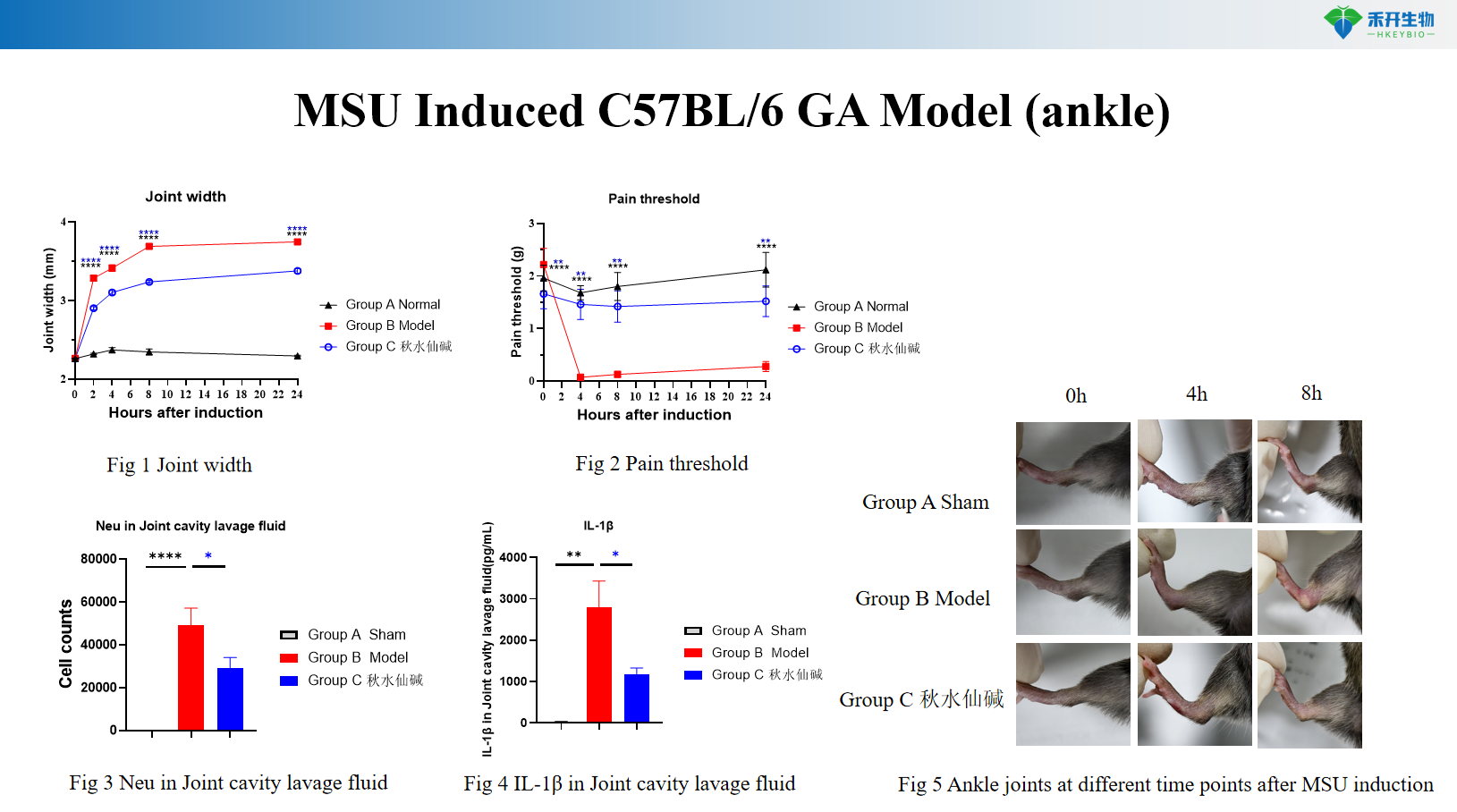
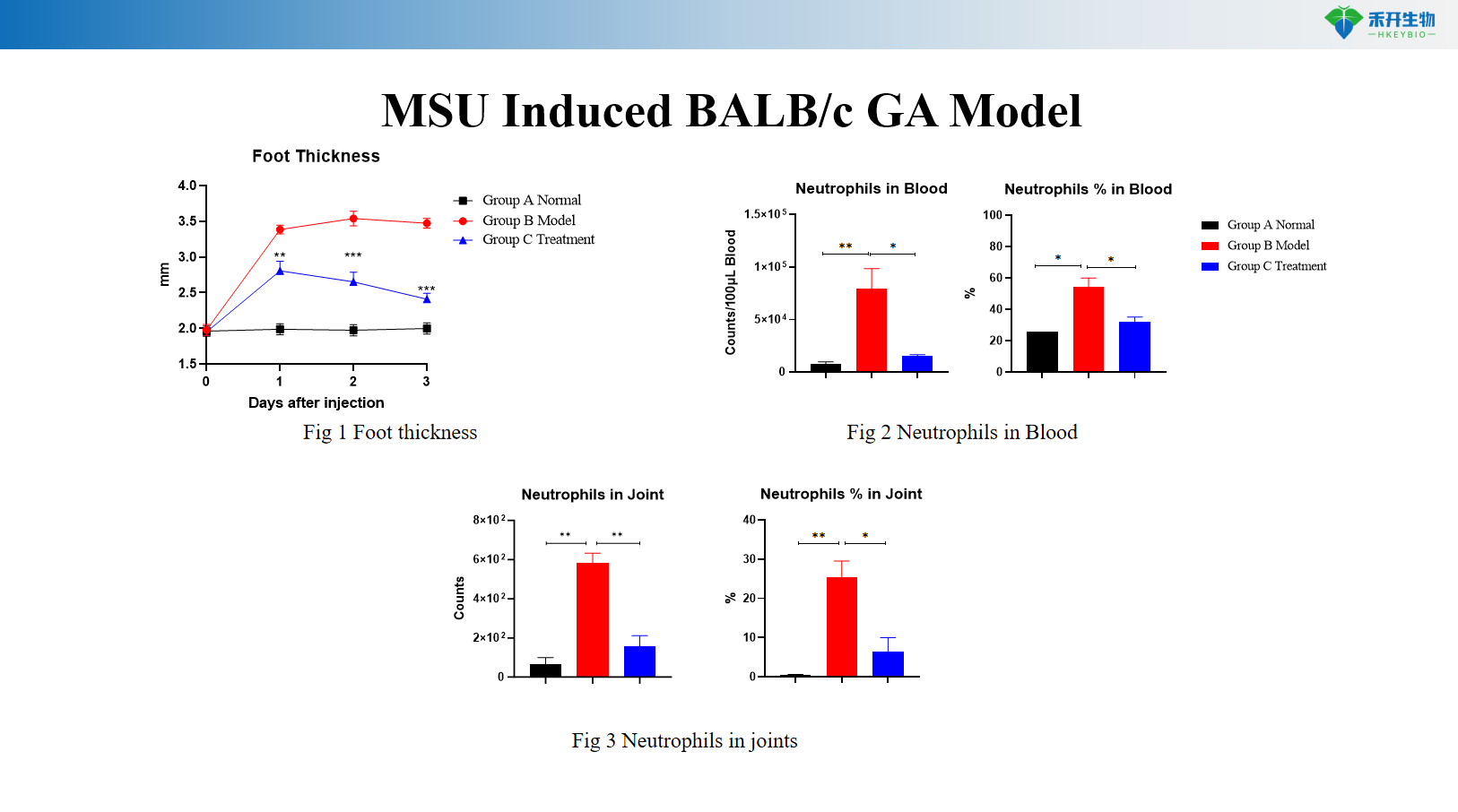
Quantifiable endpoints – Foot thickness/joint width, body weight, pain threshold (mechanical allodynia), neutrophil counts in blood and joints, cytokine levels (IL-1β, IFN-γ).
Translational value – Ideal for testing IL-1 inhibitors (canakinumab, rilonacept), NLRP3 inflammasome inhibitors, colchicine, NSAIDs, and urate-lowering therapies.
IND-ready data packages – Studies can be conducted in accordance with GLP principles.
Technical Data & Validation
Representative data from our MSU Induced Mouse GA models:
MSU Induced C57BL/6 GA Model
MSU Induced C57BL/6 GA Model (ankle)
MSU Induced BALB/c GA Model
Applications
• Efficacy testing of anti-inflammatory drugs (IL-1 inhibitors, NLRP3 inflammasome inhibitors, colchicine, NSAIDs, corticosteroids)
• Target validation for IL-1β, NLRP3, and neutrophil recruitment pathways
• Biomarker discovery (IL-1β, neutrophil markers, pain-related mediators)
• Mechanism of action (MOA) studies for anti-gout compounds
• IND-enabling pharmacology studies
Model Specifications
Parameter | MSU Induced BALB/c GA Model | MSU Induced C57BL/6 GA Model |
Strain | BALB/c mouse | C57BL/6 mouse |
Induction method | Intra-articular or periarticular injection of MSU crystals (50-100 μg) | Intra-articular or periarticular injection of MSU crystals (50-100 μg) |
Study duration | 7–14 days post-injection | 7–14 days post-injection |
Key endpoints | Body weight, foot thickness, pain response (mechanical allodynia), blood neutrophil counts, joint neutrophil counts, IL-1β, IFN-γ in joints | Joint width, pain threshold, neutrophil count in joint lavage fluid, IL-1β in joint lavage, serial joint imaging |
Data package | Raw data, analysis reports, clinical measurements, cytokine ELISA data, flow cytometry files, histology slides (optional), bioinformatics (optional) |
❓ Frequently Asked Questions
Q: What are the differences between BALB/c and C57BL/6 GA models?
A: Both strains develop robust MSU-induced inflammation. BALB/c mice typically show stronger Th2 responses, while C57BL/6 mice have more pronounced Th1/neutrophil responses. The choice depends on your specific drug mechanism and desired inflammatory profile.
Q: How is pain assessed in these models?
A: Pain is assessed using mechanical allodynia (von Frey filaments) to measure paw withdrawal threshold, or through spontaneous pain behaviors (guarding, lifting).
Q: Can these models be used for IND-enabling studies?
A: Yes. Studies can be conducted in accordance with GLP principles for regulatory submissions (FDA, EMA).
Q: Do you offer customized study protocols (e.g., different MSU doses, prophylactic vs. therapeutic dosing)?
A: Absolutely. Our scientific team tailors MSU injection protocols, treatment schedules, and endpoint analyses to your specific drug candidate.


