Main features and benefits
Clinical Relevance - LL-37 is a key effector molecule in human rosacea; its injection causes erythema, inflammation, and histopathology similar to that of the disease.
Mechanism-driven – direct activation of innate immune pathways, mimicking neurovascular and inflammatory aspects of rosacea.
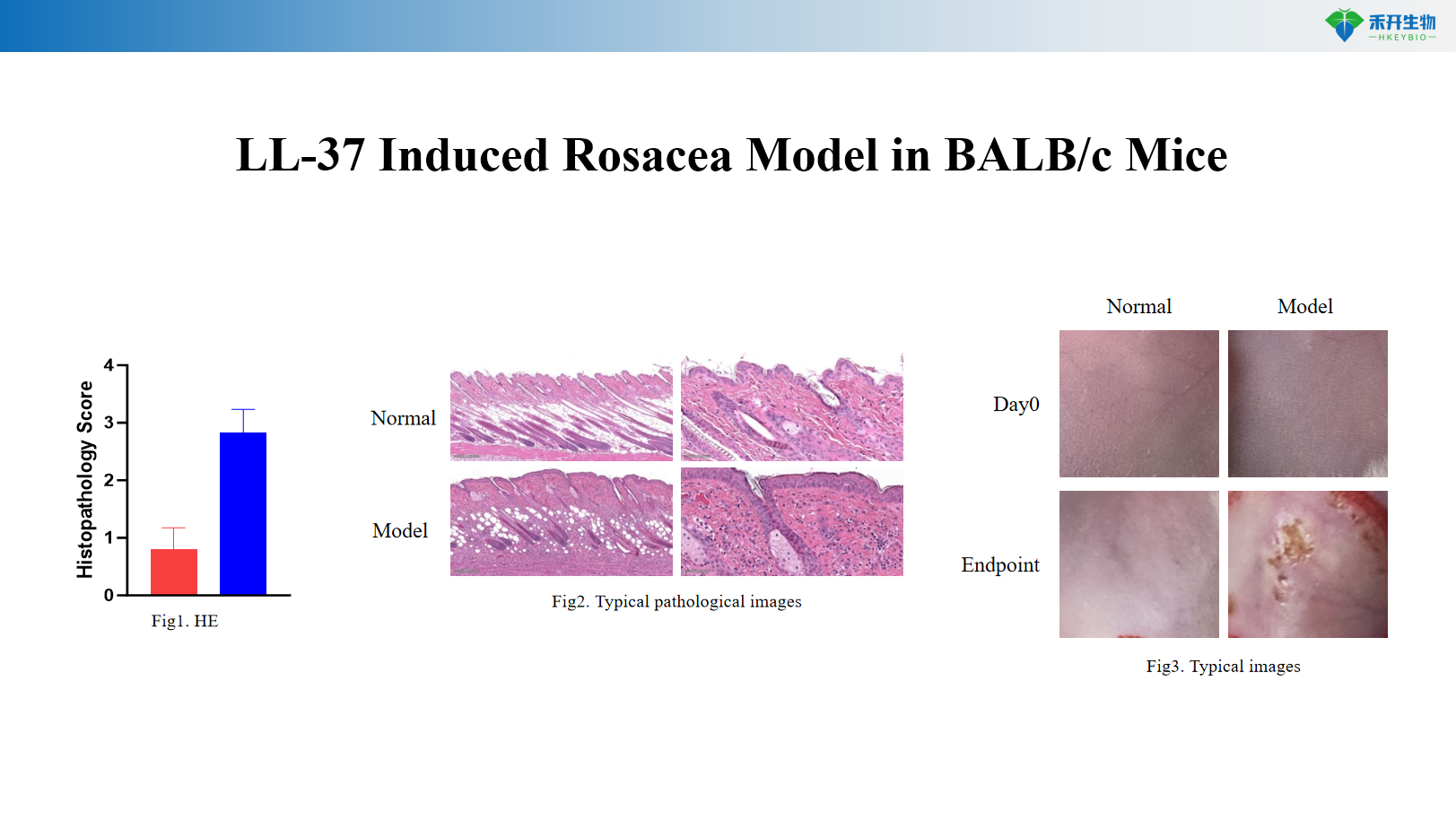
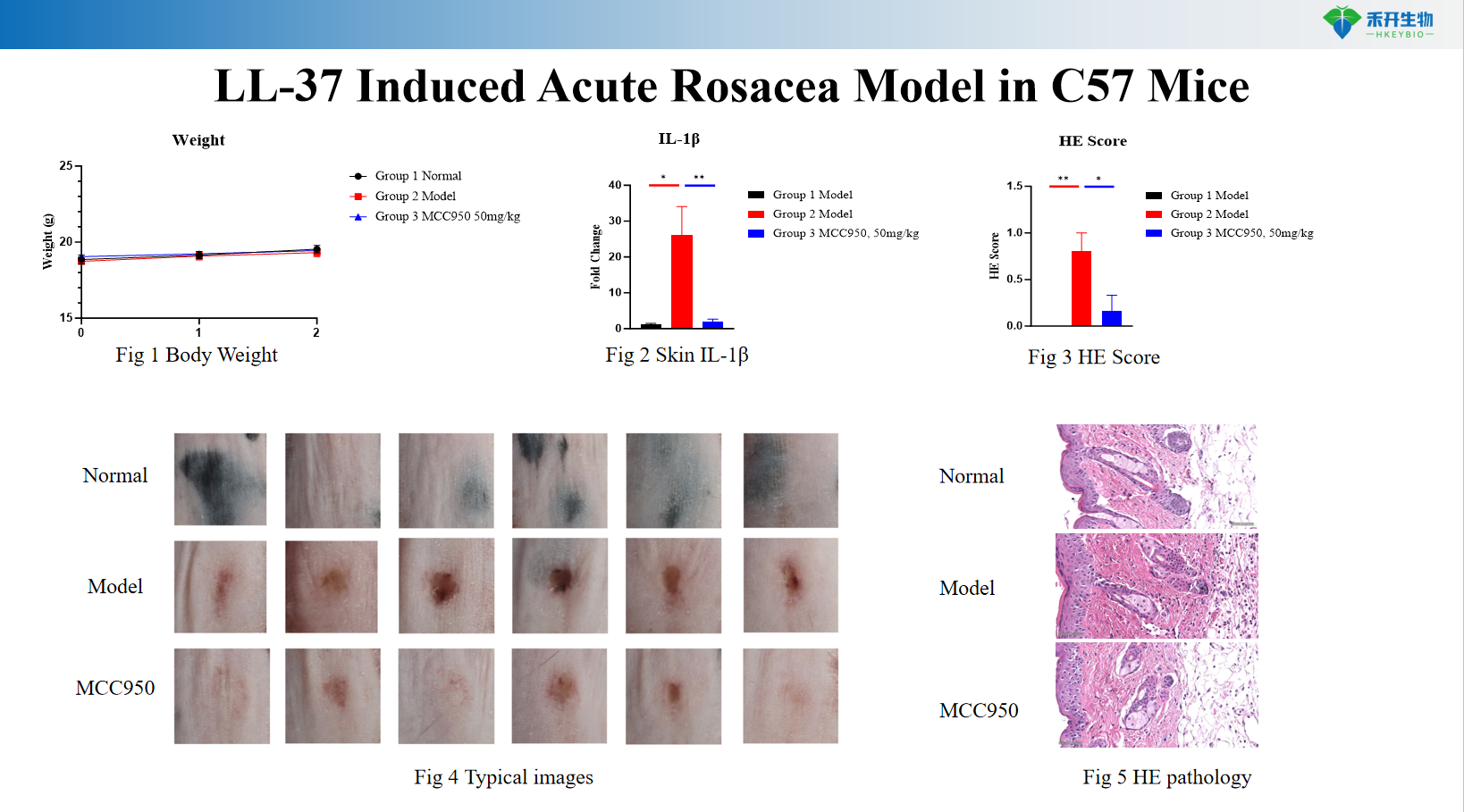
Comprehensive endpoint - body weight, skin IL-1β level, histopathology (HE score), typical pathological images.
Translational value – ideal for testing anti-inflammatory drugs (corticosteroids), vasoconstrictors (brimonidine), and immunomodulators (doxycycline, JAK inhibitors).
IND Ready Packet – Research can be conducted in accordance with GLP principles.
Technical data and verification
LL-37 induces rosacea model in BALB/c mice
LL-37 induces an acute rosacea model in C57 mice
Application areas
• Efficacy testing of topical and systemic anti-inflammatory drugs (corticosteroids, calcineurin inhibitors)
• Evaluation of vasoconstrictors (brimonidine, oxymetazoline), antibiotics (doxycycline, minocycline) and JAK inhibitors
• Target validation of innate immune pathways (cathelicidin, TLR2, inflammasome) and neurovascular regulation
• Biomarker discovery (IL-1β, inflammatory cytokines)
• Pharmacology and toxicology studies to support IND
Model specifications
scope | Specification |
Species/Strain | BALB/c mouse |
induction method | Intradermal injection of synthetic LL-37 peptide (cathelicidin) into shaved skin (single or repeated dose) |
study time | 1–7 days (acute) or up to 14 days (subacute) |
critical endpoint | Body weight, skin IL-1β level (ELISA), histopathology (inflammation HE score, epidermal thickness), clinical photos, optional: erythema score, immunohistochemistry (cathelicidin, TLR2), cytokine analysis (TNF-α, IL-6) |
| positive control | Doxycycline or corticosteroids can be used as reference compounds |
packet | Raw data, analysis reports, ELISA results, histological sections, clinical photos, bioinformatics (optional) |
❓ FAQ
Q: How does LL-37 induce rosacea-like inflammation in mice?
A: LL-37 is an antimicrobial peptide that is elevated in human rosacea. Intradermal injection activates innate immune receptors (TLR2, NLRP3 inflammasome), triggers cytokine release (IL-1β, TNF-α), and induces neurovascular changes leading to erythema, inflammation, and histopathological features similar to human rosacea.
Q: What are the key similarities to human rosacea?
A: This model exhibits erythema, inflammatory cell infiltration, IL-1β elevation, and histopathological changes (epidermal hyperplasia, dermal inflammation) similar to human papulopustular rosacea.
Q: Can this model be used for IND support studies?
Answer: Yes. Studies can be conducted according to GLP principles for regulatory submissions (FDA, EMA).
Q: Do you offer customized study protocols (e.g., different LL-37 doses, treatment times)?
Answer: Of course. Our scientific team tailors induction protocols, treatment plans and endpoint analyzes for your specific drug candidate.
Q: What is the typical timeline for a pilot efficacy study?
A: Acute studies (erythema, IL-1β) can be completed within 24-72 hours; subacute studies (histopathology) usually last 7-14 days.


