Key Features & Benefits
Clinically relevant – DHT induced model mimics human AGA pathogenesis with androgen-mediated follicle miniaturization and hair loss.
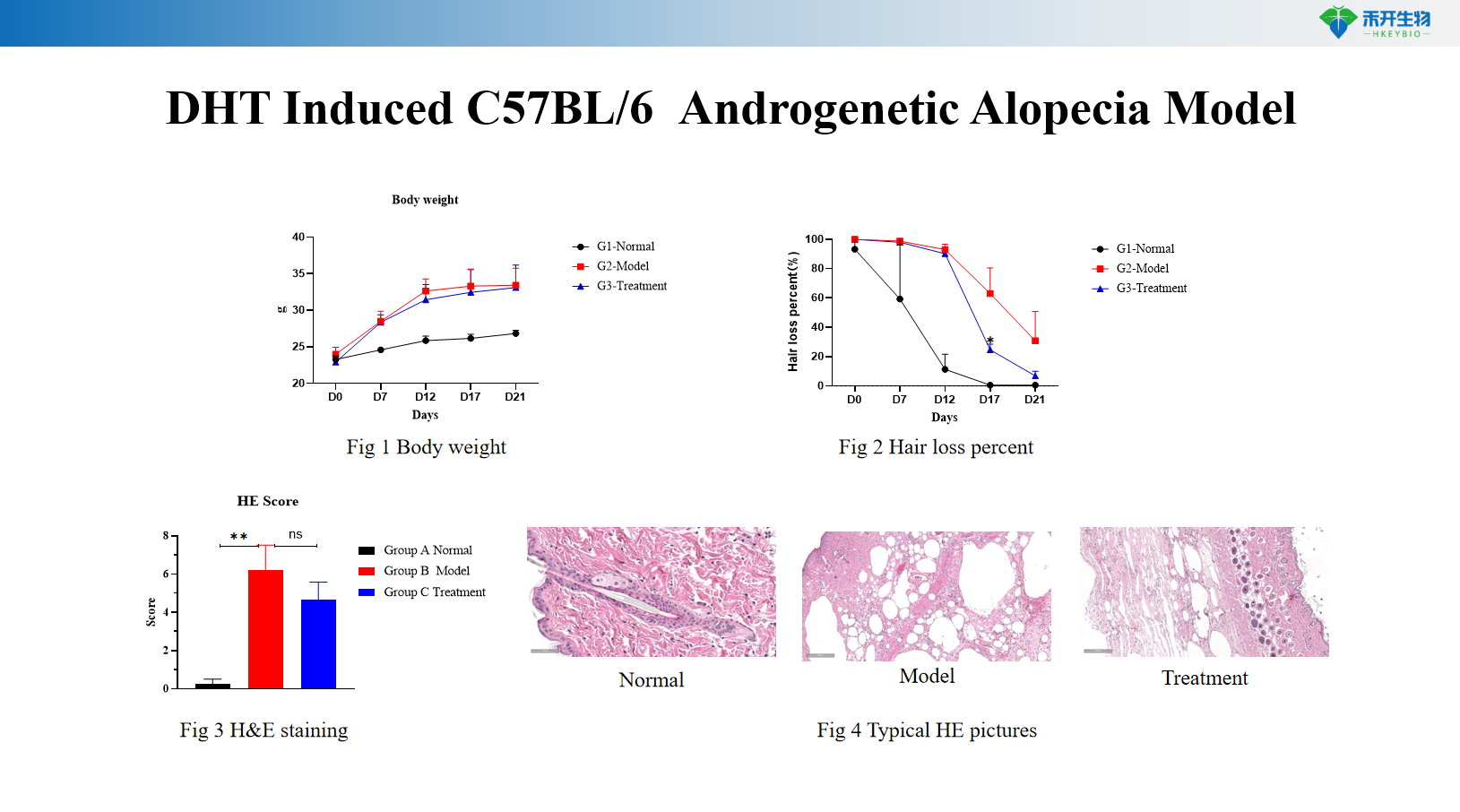
Quantifiable endpoints – Body weight, hair loss percentage (image analysis), skin histopathology (H&E) with follicle count and size measurement.
Mechanism-driven – Direct DHT-AR pathway activation recapitulates the hormonal basis of AGA.
Translational value – Ideal for testing 5α-reductase inhibitors (finasteride, dutasteride), androgen receptor antagonists, and hair growth stimulants (minoxidil).
IND-ready data packages – Studies can be conducted in accordance with GLP principles.
Technical Data & Validation
DHT Induced C57BL/6 Androgenetic Alopecia Model
Applications
• Efficacy testing of 5α-reductase inhibitors (finasteride, dutasteride), androgen receptor antagonists, and hair growth stimulants (minoxidil, plant extracts, peptides)
• Target validation for androgen receptor signaling in hair follicles
• Biomarker discovery (DHT levels, androgen receptor expression, hair cycle markers)
• Mechanism of action (MOA) studies for hair growth compounds
• IND-enabling pharmacology and toxicology studies for hair loss therapeutics
Model Specifications
Parameter | Specificatio |
Species/Strain | C57BL/6 mouse (male) |
Induction method | Topical application or intradermal injection of dihydrotestosterone (DHT) on dorsal skin, daily or multiple times weekly for 2–4 weeks |
Study duration | 2–5 weeks (induction + treatment phase) |
Key endpoints | Body weight, hair loss percentage (image analysis), skin histopathology (H&E) with hair follicle count and size measurement, anagen/telogen ratio, optional: androgen receptor expression, serum DHT levels, immunohistochemistry for Ki67 (proliferation) |
Data package | Raw data, analysis reports, clinical photographs, histology slides, image analysis files, bioinformatics (optional) |
❓ Frequently Asked Questions
Q: How does DHT induce androgenetic alopecia in mice?
A: DHT binds to androgen receptors (AR) in dermal papilla cells, triggering signaling pathways that lead to follicle miniaturization, shortened anagen phase, and progressive hair loss. This mimics the human AGA pathogenesis where 5α-reductase converts testosterone to DHT in susceptible follicles.
Q: What are the key similarities with human AGA?
A: The model exhibits progressive hair loss, follicle miniaturization, reduced follicle density, and response to standard therapies (minoxidil, finasteride), closely resembling human male pattern baldness.
Q: Can this model be used for IND-enabling studies?
A: Yes. Studies can be conducted in accordance with GLP principles for regulatory submissions (FDA, EMA).
Q: Do you offer customized study protocols (e.g., different DHT doses, topical vs. systemic administration, combination with other agents)?
A: Absolutely. Our scientific team tailors DHT dosing regimens, application methods, and endpoint analyses to your specific drug candidate.


