Key Features & Benefits
Multiple etiologies – Chemical (BLM) and occupational (silica) induced models covering different IPF pathogenic mechanisms.
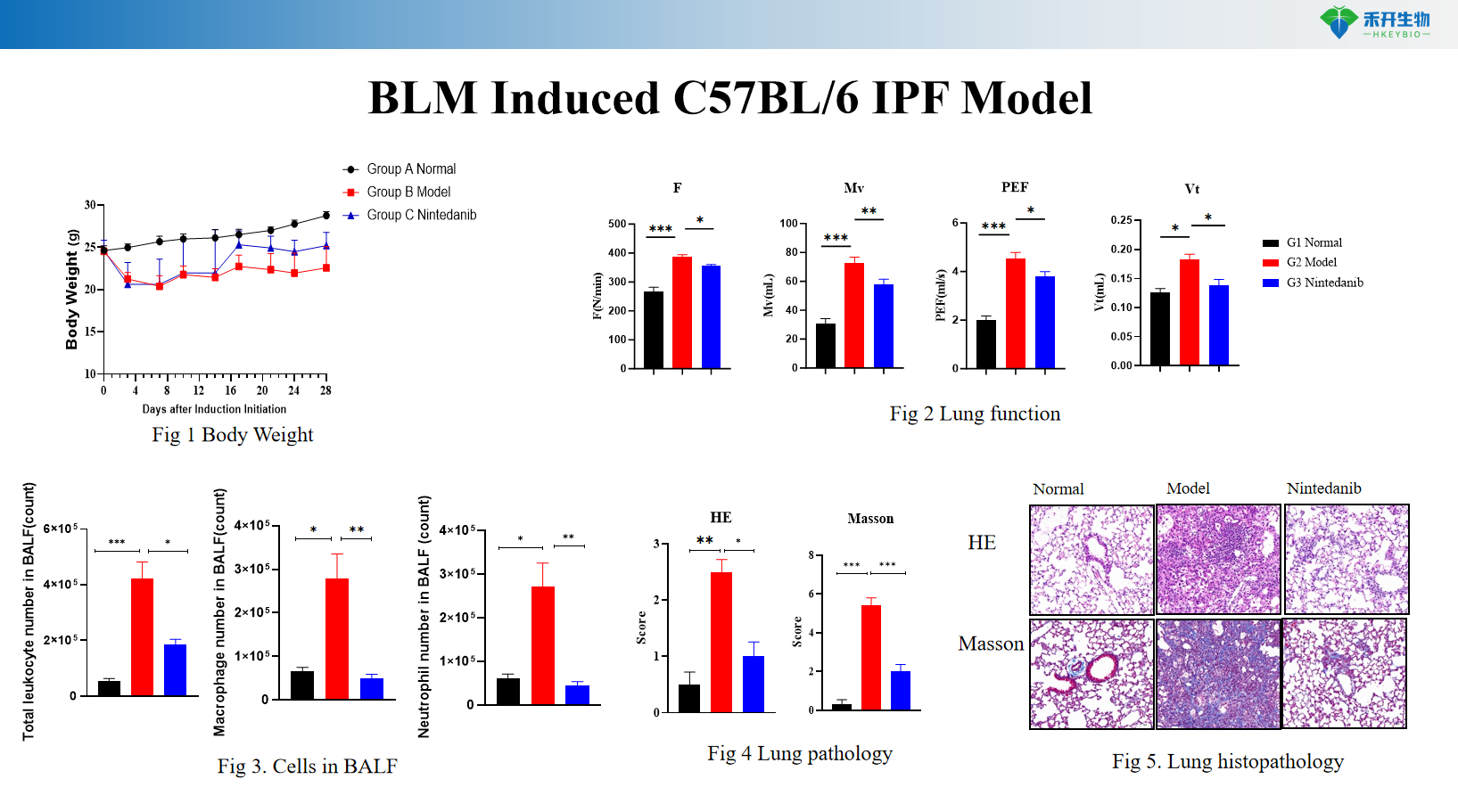
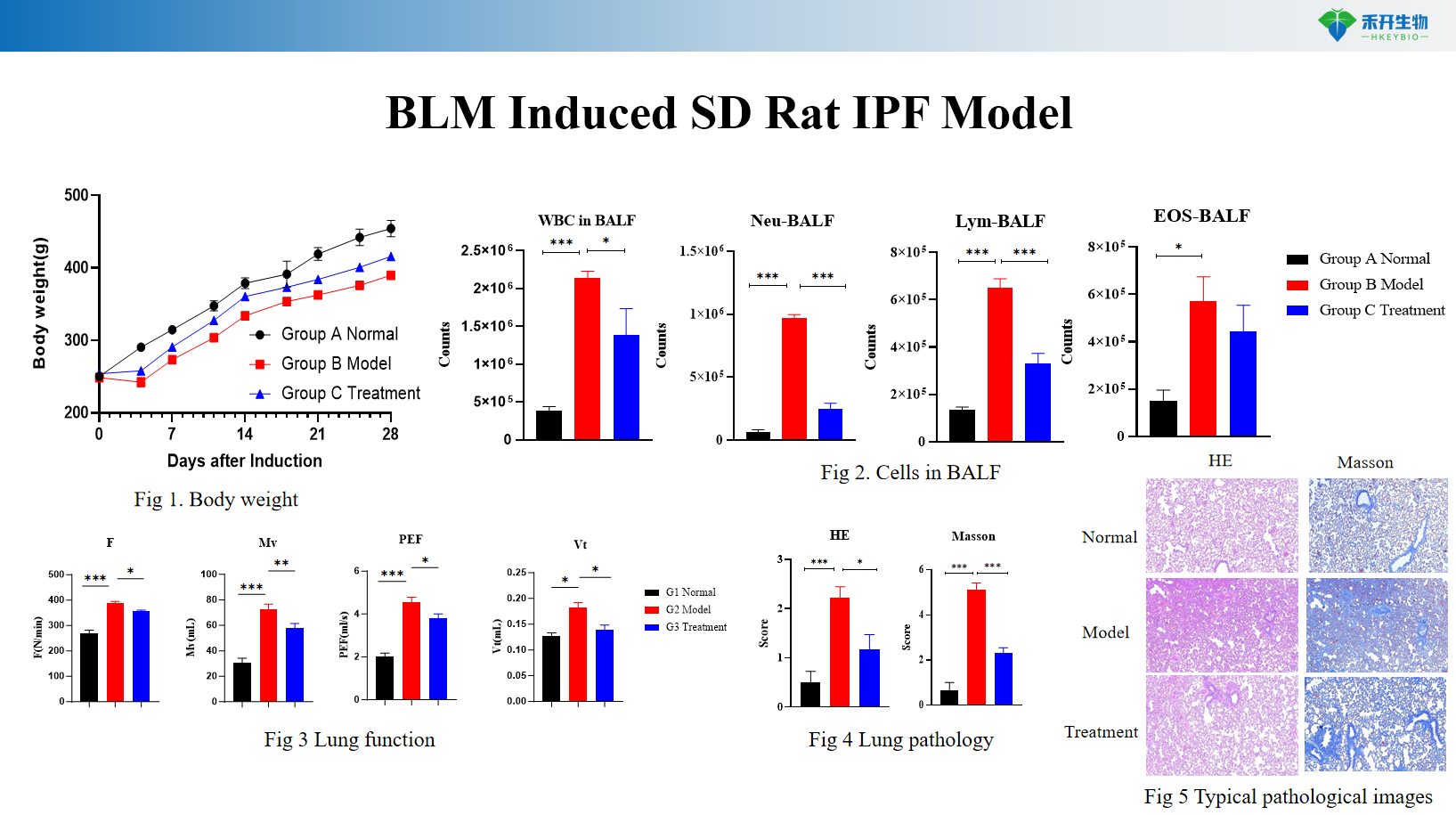
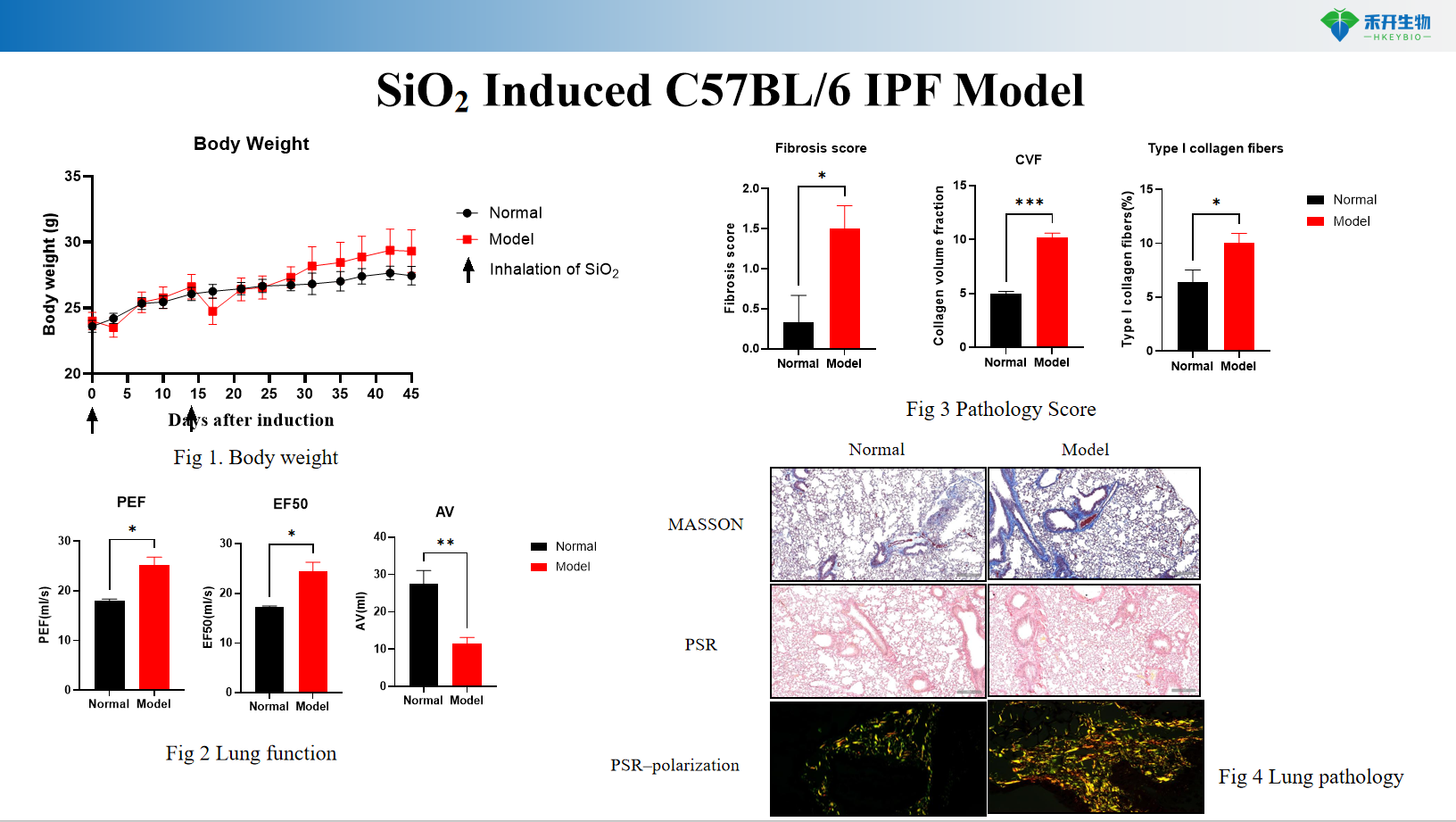
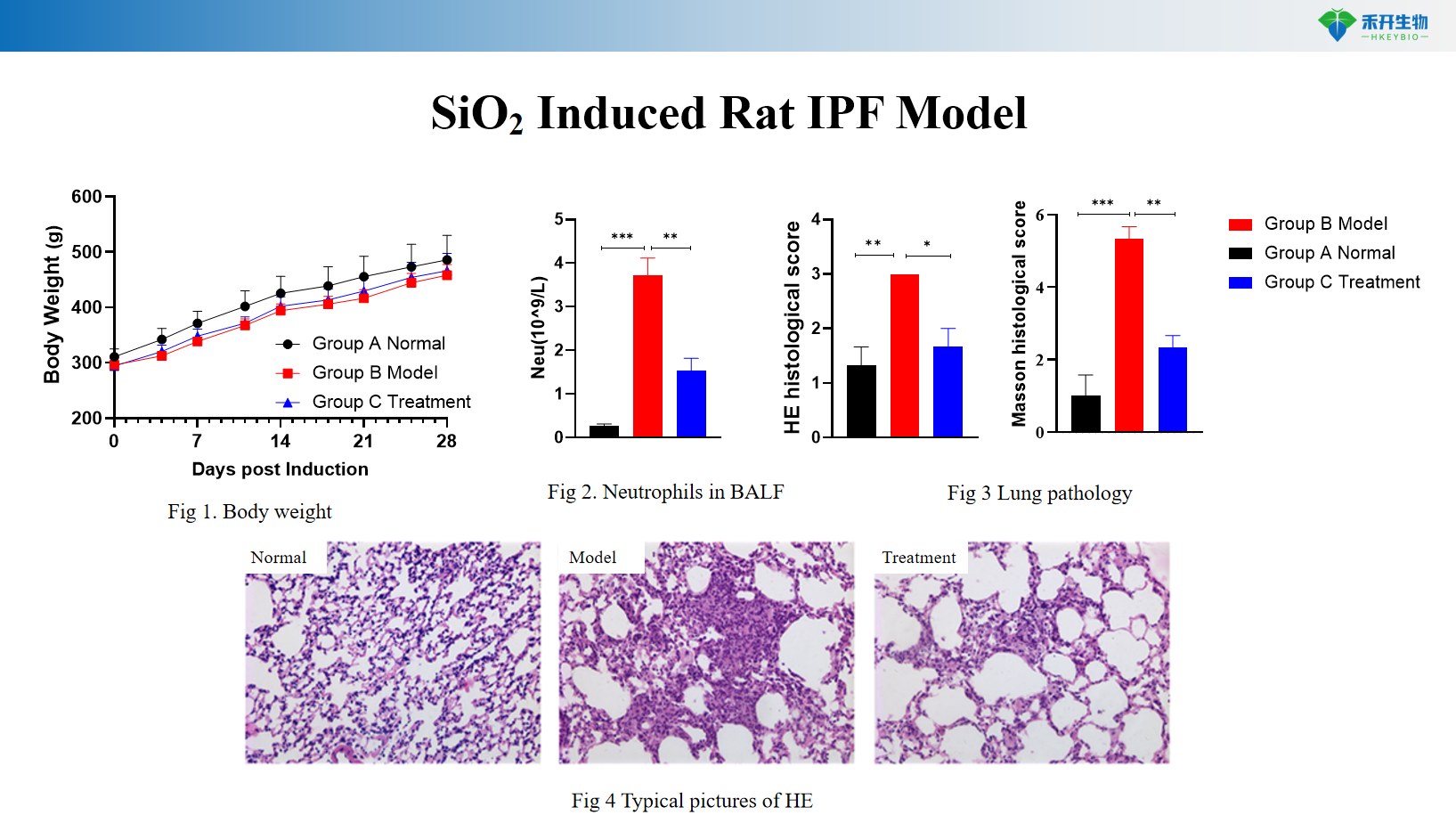
Comprehensive endpoints – Body weight, BALF cytology (inflammatory cells), lung function, histopathology (HE, Masson, PSR), pathology scoring.
Translational value – Ideal for testing anti-fibrotic drugs (nintedanib, pirfenidone), TGF-β inhibitors, and novel therapeutic candidates.
Species options – Rat and mouse models available to suit different experimental requirements.
IND-ready data packages – Studies can be conducted in accordance with GLP principles.
Technical Data & Validation
Representative data from our NHP Atopic Dermatitis (AD) Model:
BLM Induced C57BL/6 IPF Model
BLM Induced SD Rat IPF Model
SiO2 Induced C57BL/6 IPF Model
SiO2 Induced Rat IPF Model
Applications
• Efficacy testing of anti-fibrotic drugs (nintedanib, pirfenidone, TGF-β inhibitors, lysyl oxidase inhibitors)
• Target validation for fibrotic pathways (TGF-β, CTGF, PDGF)
• Biomarker discovery (collagen deposition markers, inflammatory mediators)
• Mechanism of action (MOA) studies
• IND-enabling pharmacology and toxicology studies
Model Specifications
Parameter | BLM Induced Rat IPF | SiO2 Induced Mouse IPF | SiOx Induced Rat IPF |
Species/Strain | Sprague-Dawley rat | C57BL/6 mouse | Sprague-Dawley rat |
Induction method | Intratracheal bleomycin (single dose) | Intratracheal SiO2 (single dose) | Intratracheal crystalline silica (SiOx) |
Study duration | 14–28 days | 45 days | 28–56 days |
Key endpoints | Body weight, BALF cytology (total cells, differential), lung function, histopathology (HE, Masson), pathology scoring | Body weight, lung function, pathology score, histopathology (HE, Masson, PSR) | Body weight, BALF neutrophils, histopathology (HE, Masson, PSR) |
Data package | Raw data, analysis reports, BALF cytology, histology slides (HE, Masson, PSR), lung function data, bioinformatics (optional) |
❓ Frequently Asked Questions
Q1: What IPF models do you provide and what are their principles? A1: We offer four mature rodent IPF models: BLM-induced and SiO2-induced models in C57BL/6 mice and SD rats. Bleomycin (BLM) triggers lung inflammation and fibrosis, while silicon dioxide (SiO₂) simulates fibrosis caused by silica exposure, both recapitulating the pathological features of idiopathic pulmonary fibrosis.
Q2: What evaluation indicators are used for these IPF models? A2: Core assessments include body weight monitoring, lung function detection and bronchoalveolar lavage fluid (BALF) cell analysis. We also test hydroxyproline levels and perform pathological staining with HE, Masson and PSR for comprehensive fibrosis evaluation.
Q3: What are the modeling cycles of different IPF models? A3: BLM-induced models: Single administration on Day 0, and animals are sacrificed on Day 28. SiO₂-induced mouse model: One-time dosing on Day 0, followed by sampling on Day 45. SiO₂-induced rat model: Dosing on Day 0 and sacrifice on Day 28.
Q4: What research scenarios are these IPF models suitable for? A4: They are widely applied in preclinical efficacy screening, mechanism research and safety assessment of anti-fibrotic drugs, anti-inflammatory agents and targeted therapeutics for interstitial lung diseases and pulmonary fibrosis.
Q5: What are the advantages of your IPF animal models? A5: These models feature stable molding effects and typical pathological changes highly consistent with human IPF. Multiple detection indicators support multi-dimensional data analysis. They are reliable and cost-effective for high-throughput preclinical drug development


