Key Features & Benefits
Clinically relevant – R97-116 peptide induced EAMG closely mimics human MG with antibody-mediated pathology and muscle weakness.
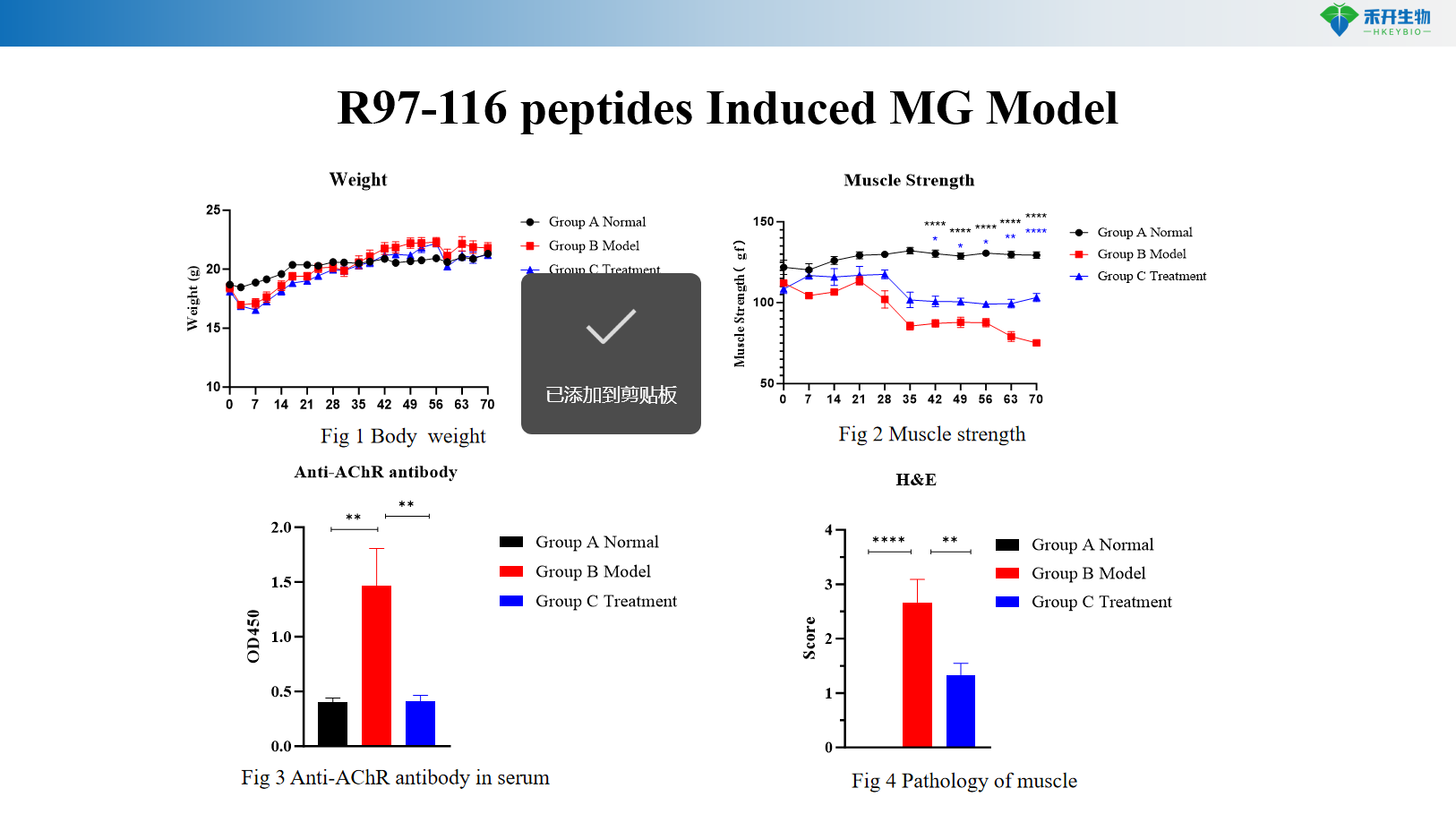
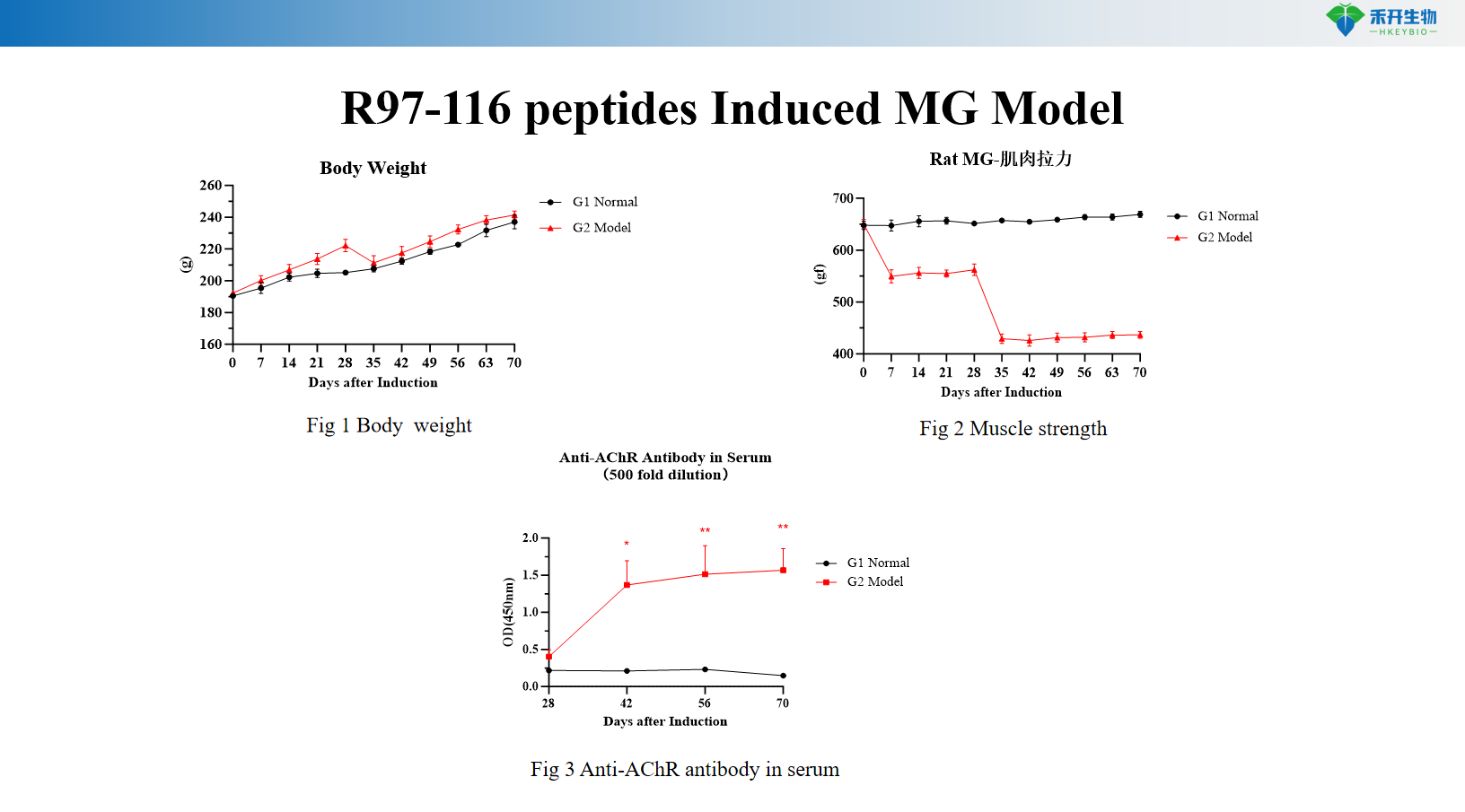
Well-characterized endpoints – Body weight, muscle strength (grip strength test), serum anti-AChR antibody levels (ELISA), muscle histopathology (H&E).
Translational value – Ideal for testing immunomodulators, FcRn inhibitors, complement inhibitors, and antigen-specific therapies.
Species options – Available in both Lewis rat and C57BL/6 mouse strains.
IND-ready data packages – Studies can be conducted in accordance with GLP principles.
ATechnical Data & Validation
R97-116 peptides Induced MG Model
Applications
• Efficacy testing of immunomodulators (corticosteroids, mycophenolate, cyclosporine), FcRn inhibitors, complement inhibitors (anti-C5), and biologics
• Target validation for AChR antibody-mediated pathology
• Biomarker discovery (anti-AChR antibodies, complement factors)
• Mechanism of action (MOA) studies for autoimmune neuromuscular disorders
• IND-enabling pharmacology studies
Model Specifications
Parameter | Rat MG Model | Mouse MG Model |
Species/Strain | Lewis rat | C57BL/6 mouse |
Induction method | Immunization with R97-116 peptide (AChR α subunit 97-116) in CFA, with booster immunizations |
Study duration | 4–8 weeks | 4–8 weeks |
Key endpoints | Body weight, muscle strength (grip strength), serum anti-AChR antibody titers, muscle histopathology (H&E), neuromuscular junction analysis (optional) | Body weight, muscle strength, serum anti-AChR antibodies |
Data package | Raw data, analysis reports, grip strength measurements, ELISA data, histology slides, bioinformatics (optional) |
❓ Frequently Asked Questions
Q1: What is the R97-116 peptides induced MG model? A1: It is an experimental autoimmune myasthenia gravis (EAMG) model established by immunizing animals with R97-116 peptides. It recapitulates the pathological features of human myasthenia gravis, an autoimmune disease damaging neuromuscular transmission.
Q2: What animal species are used for this MG model? A2: We adopt C57BL/6 mice and Lewis rats to build the R97-116 peptides induced MG model. Both are well-recognized tools for preclinical MG research.
Q3: What evaluation indicators are applied in the model assessment? A3: We monitor multiple indicators including body weight, muscle strength, serum anti-AChR antibody level and muscle histopathology via H&E staining for comprehensive evaluation.
Q4: What is the modeling cycle and key timeline? A4: The modeling starts with R97-116 peptide immunization on Day 0. Relevant observations and detections will last until Day 70 to assess the progression of MG symptoms.
Q5: What are the main applications and advantages of this MG model? A5: This stable and reproducible model perfectly simulates the pathogenesis of human MG. It is ideal for efficacy screening and mechanism research of novel drugs and therapeutic strategies against myasthenia gravis.


