Key Features & Benefits
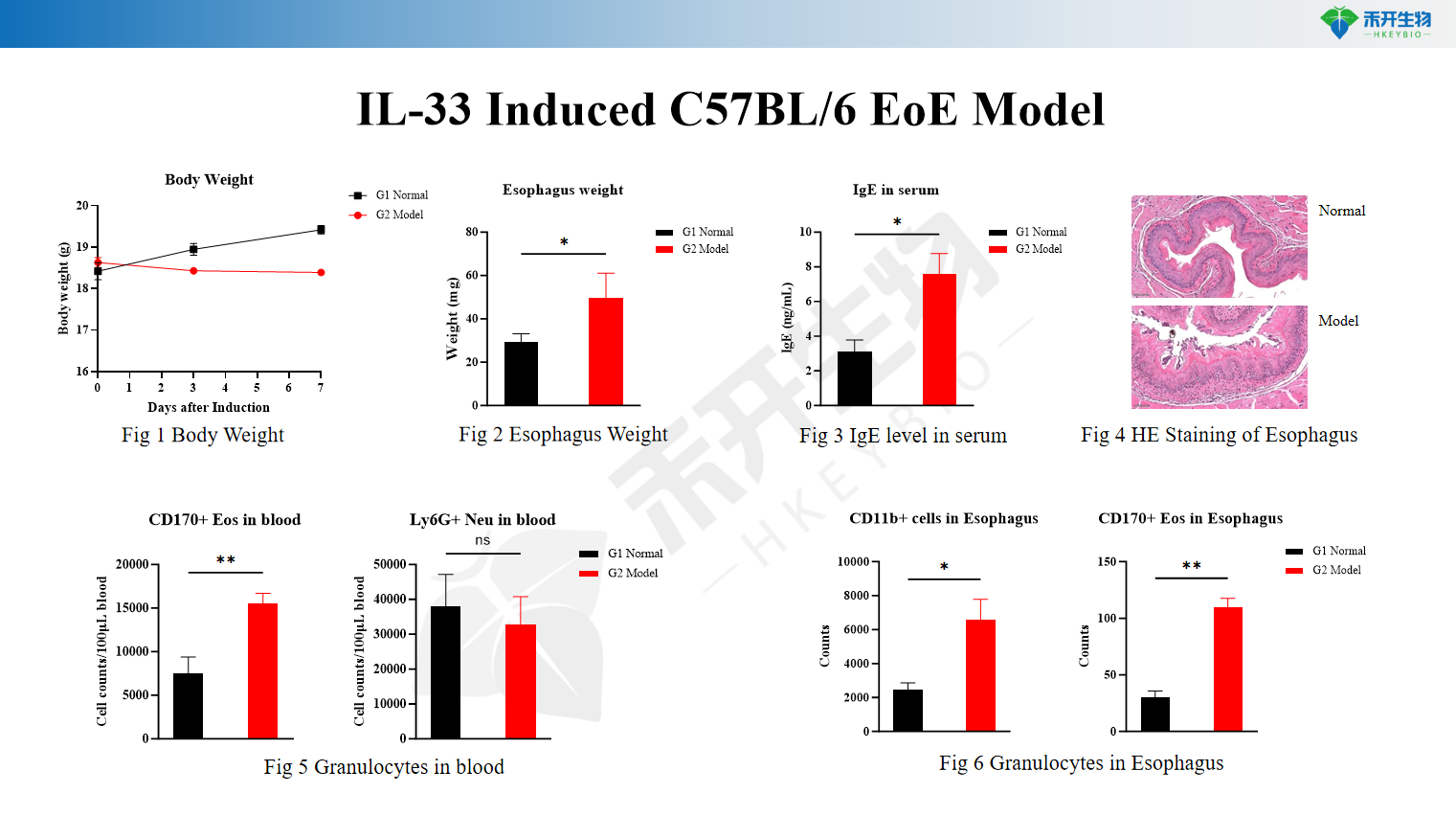
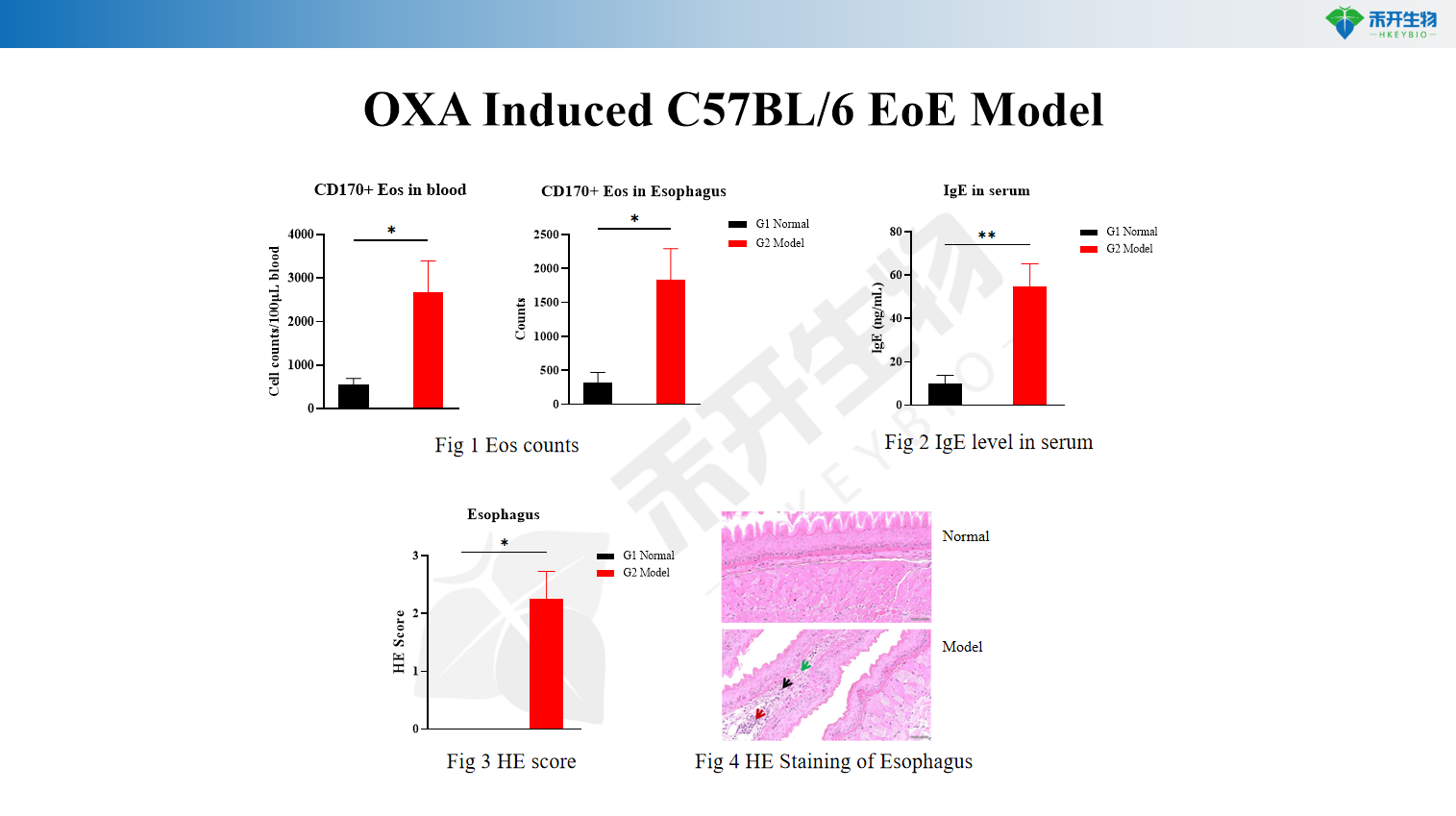
Clinically relevant – Two models capture key human EoE features: eosinophilic infiltration, Th2 inflammation, and epithelial dysfunction.
Mechanism diversity – IL-33 model reflects alarmin-driven Th2 response; OXA model represents hapten-induced allergic inflammation.
Quantifiable endpoints – Body weight, esophagus weight, serum IgE, eosinophil counts in blood and esophagus, histopathology scores (HE), granulocyte analysis.
Translational value – Ideal for testing anti-IL-5, anti-IL-13, anti-IL-33, JAK inhibitors, and steroid-sparing therapies.
IND-ready data packages – Studies can be conducted in accordance with GLP principles.
Technical Data & Validation
IL-33 Induced C57BL/6 EoE Model
OXA Induced C57BL/6 EoE Model
Applications
• Efficacy testing of biologics (anti-IL-5, anti-IL-13, anti-IL-33, anti-Siglec-8), JAK inhibitors, and corticosteroids
• Target validation for Th2 pathways and eosinophil recruitment
• Biomarker discovery (IgE, eosinophil-derived mediators, cytokines)
• Mechanism of action (MOA) studies for eosinophilic disorders
• IND-enabling pharmacology studies
Model Specifications
Parameter | IL-33 Induced EoE Model | OXA Induced EoE Model |
Strain | C57BL/6 mouse | C57BL/6 mouse |
Induction method | Recombinant IL-33 (i.p. or intranasal), multiple doses over 5–14 days | Skin sensitization with OXA followed by intraluminal OXA challenge |
Study duration | 7–21 days | 10–18 days (sensitization + challenge) |
Key endpoints | Body weight, esophagus weight, serum IgE, eosinophil counts in blood and esophagus (flow cytometry), HE staining score, granulocyte analysis | Eosinophil counts in esophagus, serum IgE, HE staining score, esophageal histopathology, Th2 cytokine levels (IL-4, IL-5, IL-13) |
Data package | Raw data, analysis reports, flow cytometry files, histology slides (HE), bioinformatics (optional) |
❓ Frequently Asked Questions
Q1: What EoE preclinical models do you offer? A1: We provide two mature C57BL/6 mouse models for Eosinophilic Esophagitis (EoE), namely the IL-33-induced model and the Oxazolone (OXA)-induced model.
Q2: What are the mechanisms of the two EoE models? A2: The IL-33-induced model triggers typical Th2 immune responses and esophageal inflammation. OXA works as a hapten to activate Th2 cells, induce cytokine secretion and massive eosinophil infiltration, both mimicking the core pathogenesis of human EoE.
Q3: What detection indicators are used for model evaluation? A3: We test serum IgE, blood cell counts including WBC, neutrophils and eosinophils. Esophageal histopathology via HE staining is also conducted for comprehensive assessment.
Q4: What are the modeling cycles and key procedures? A4: The IL-33-induced model takes 7 days in total. For the OXA-induced model, sensitization is performed on Day 7, followed by challenge, and the whole experiment ends on Day 28.
Q5: What are the advantages and applications of these EoE models? A5: Both models stably reproduce EoE pathological features and immune disorders. They are reliable tools for preclinical efficacy screening, mechanism research and evaluation of targeted drugs for EoE and allergic esophageal diseases.


