Key Features & Benefits
Multiple susceptible strains – C57BL/6, DBA/1 mice and Wistar rats available to suit different genetic backgrounds and experimental needs.
Clinically relevant – Recapitulates human RA: autoimmune polyarthritis, synovial hyperplasia, pannus formation, cartilage erosion, and bone destruction.
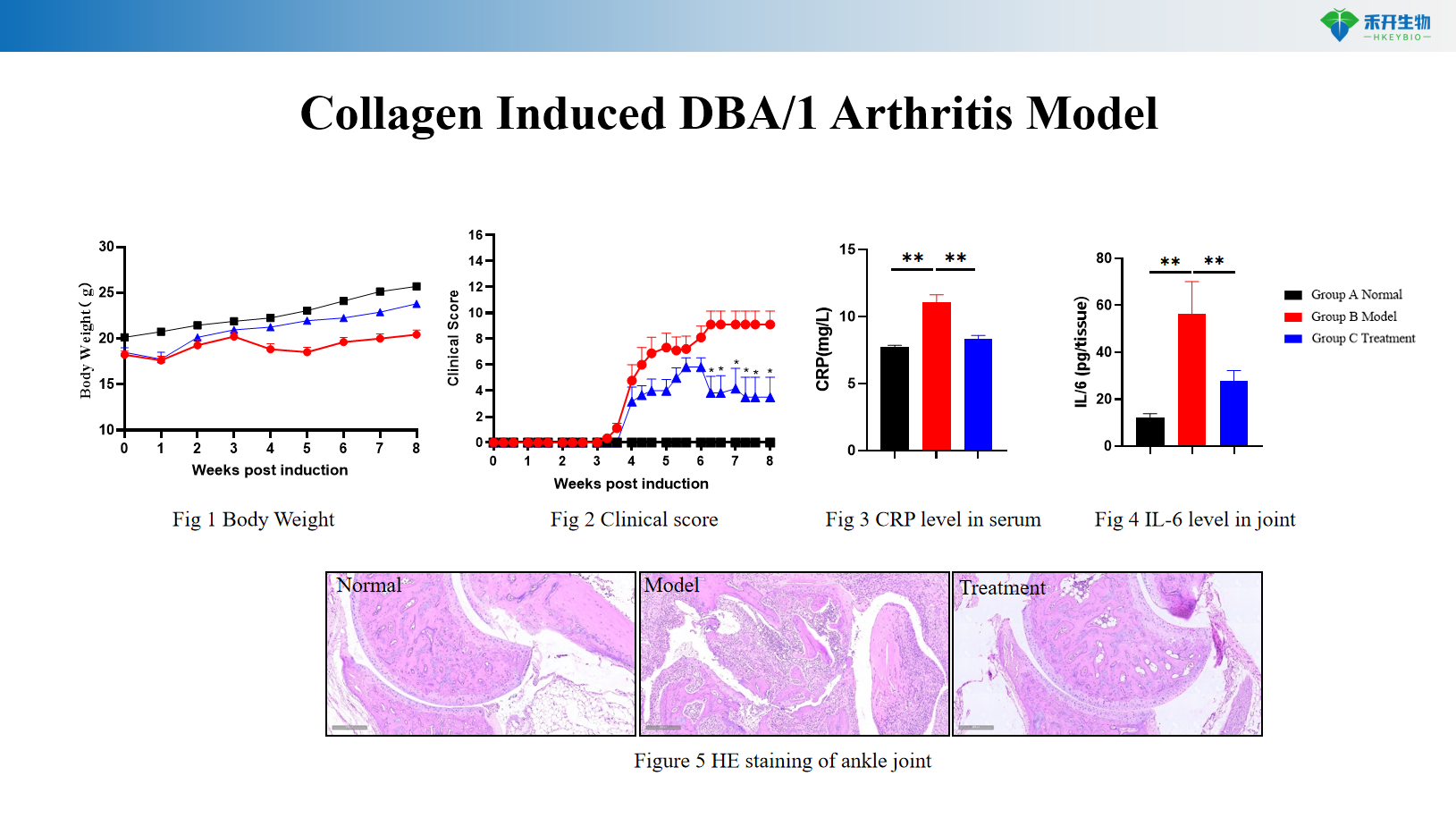
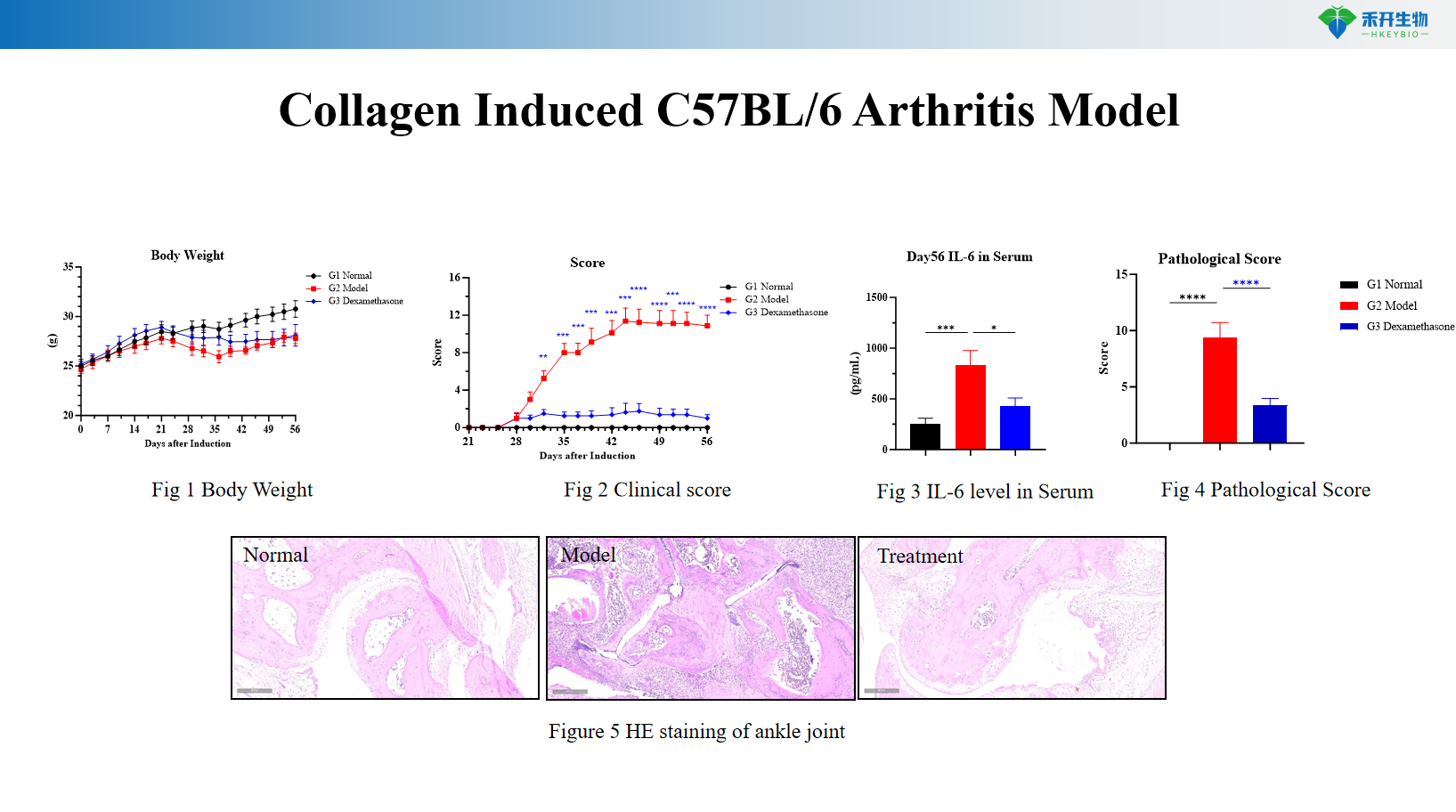
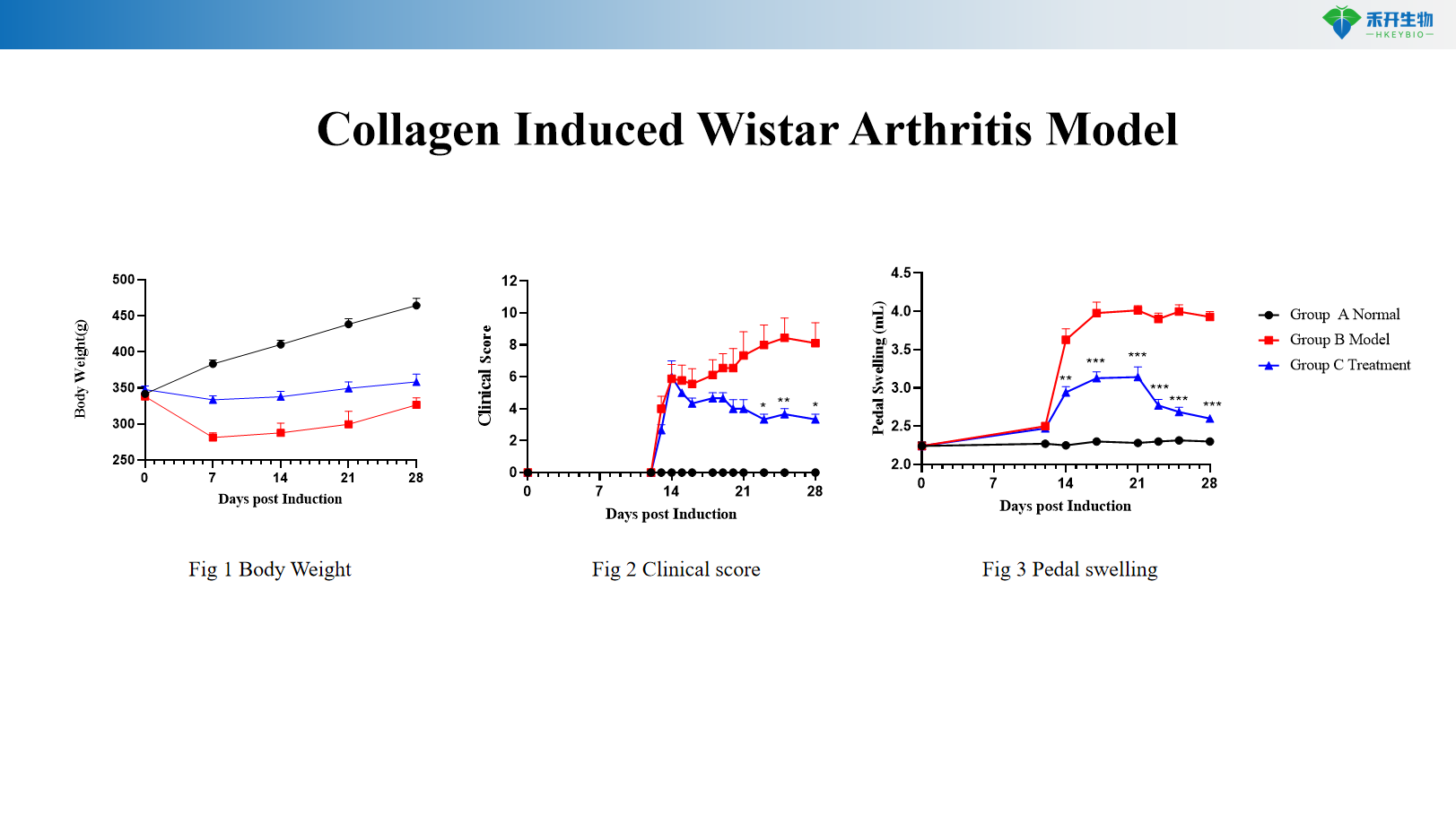
Comprehensive endpoints – Body weight, clinical arthritis score, pedal swelling, serum inflammatory markers (CRP, IL-6), joint histopathology (HE scoring).
Translational value – Ideal for testing DMARDs (methotrexate, sulfasalazine), biologics (anti-TNF, anti-IL-6R), JAK inhibitors, and novel immunomodulators.
IND-ready data packages – Studies can be conducted in accordance with GLP principles.
Technical Data & Validation
Collagen Induced DBA/1 Arthritis Model
Collagen Induced C57BL/6 Arthritis Model
Collagen Induced Wistar Arthritis Model
Applications
• Efficacy testing of DMARDs (methotrexate, sulfasalazine, leflunomide, hydroxychloroquine)
• Evaluation of biologics (anti-TNF, anti-IL-6R, anti-IL-17, anti-CD20) and JAK inhibitors (tofacitinib, baricitinib)
• Target validation for autoimmune arthritis pathways (Th17, TNF, IL-6, RANKL)
• Biomarker discovery (anti-collagen antibodies, inflammatory mediators, acute phase proteins)
• IND-enabling pharmacology and toxicology studies
Model Specifications
Parameter | C57BL/6 CIA Model | DBA/1 CIA Model | Wistar Rat CIA Model |
Species/Strain | C57BL/6 mouse | DBA/1 mouse | Wistar rat |
Induction method | Immunization with type II collagen (CII) emulsified in CFA (day 0) and IFA booster (day 21) |
Study duration | 5–8 weeks |
Key endpoints | Body weight, clinical score, IL-6, joint histopathology (HE) | Body weight, clinical score, CRP, pedal swelling, joint histopathology | Body weight, clinical score, pedal swelling, joint histopathology, larger joints for imaging |
Data package | Raw data, analysis reports, clinical scores, histology slides, serum analysis (IL-6, CRP), optional: anti-CII antibodies, micro-CT imaging |
❓ Frequently Asked Questions
Q1: What CIA models do you provide? A1: We establish Collagen Induced Arthritis (CIA) models using C57BL/6 mice, DBA/1 mice and Wistar rats for rheumatoid arthritis research.
Q2: What is the modeling mechanism? A2: Immunization with type II collagen triggers autoimmune responses in animals. It causes polyarthritis that highly resembles the clinical symptoms and histopathological features of human rheumatoid arthritis.
Q3: What evaluation indicators are used? A3: We assess body weight and joint clinical scores. We also detect serum CRP and IL-6 levels, and conduct HE staining to analyze joint pathological changes.
Q4: What are the modeling timelines? A4: Mice receive two injections of type II collagen on Day 0 and Day 21, with the whole experiment lasting 56 days. For Wistar rats, the procedure ends on Day 28 after two doses on Day 0 and Day 7.
Q5: What are the advantages and applications? A5: These models feature stable inflammation and high reproducibility. They are widely applied for preclinical efficacy screening, mechanism exploration and safety assessment of anti-rheumatoid arthritis drugs.


