Key Features & Benefits
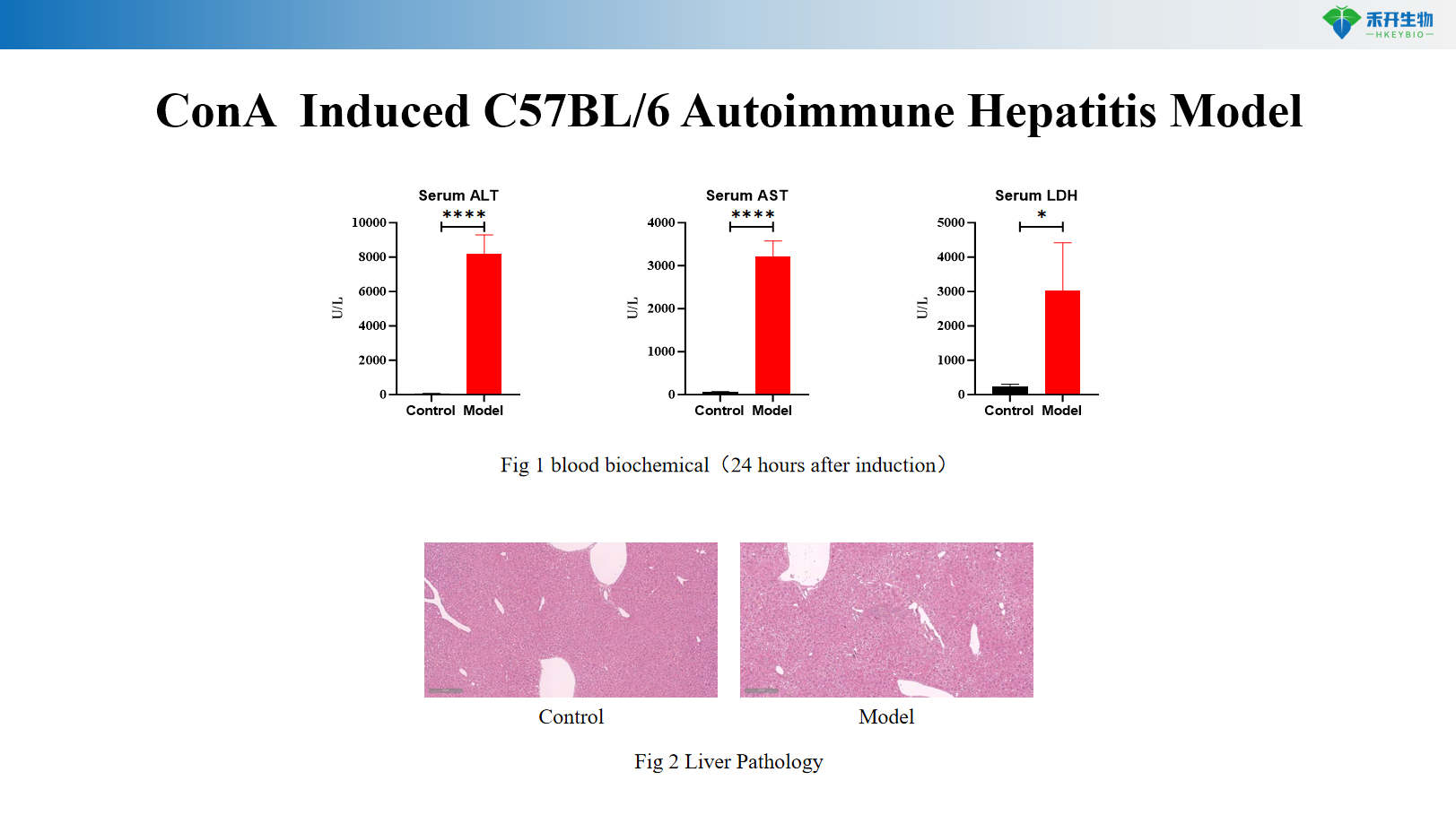
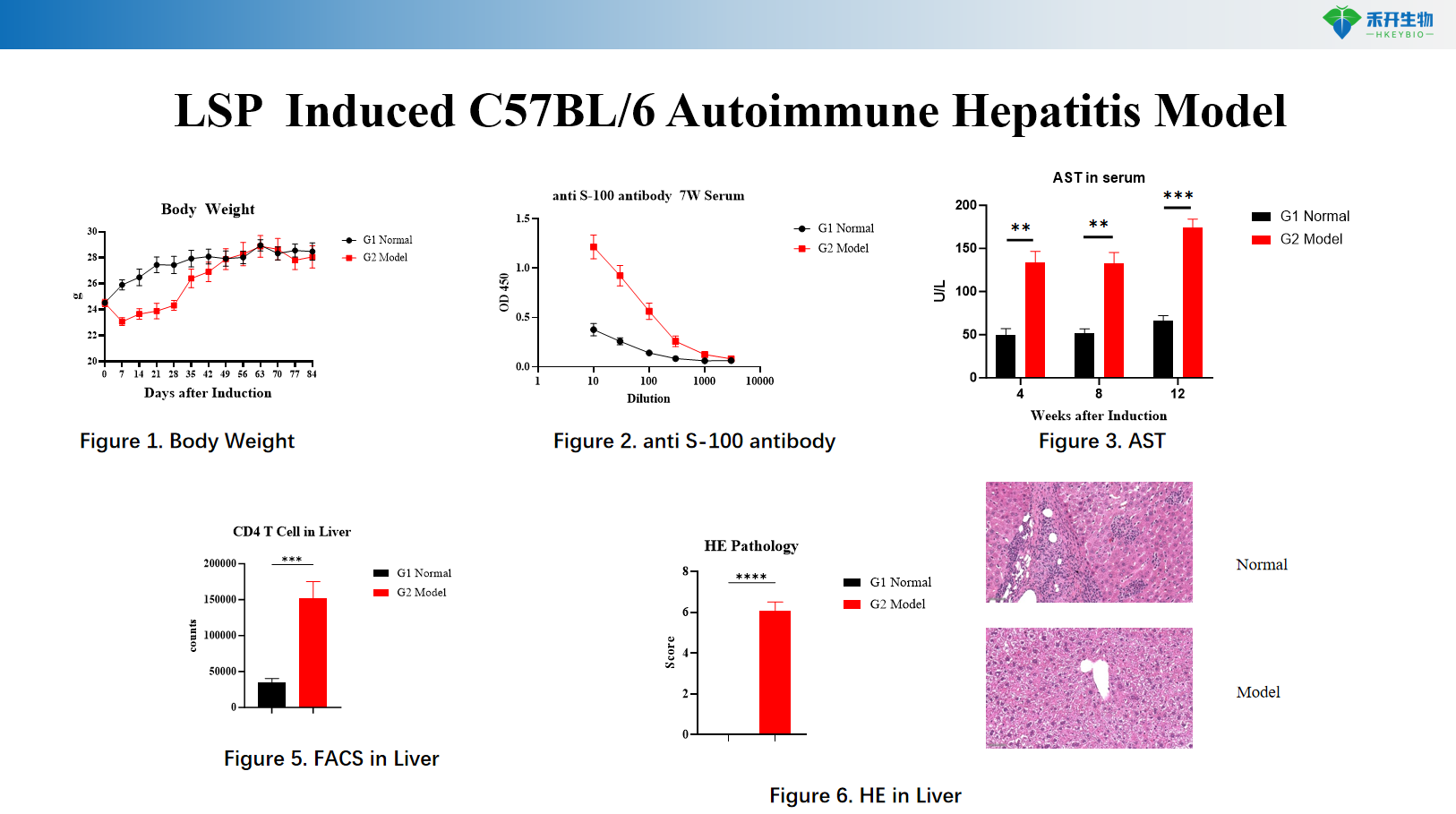
Complementary models – ConA model for acute T cell-mediated hepatitis; S100 model for chronic autoimmune hepatitis with autoantibody production.
Comprehensive endpoints – Body weight, serum biochemistry (ALT, AST, LDH), autoantibody levels (anti-S100), liver histopathology (HE), immune cell infiltration analysis by FACS.
Mechanism-driven – ConA activates T cells directly; S100 model breaks hepatic immune tolerance via adjuvant, recapitulating human AIH pathogenesis.
Translational value – Ideal for testing immunosuppressants (corticosteroids, mycophenolate), biologics targeting T cells (anti-CD3), and JAK inhibitors.
IND-ready data packages – Studies can be conducted in accordance with GLP principles.
Technical Data & Validation
ConA Induced C57BL/6 Autoimmune Hepatitis Model
LSP Induced C57BL/6 Autoimmune Hepatitis Model
Applications
• Efficacy testing of immunosuppressants (corticosteroids, mycophenolate mofetil, azathioprine, calcineurin inhibitors)
• Evaluation of biologics targeting T cells (anti-CD3, anti-CD4), cytokines (anti-TNF, anti-IFN-γ), and JAK inhibitors
• Target validation for T cell activation, autoantibody production, and inflammatory pathways
• Biomarker discovery (liver enzymes, autoantibodies, cytokine profiles)
• IND-enabling pharmacology and toxicology studie
Model Specifications
Parameter | ConA Induced AIH Model | S100 Induced AIH Model |
Species/Strain | C57BL/6 mouse | C57BL/6 mouse |
Induction method | Intravenous ConA (15–20 mg/kg), single dose | Subcutaneous immunization with S100 hepatic protein homogenate + Freund's adjuvant (CFA/IFA), multiple doses over 3–4 weeks |
Study duration | Acute: 24–72 hours; subacute: up to 7 days | 4–6 weeks (immunization + challenge) |
Key endpoints | Serum ALT, AST, LDH; liver histopathology (HE); cytokine levels (IFN-γ, TNF-α, IL-2); optional: T cell activation markers | Body weight, serum anti-S100 autoantibodies, serum AST, liver immune cell infiltration (FACS for T cells, macrophages), liver histopathology (HE), Th1/Th17 cytokine profiling |
Data package | Raw data, analysis reports, clinical chemistry, histology slides, FACS files, bioinformatics (optional) |
❓ Frequently Asked Questions
Q1: What autoimmune hepatitis (AIH) models do you provide? A1: We offer two AIH models using C57BL/6 mice: ConA-induced acute AIH model and S100-induced chronic AIH model for preclinical research.
Q2: What are the mechanisms of the two models? A2: ConA non-specifically activates T lymphocytes to trigger acute liver inflammation. S100 combined with adjuvant breaks liver immune tolerance, induces persistent immune responses and forms chronic liver damage.
Q3: What evaluation indicators are used? A3: Core detections include serum ALT, AST and LDH for liver function. We also test autoantibody levels, immune cell profiles and perform liver histopathological examination.
Q4: What are the modeling cycles and operations? A4: The ConA model uses a single intravenous injection, and mice are sacrificed at 24 hours. The S100 model receives weekly intraperitoneal administration, with the experiment lasting for 8 weeks.
Q5: What are the advantages and applications? A5: The two models respectively simulate acute and chronic AIH with stable phenotypes. They are reliable tools for efficacy screening and mechanism study of immunosuppressants and hepatoprotective drugs for autoimmune hepatitis.


