Main features and benefits
Broad model portfolio – covering eosinophilic CRS (papain), fungal protease-induced CRS (Aspergillus), superantigen-associated CRS (SEB) and classic allergic rhinitis (OVA).
Multiple strains – C57BL/6 and BALB/c to accommodate different genetic backgrounds and Th1/Th2 preferences.
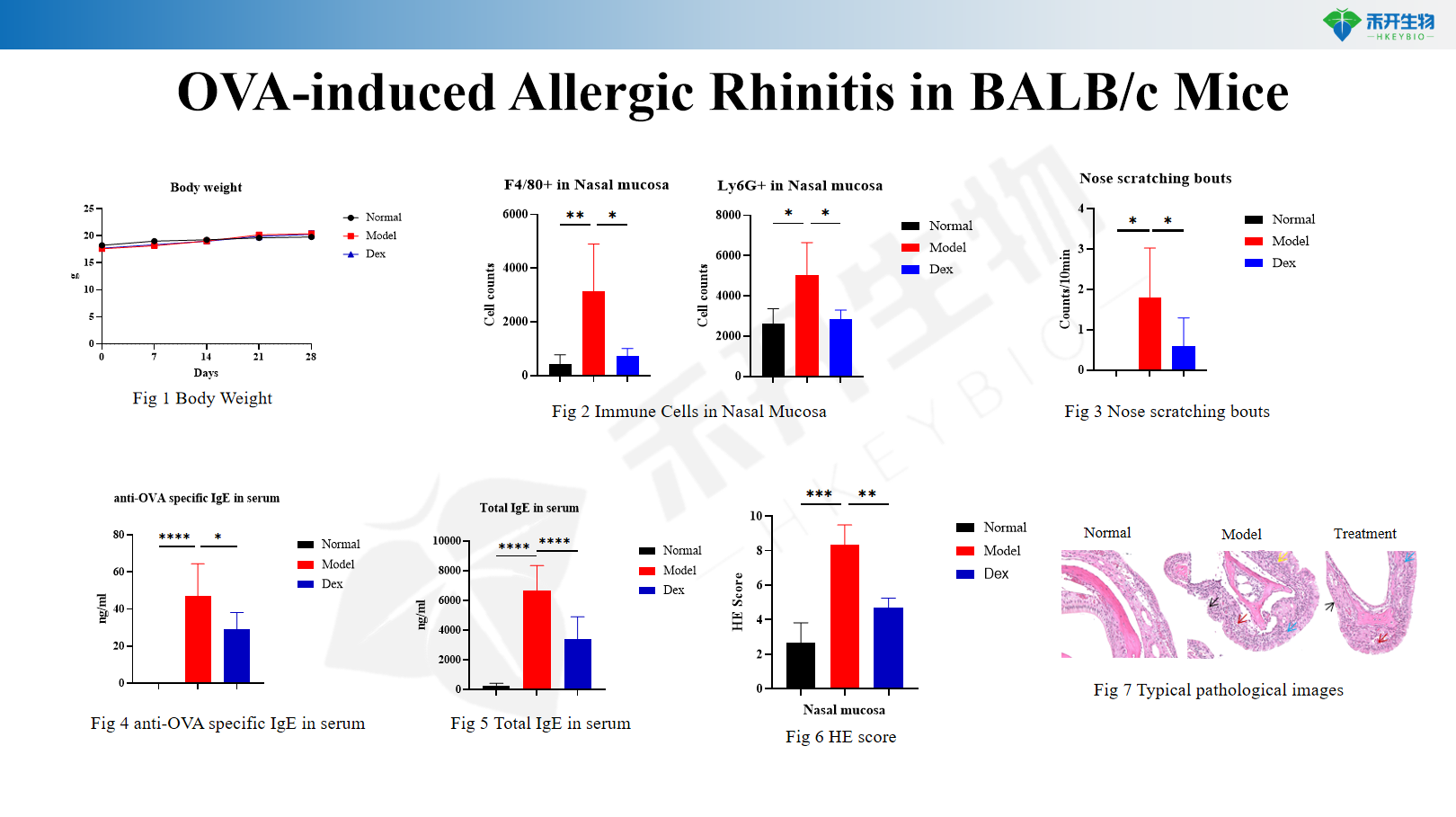
Composite endpoints —body weight, nasal lavage cell count (eosinophils, total cells), serum IgE (total IgE and OVA specific), nasal scratching behavior, nasal mucosal histopathology (HE), and cytokine analysis (IL-33, Th2 cytokines).
Translational Value – Ideal for testing corticosteroids, antihistamines, biologics (anti-IgE, anti-IL-5, anti-IL-4Rα) and novel immunomodulators.
IND Ready Packet – Research can be conducted in accordance with GLP principles.
Technical data and verification
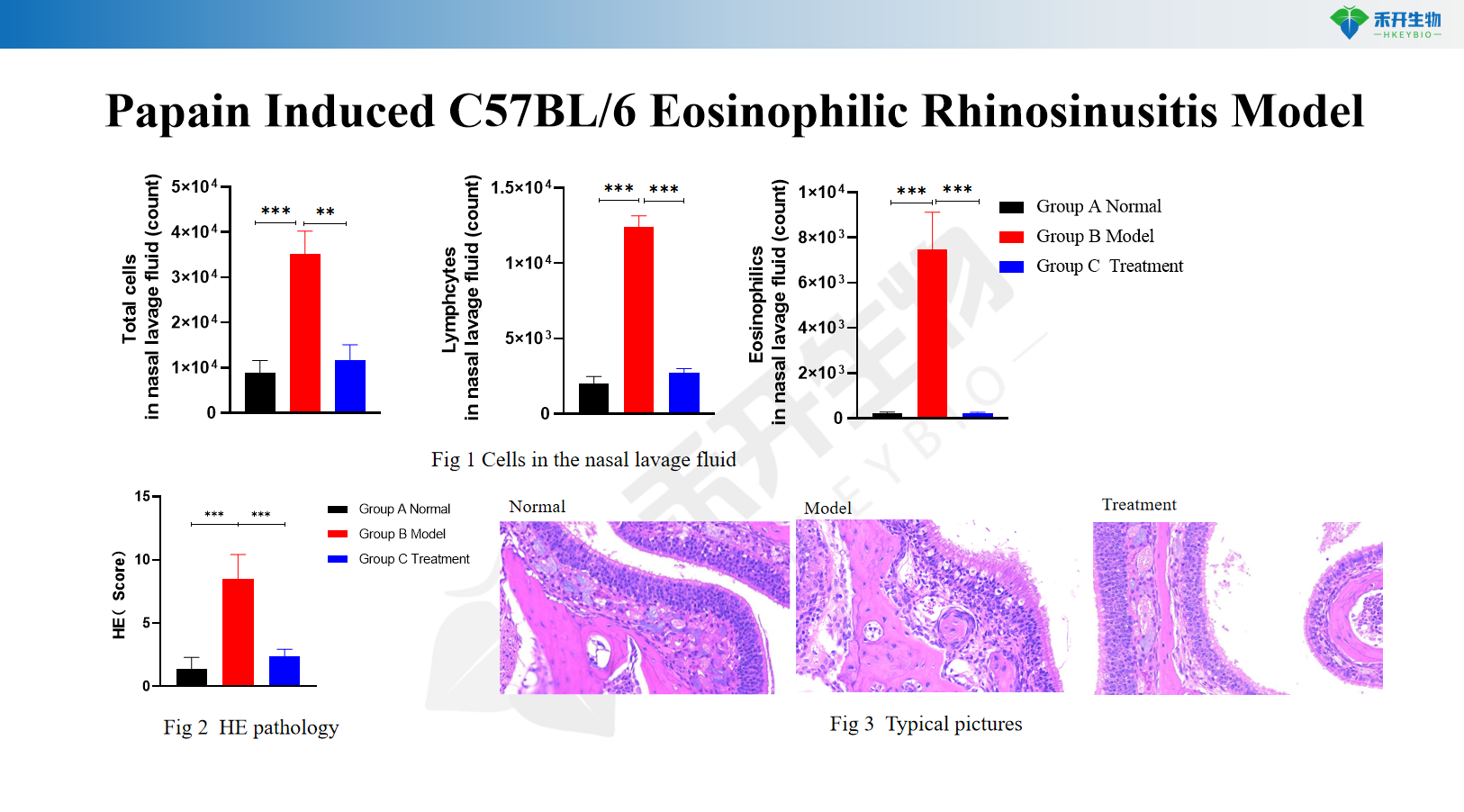
Papain-induced C57BL/6 eosinophilic sinusitis model
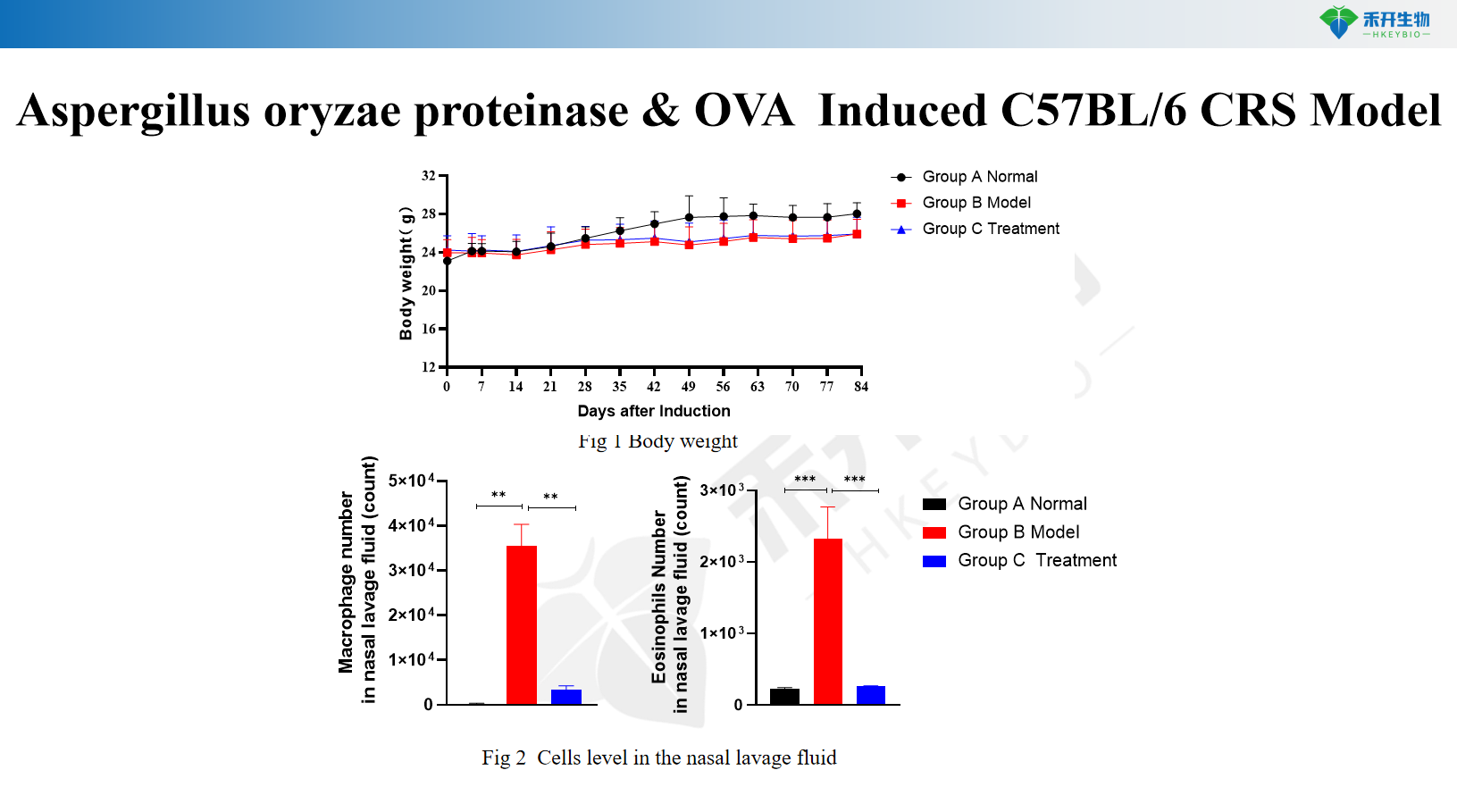
C57BL/6 CRS model induced by Aspergillus oryzae protease and OVA
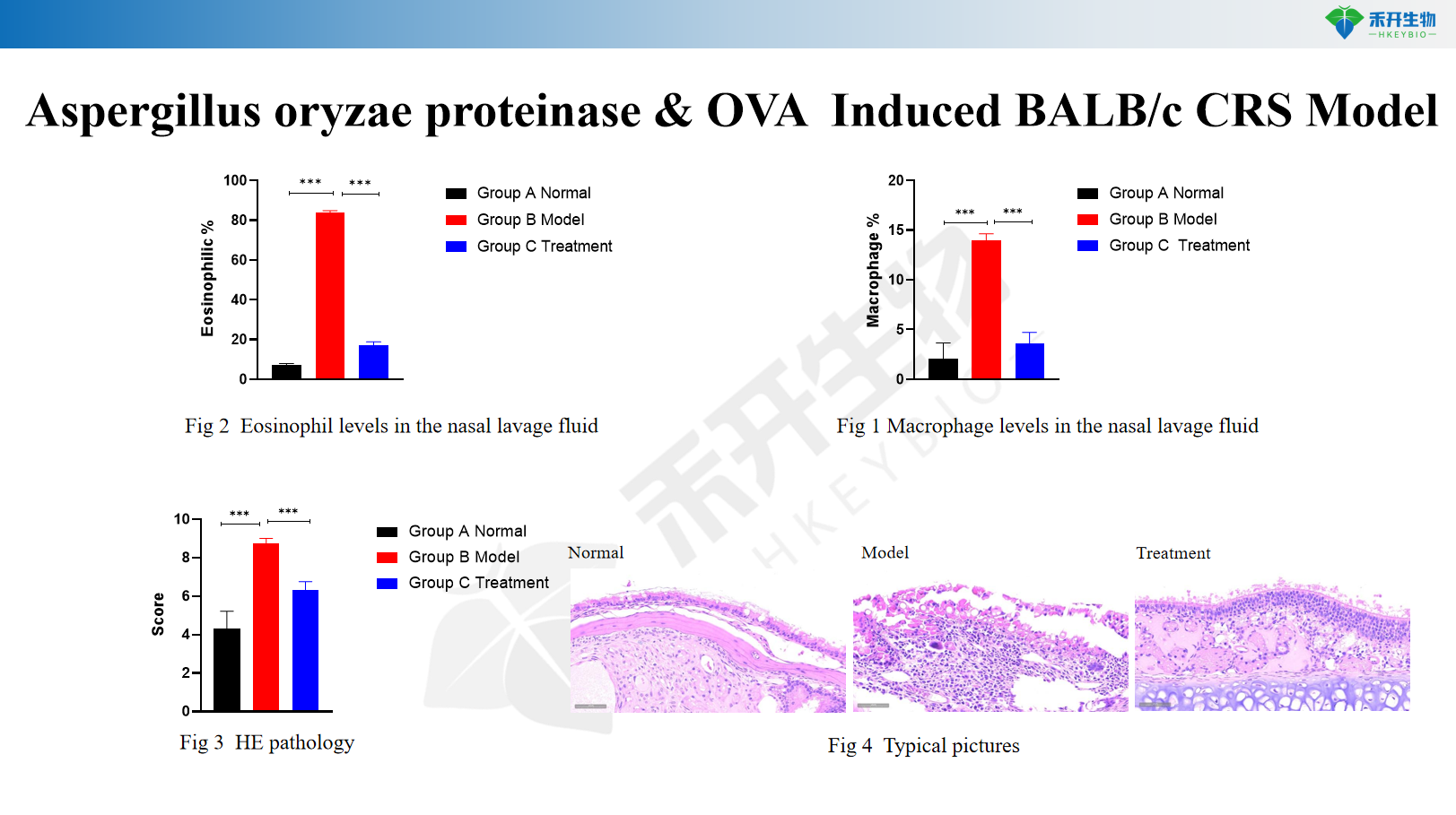
BALB/c CRS model induced by Aspergillus oryzae protease and OVA
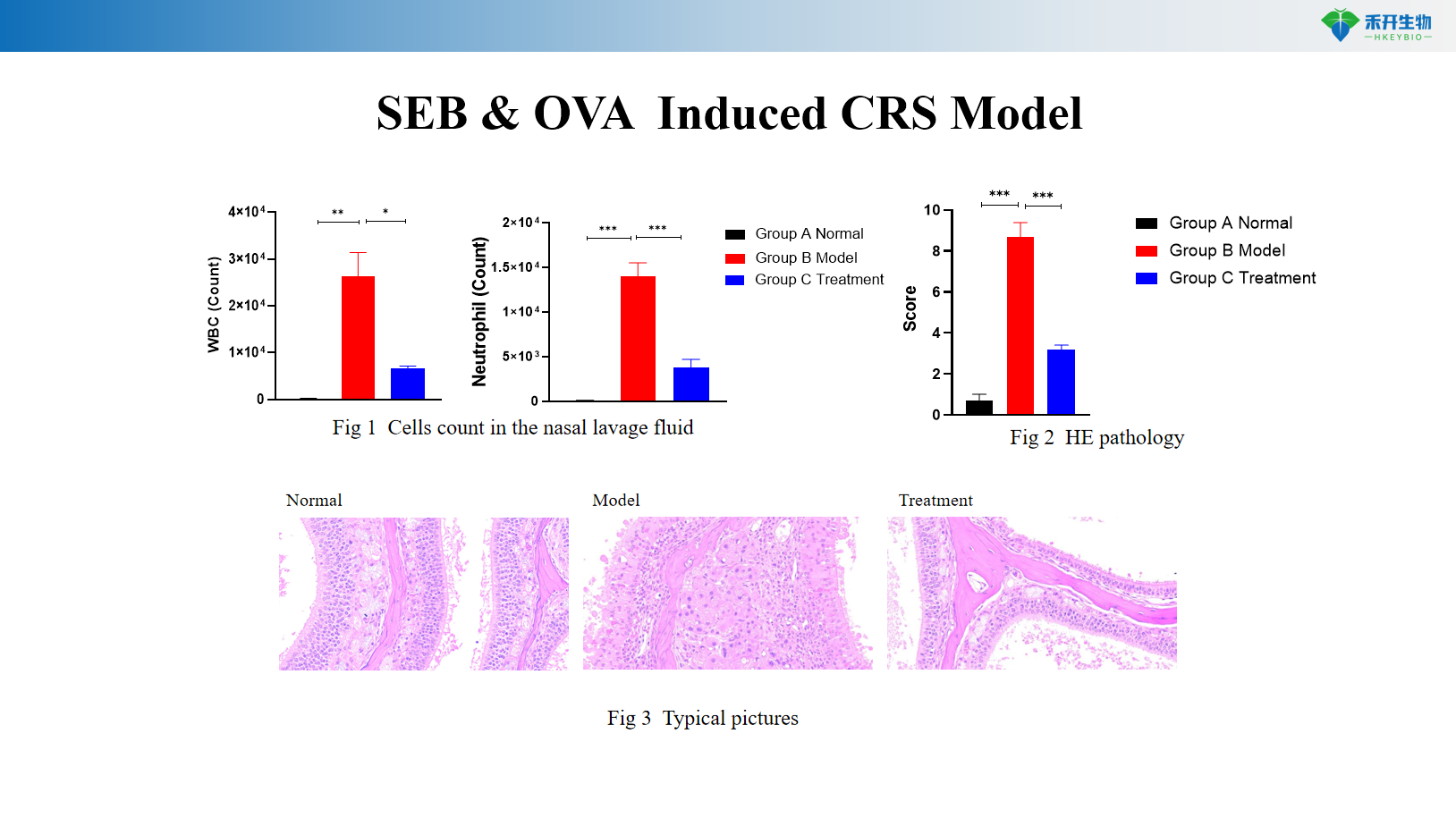
SEB and OVA induced CRS model
OVA-induced allergic rhinitis in BALB/c mice
Application areas
• Efficacy testing of intranasal and systemic corticosteroids, antihistamines, and decongestants
• Evaluate biologics targeting the Th2 pathway (anti-IL-4Rα, anti-IL-5, anti-IL-13, anti-IgE)
• Target validation of epithelial-derived cytokine (TSLP, IL-33, IL-25) and protease activation pathways
• Biomarker discovery (IgE, eosinophil peroxidase, cytokine signature)
• Pharmacology and toxicology studies to support IND
Model specifications
scope | Specification |
Species/Strain | Mouse (C57BL/6, BALB/c) |
induction method | Papain (protease); Aspergillus + OVA; SEB + OVA; OVA + alum |
study time | 3–6 weeks (sensitization + challenge phase) |
critical endpoint | Body weight, nasal lavage cell count (total and differential), serum total IgE and OVA-specific IgE, nose scratching behavior (allergic rhinitis), nasal mucosal histopathology (HE score for inflammation, eosinophil infiltration, goblet cell hyperplasia), cytokine levels in nasal tissue/lavage fluid (IL-4, IL-5, IL-13, IL-33) |
packet | Raw data, analysis report, nasal lavage cytology, ELISA results, histological sections, behavioral data, bioinformatics (optional) |
❓ FAQ
Q: How do I choose the right model for my drug candidate?
A: For eosinophilic CRS, papain or aspergillus protease models are recommended. For superantigen-related CRS, the SEB+OVA model is suitable. For typical allergic rhinitis, the OVA model is the standard choice. BALB/c mice exhibit a stronger Th2 response, whereas C57BL/6 allows the use of transgenic lines. Our scientific team can guide model selection based on your specific goals.
Q: What role does protease activity play in the CRS model?
A: Proteases (papain, aspergillus) disrupt epithelial tight junctions, leading to barrier dysfunction and release of epithelial cytokines (IL-33, TSLP) that drive type 2 inflammation and eosinophil infiltration, similar to human CRS pathophysiology.
Q: Can these models be used for IND support studies?
Answer: Yes. Studies can be conducted according to GLP principles for regulatory submissions (FDA, EMA).
Q: Do you offer customized study protocols (e.g., different allergen doses, sensitization schedules)?
Answer: Of course. Our scientific team tailors induction protocols, treatment plans and endpoint analyzes for your specific drug candidate.


