Key Features & Benefits
Broad model portfolio – Covers IgE-dependent (OVA), direct mast cell activator (C48/80), and passive sensitization (PCA) mechanisms.
Multiple species/strains – BALB/c, C57BL/6 mice and Wistar rats available.
Comprehensive endpoints – Body weight, eosinophil counts, serum IgE, mast cell degranulation, paw swelling, Evans blue extravasation, histopathology (HE, toluidine blue).
Translational value – Ideal for testing anti-IgE biologics, mast cell stabilizers, H1-antihistamines, and MRGPRX2 antagonists.
IND-ready data packages – Studies can be conducted in accordance with GLP principles.
Technical Data & Validation
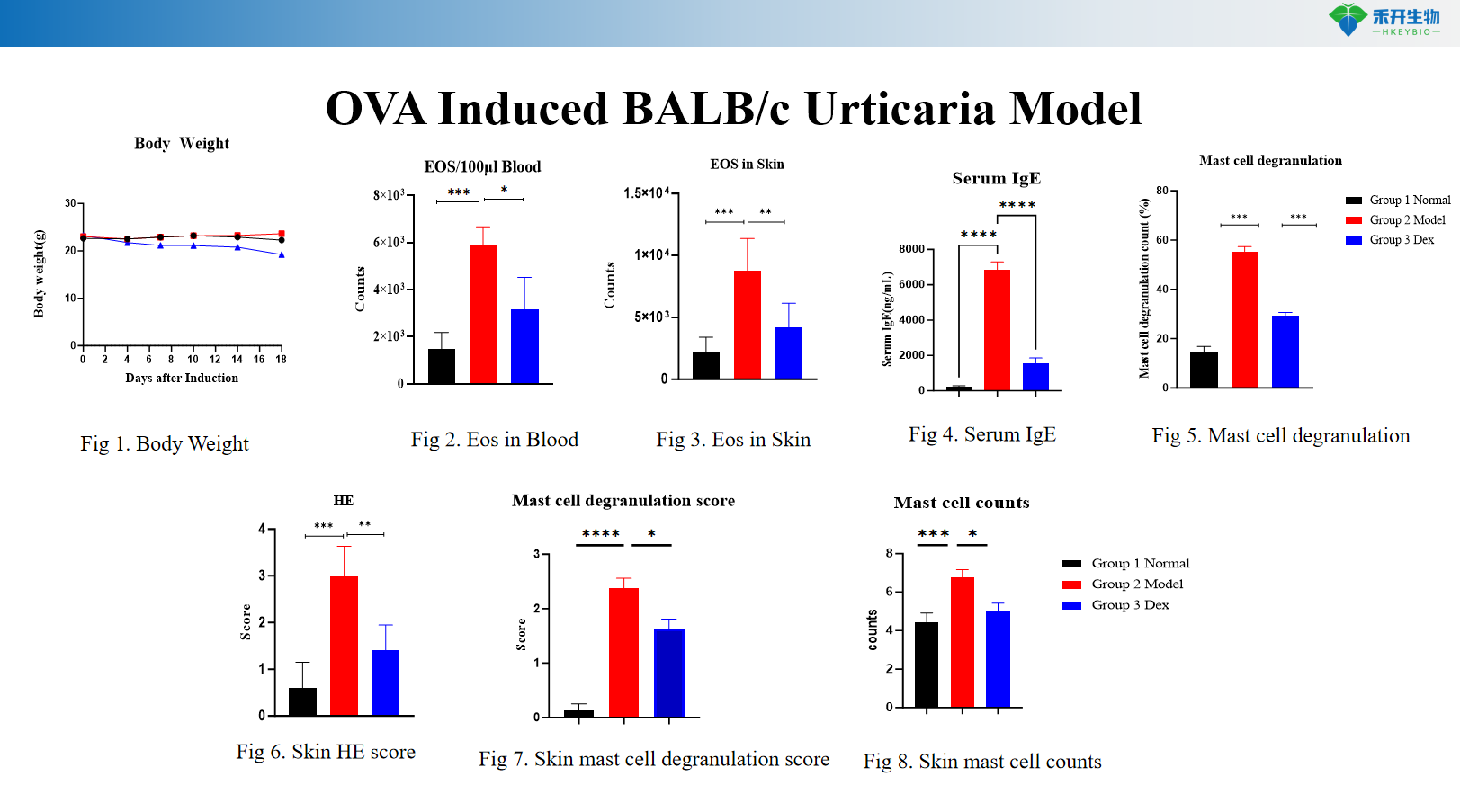
OVA Induced BALB/c Urticaria Model
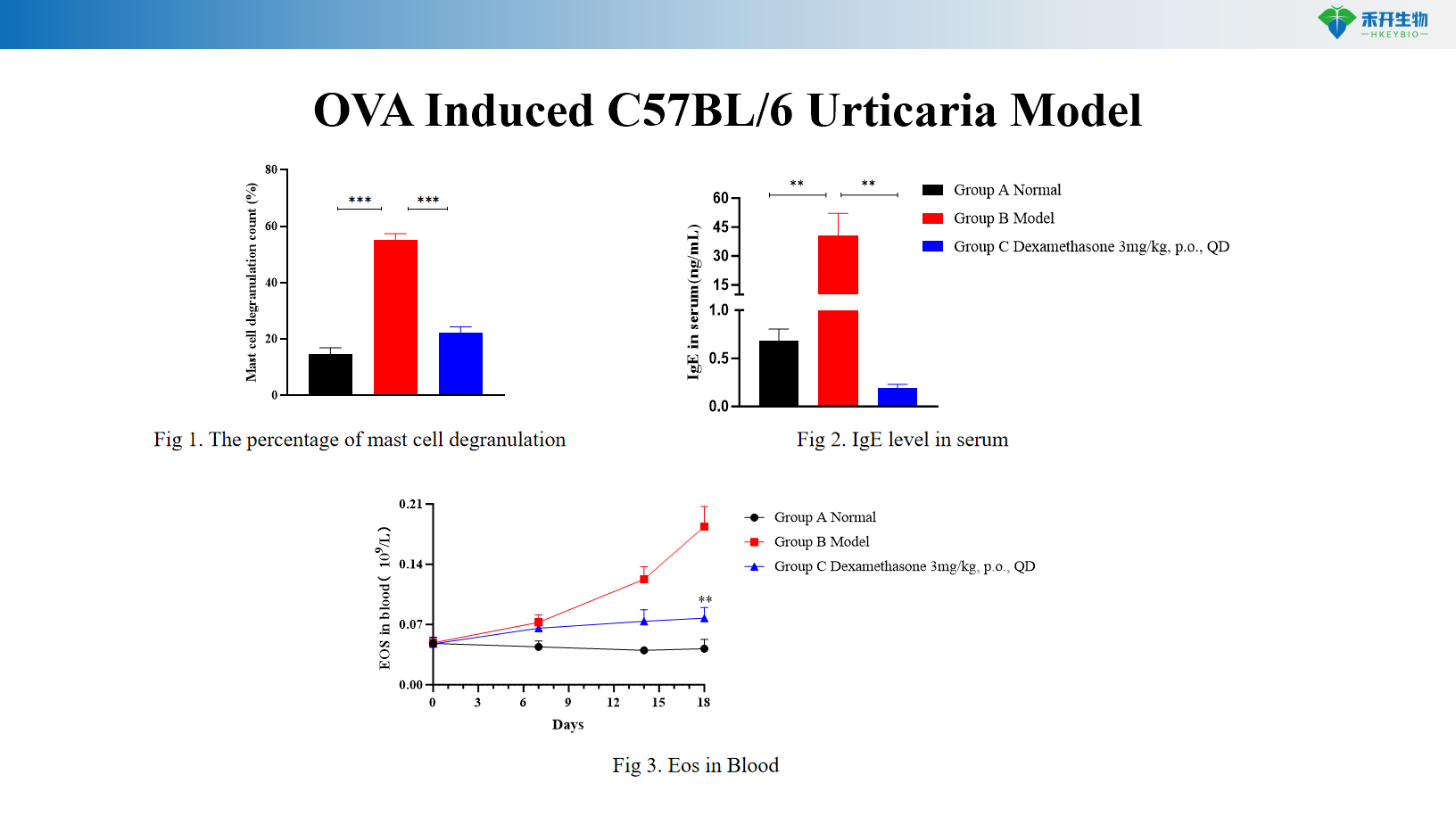
OVA Induced C57BL/6 Urticaria Model
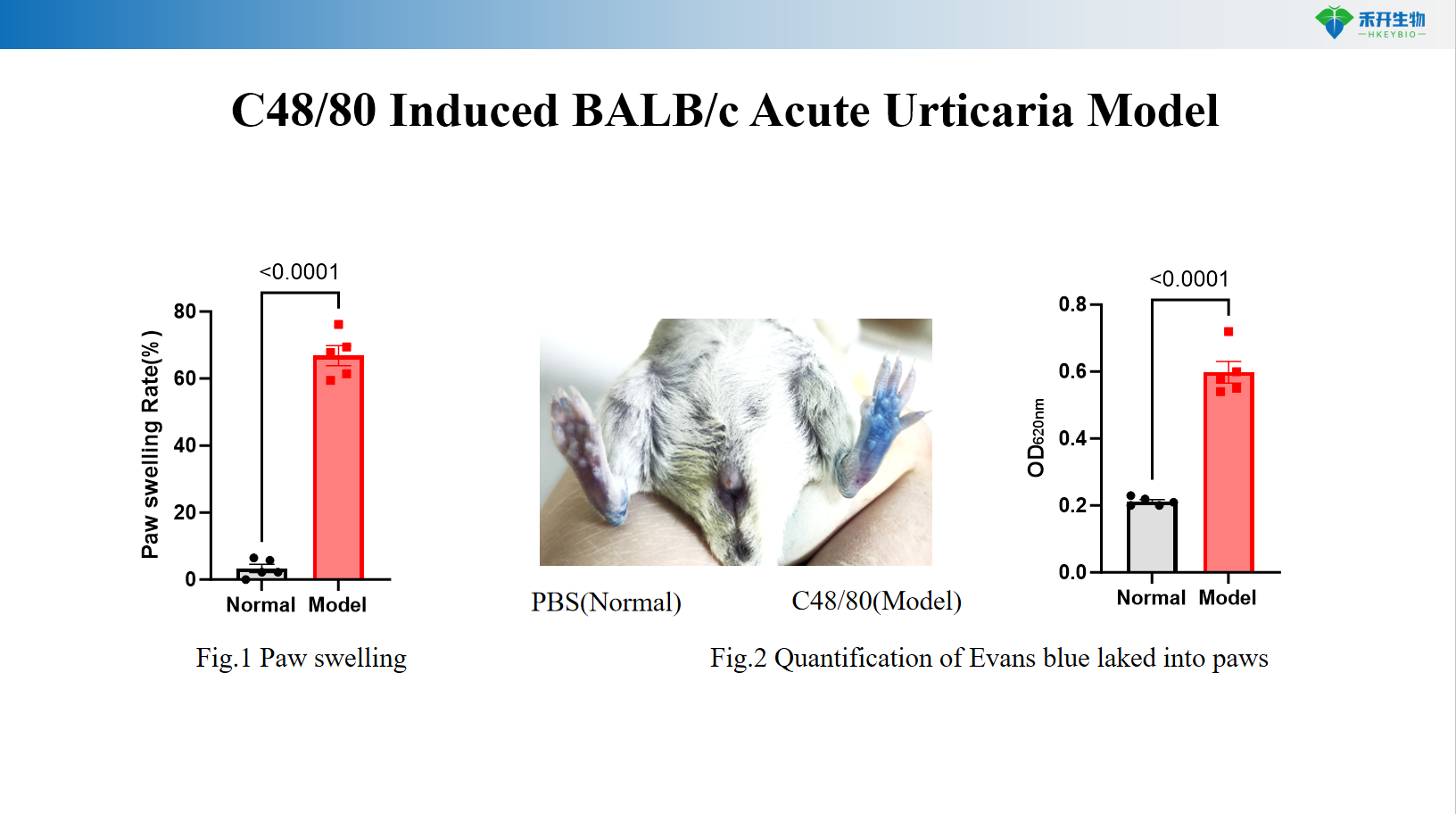
C48/80 Induced BALB/c Acute Urticaria Model
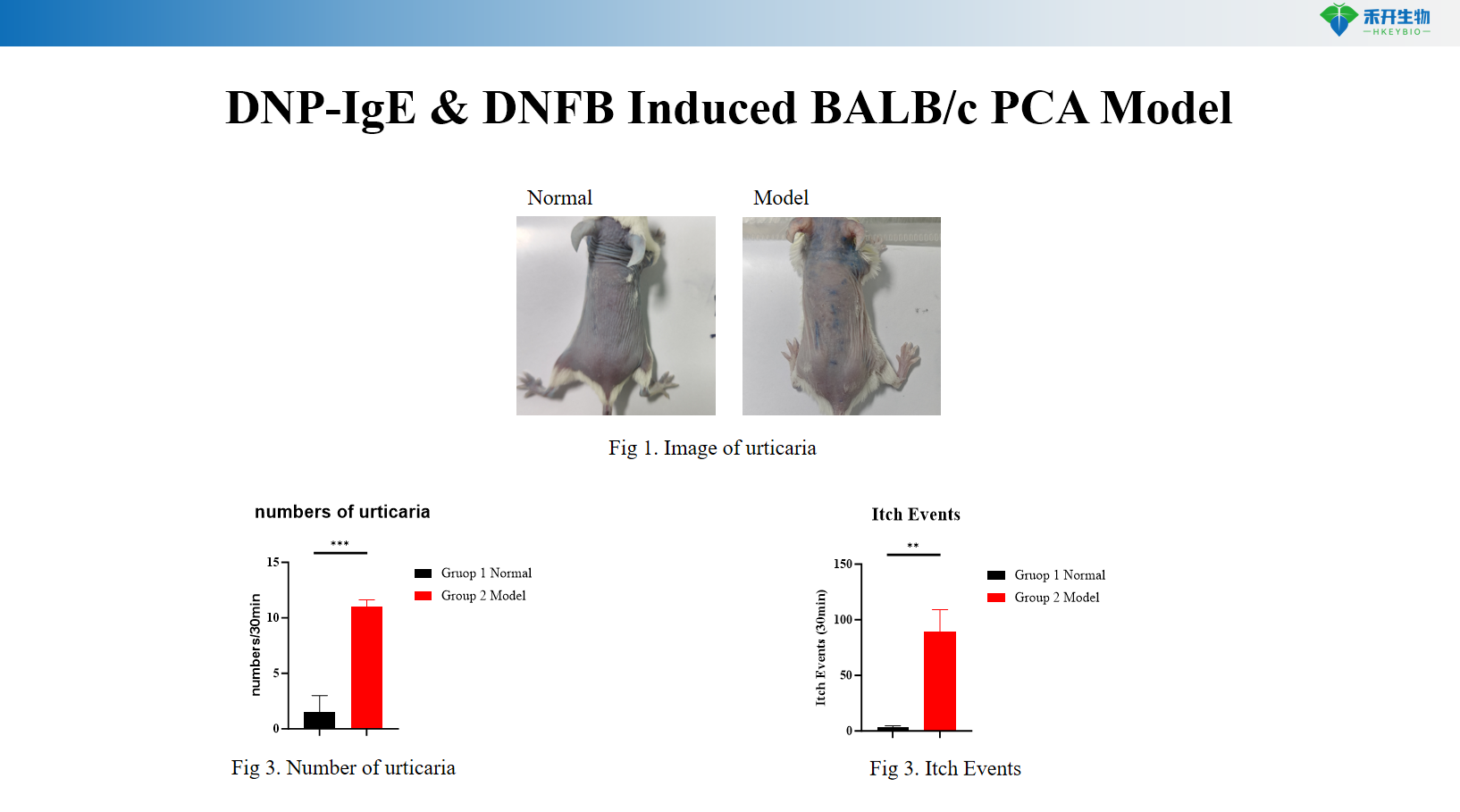
DNP-IgE & DNFB Induced BALB/c PCA Model
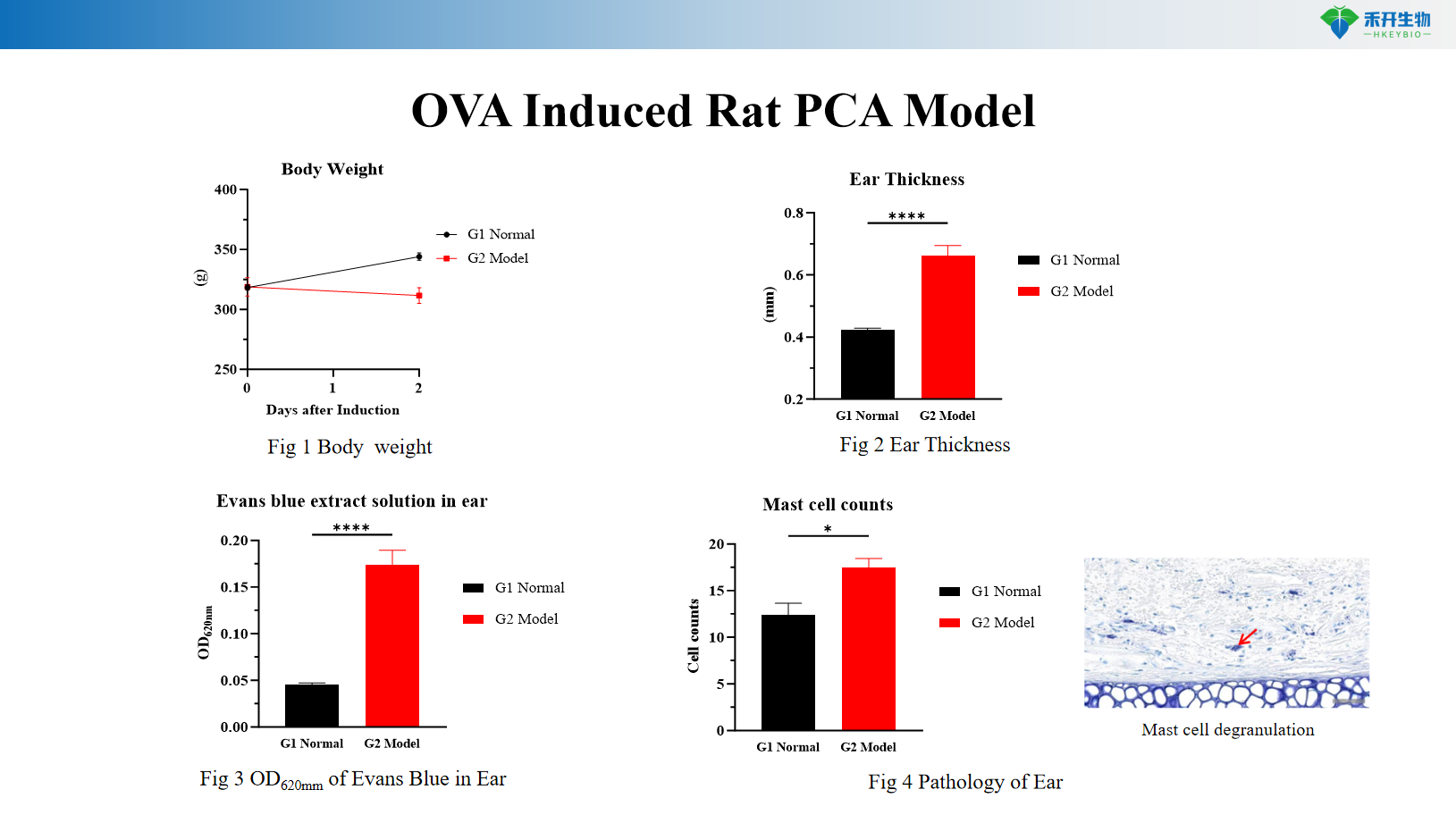
OVA Induced Rat PCA Model
Applications
• Efficacy testing of immunomodulators (corticosteroids, mycophenolate, cyclophosphamide) for IgAN
• Evaluation of renoprotective agents and angiotensin-converting enzyme (ACE) inhibitors
• Target validation for IgA immune complex deposition and mesangial cell activation
• Biomarker discovery (albuminuria, serum IgA levels)
• IND-enabling pharmacology and toxicology studies
Model Specifications
Model | Species/Strain | Induction Method | Key Endpoints | Study Duration |
OVA Induced BALB/c Urticaria Model | BALB/c mouse | OVA + alum sensitization + intradermal OVA challenge | Body weight, eosinophils, serum IgE, mast cell degranulation, HE score | 4–6 weeks |
OVA Induced C57BL/6 Urticaria Model | C57BL/6 mouse | OVA + alum sensitization + intradermal OVA challenge | Mast cell degranulation, serum IgE, eosinophils | 4–6 weeks |
C48/80 Induced BALB/c Acute Urticaria Model | BALB/c mouse | Intradermal C48/80 | Paw swelling, Evans blue extravasation | 30min – 24 h |
DNP-IgE & DNFB Induced BALB/c PCA Model | BALB/c mouse | Intradermal DNP-IgE + topical DNFB | Urticaria number, itch events | 24–48h |
| OVA Induced Rat PCA Model | Wistar rat | Intradermal OVA-sensitized serum + i.v. OVA with Evans blue | Ear thickness, Evans blue OD, mast cell degranulation | 24–48h |
❓ Frequently Asked Questions
Q1: What urticaria models do you provide? A1: We offer two non-human primate (NHP) models: HDM-induced urticaria model and DNP-IgE & DNFB-induced passive cutaneous anaphylaxis (PCA) model.
Q2: What are the modeling mechanisms? A2: HDM acts as an allergen to trigger sensitization and challenge, causing typical wheal-and-flare skin reactions and mast cell degranulation. The PCA model induces type I hypersensitivity via IgE-mediated allergic responses.
Q3: What evaluation indicators are adopted? A3: We observe clinical urticaria and PCA symptoms. We test eosinophils and mast cells, detect serum IgE, and conduct HE and toluidine blue staining for pathological analysis.
Q4: What are the modeling procedures and cycles? A4: The HDM model includes sensitization and challenge phases, lasting 28 days in total. The PCA model completes IgE injection on Day 0 and DNFB stimulation on Day 1 for immediate reaction observation.
Q5: What are the advantages and applications? A5: NHP models share high similarity with human skin and immune systems. They are ideal for efficacy evaluation and mechanism research of anti-urticaria and anti-allergic drugs.


