Key Features & Benefits
Complementary mechanisms – MSU model mimics crystal-induced inflammation (gout-related); LPS model mimics bacterial endotoxin-induced inflammation.
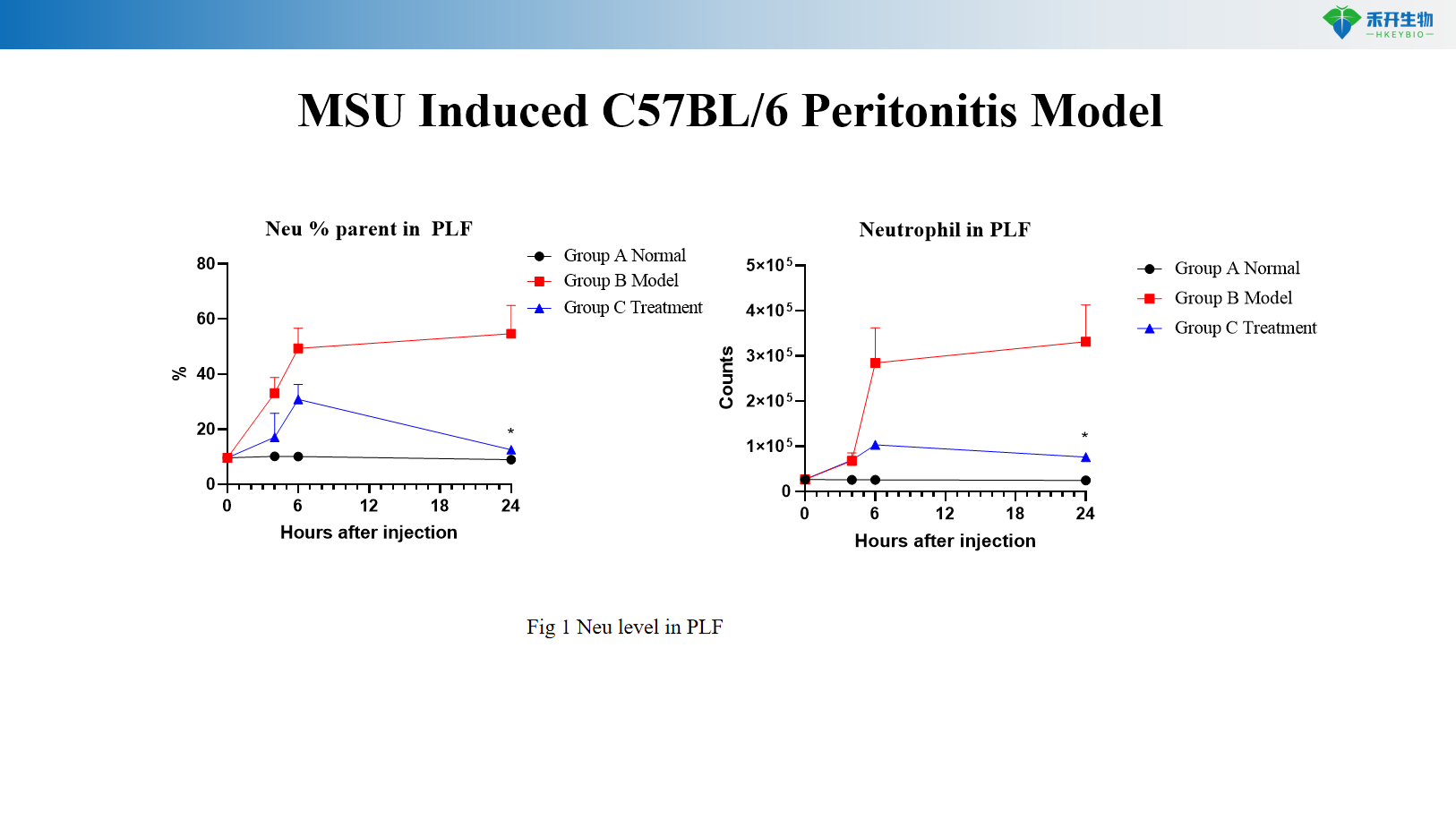
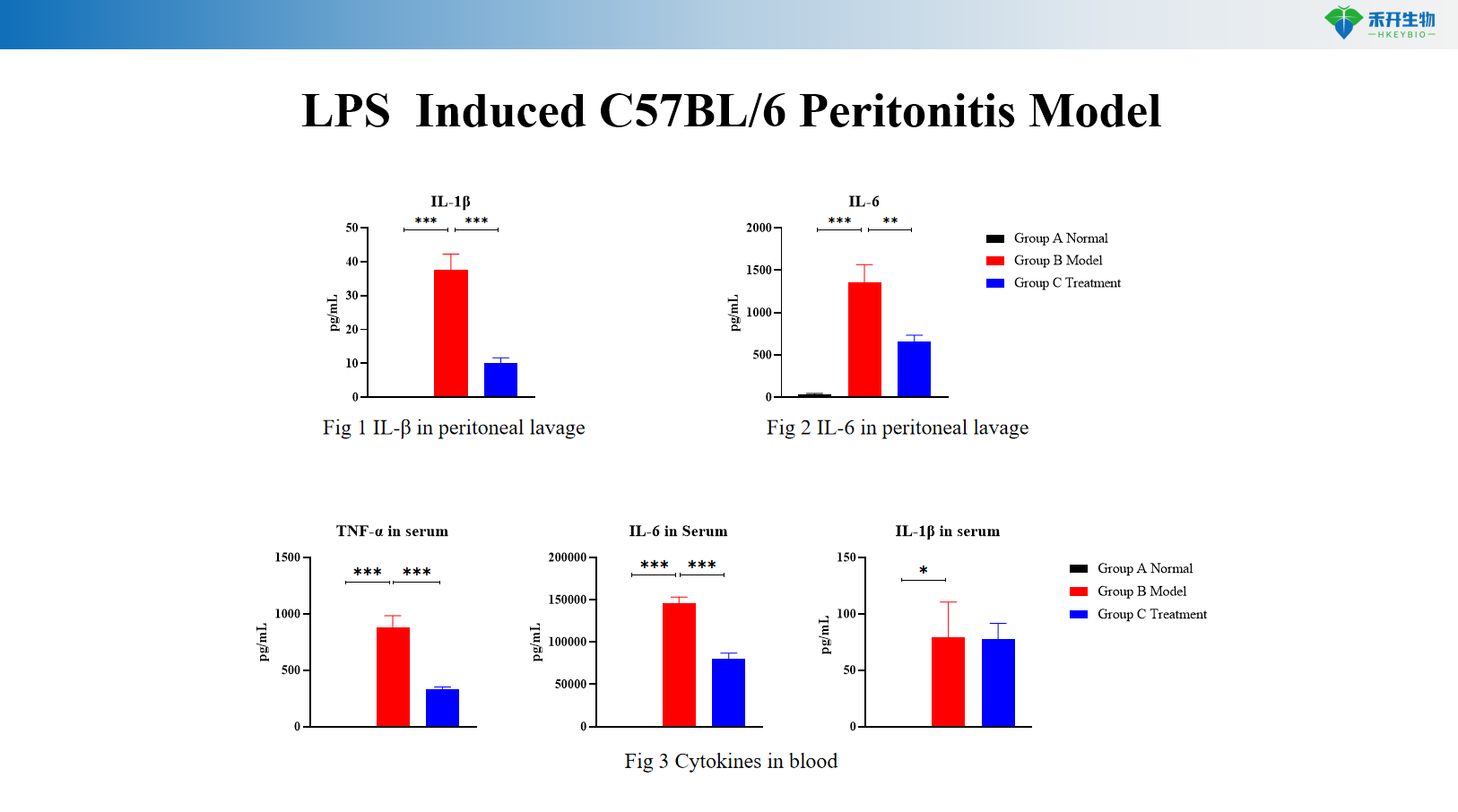
Quantifiable endpoints – Neutrophil counts in peritoneal lavage fluid (MSU model), IL-1β and IL-6 levels in peritoneal lavage fluid and blood (LPS model).
Rapid and reproducible – Both models induce acute inflammation within hours, allowing rapid screening of anti-inflammatory compounds.
Translational value – Ideal for testing anti-inflammatory drugs (NSAIDs, corticosteroids), IL-1 inhibitors (anakinra, canakinumab), and TLR4 antagonists.
IND-ready data packages – Studies can be conducted in accordance with GLP principles.
Technical Data & Validation
MSU Induced C57BL/6 Peritonitis Model
LPS Induced C57BL/6 Peritonitis Model
Applications
• Efficacy testing of anti-inflammatory drugs (NSAIDs, corticosteroids, COX-2 inhibitors)
• Evaluation of IL-1 inhibitors (anakinra, canakinumab), NLRP3 inflammasome inhibitors, and TLR4 antagonists
• Target validation for neutrophil recruitment and cytokine pathways
• Biomarker discovery (neutrophil markers, cytokine signatures)
• IND-enabling pharmacology and toxicology studies
Model Specifications
Parameter | MSU Induced Peritonitis Model | LPS Induced Peritonitis Model |
Species/Strain | C57BL/6 mouse | C57BL/6 mouse |
Induction method | Intraperitoneal injection of MSU crystals (1–3 mg/mouse) | Intraperitoneal injection of LPS (5–20 mg/kg) |
Study duration | 4–24 hours post-induction | 2–24 hours post-induction |
Key endpoints | Neutrophil counts in peritoneal lavage fluid (flow cytometry or cytospin) | IL-1β and IL-6 levels in peritoneal lavage fluid and blood (ELISA) |
| Positive control | Dexamethasone or indomethacin available as reference anti-inflammatory compounds |
| Data package | Raw data, analysis reports, cell counts, ELISA results, bioinformatics (optional)Raw data, analysis reports, cell counts, ELISA results, bioinformatics (optional) |
❓ Frequently Asked Questions
Q1: What peritonitis models do you provide? A1: We offer two mature acute peritonitis models using C57BL/6 mice, including MSU-induced model and LPS-induced model for preclinical inflammatory research.
Q2: What are the mechanisms of the two models? A2: MSU crystals trigger acute peritoneal inflammation mainly mediated by IL-1β. LPS activates the TLR4 signaling pathway to overstimulate innate immunity and induce severe inflammatory responses.
Q3: What evaluation indicators are applied in the models? A3: The MSU model detects neutrophil counts in peritoneal lavage fluid. The LPS model tests key pro-inflammatory cytokines IL-1β and IL-6 in peritoneal fluid and blood samples.
Q4: What are the modeling cycles and time points? A4: For the MSU-induced model, samples are collected 24 hours after injection. For the LPS-induced model, relevant detections are completed within 2 hours after administration.
Q5: What are the advantages and application scenarios? A5: Both models have rapid onset, obvious inflammatory phenotypes and high reproducibility. They are widely used for efficacy screening and mechanism study of anti-inflammatory drugs and anti-endotoxin therapeutics.


