Key Features & Benefits
Complementary models – Induced model for rapid disease development; spontaneous NOD model for studying natural disease progression.
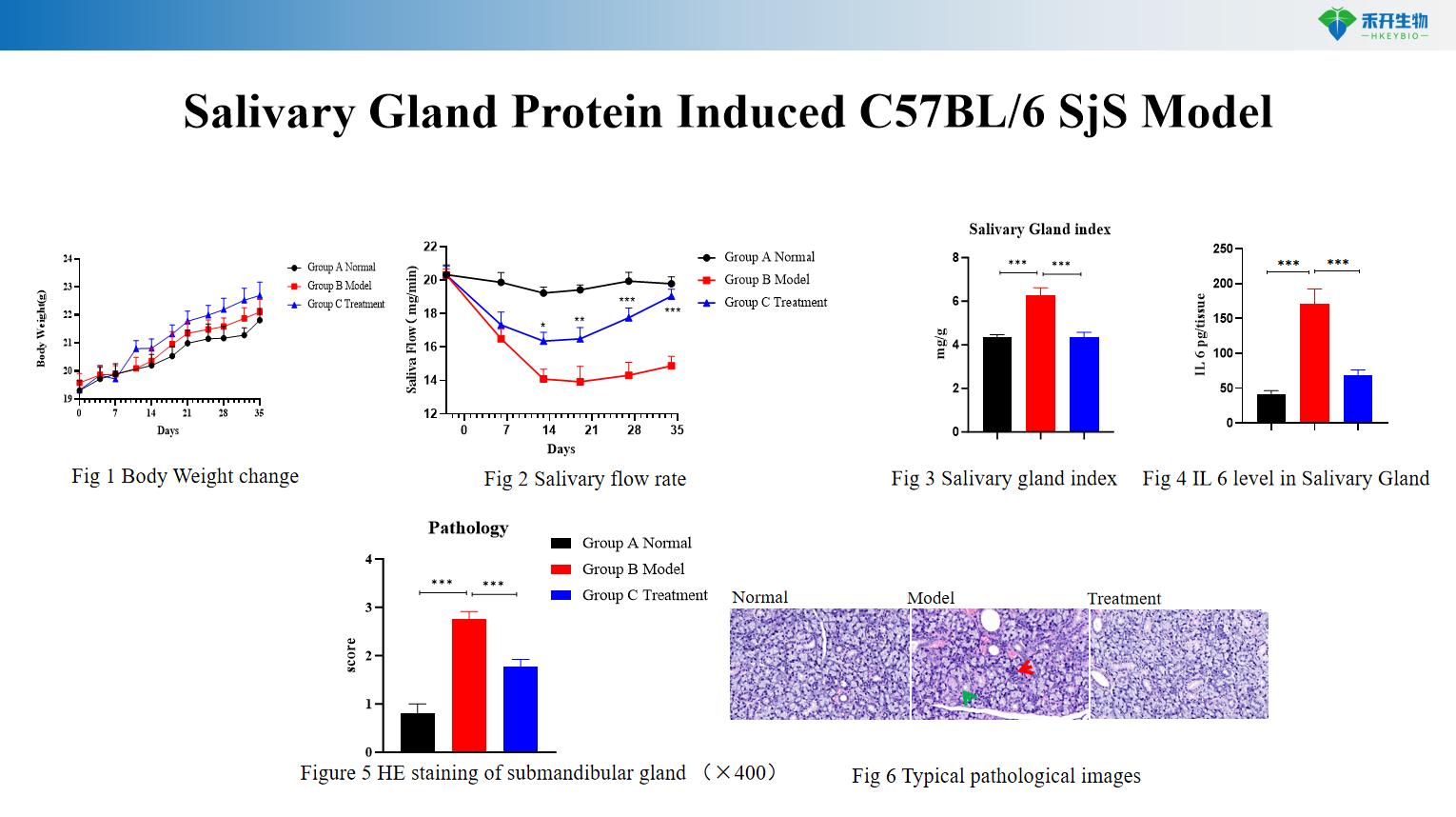
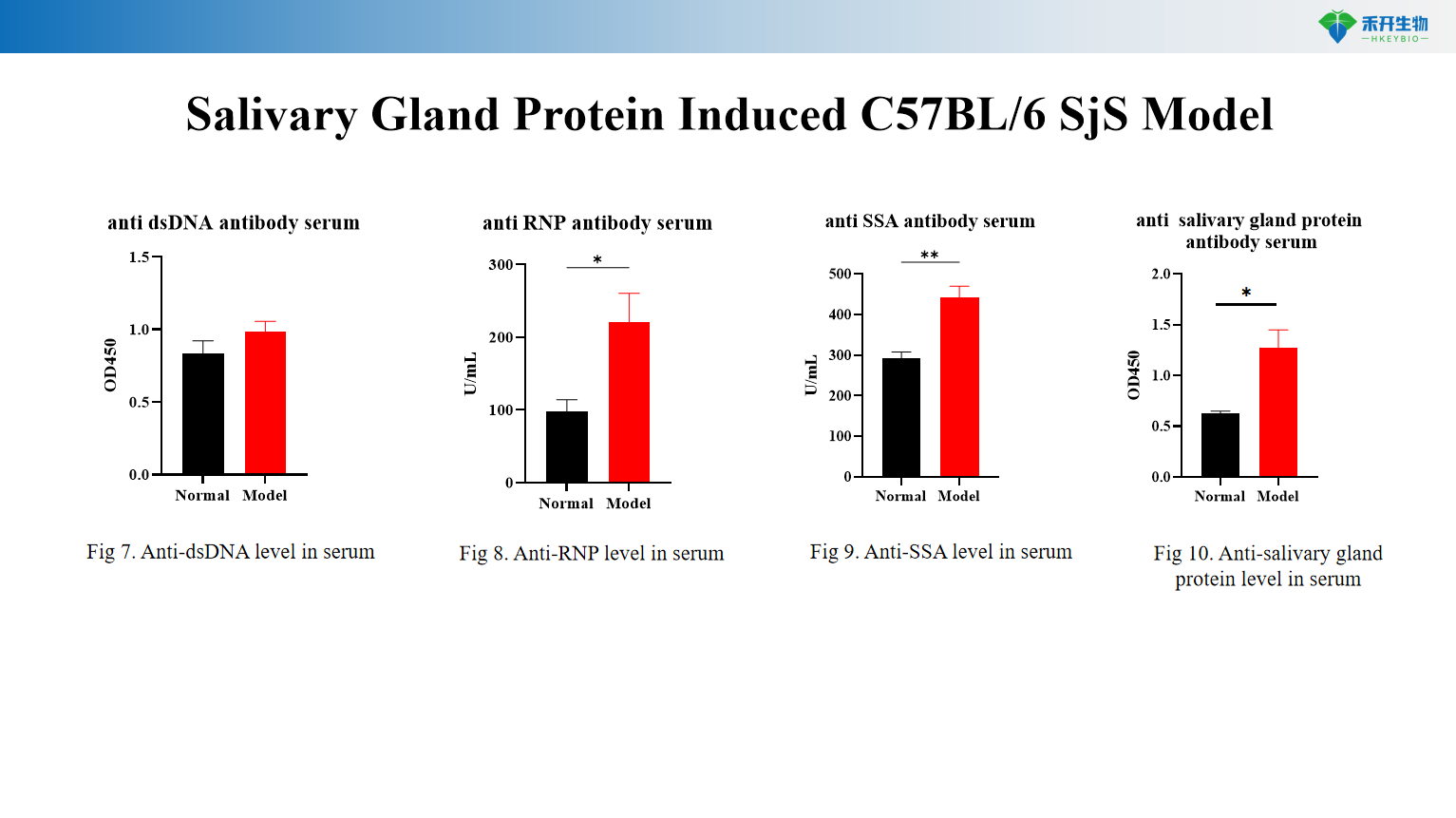
Comprehensive endpoints – Body weight, salivary flow rate, salivary gland index, autoantibody profiles (anti-SSA, anti-RNP, anti-dsDNA, anti-salivary gland protein), cytokine levels (IL-6), histopathology (HE).
Clinically relevant – Both models exhibit hallmark SjS features: lymphocytic infiltration, reduced secretory function, and autoantibody production (anti-SSA, anti-Ro/La).
Translational value – Ideal for testing immunomodulators (corticosteroids, mycophenolate), biologics targeting B cells (rituximab), and novel autoimmune therapies.
IND-ready data packages – Studies can be conducted in accordance with GLP principles.
Technical Data & Validation
Salivary Gland Protein Induced C57BL/6 SjS Model
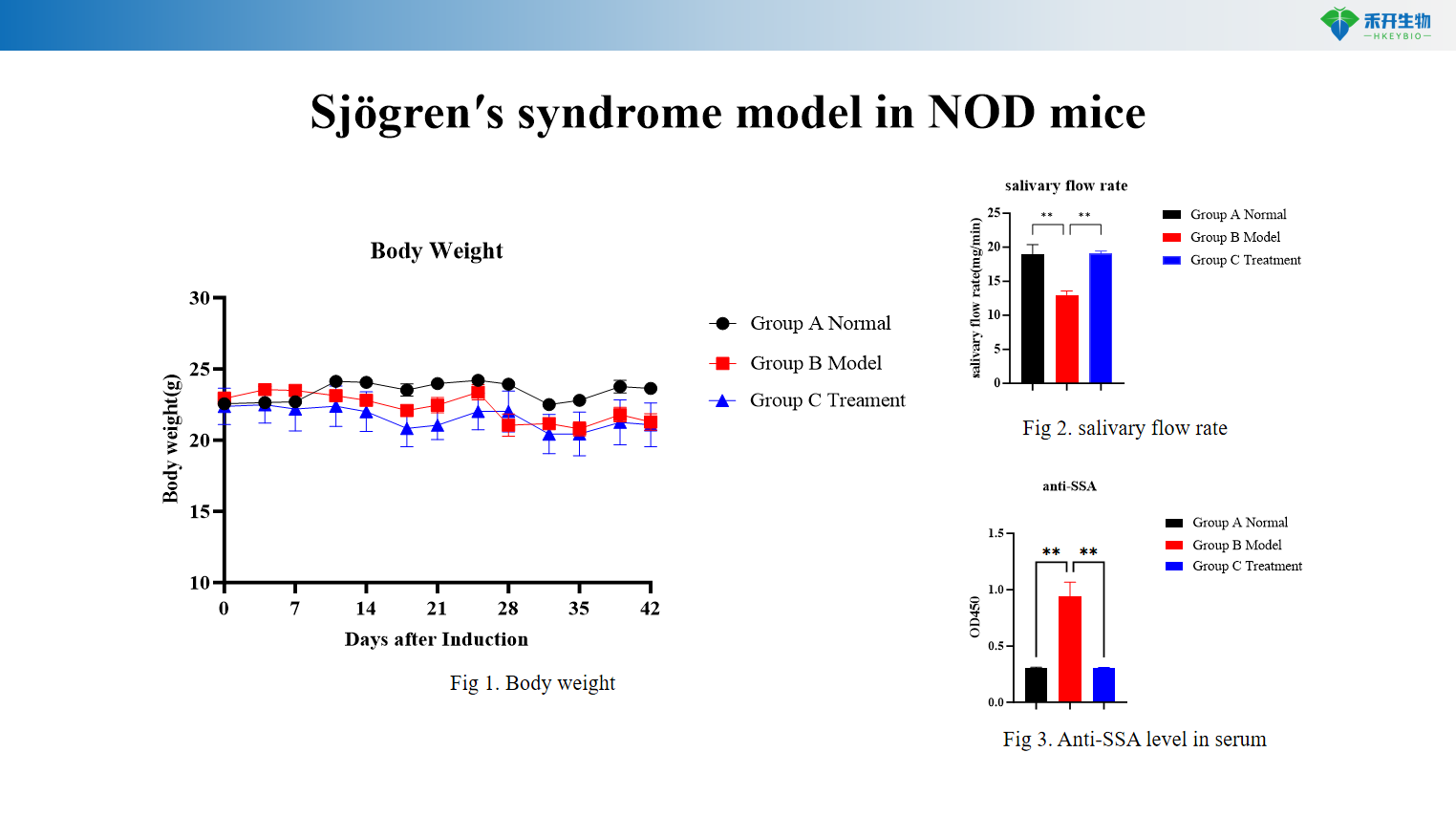
Sjögren′s syndrome model in NOD mice
Applications
• Efficacy testing of immunomodulators (corticosteroids, hydroxychloroquine, mycophenolate mofetil, leflunomide)
• Evaluation of B-cell targeting biologics (rituximab, belimumab) and T-cell modulators (abatacept)
• Target validation for autoantibody production and exocrine gland dysfunction
• Biomarker discovery (autoantibody profiles, inflammatory cytokines)
• IND-enabling pharmacology and toxicology studies
Model Specifications
Parameter | Induced C57BL/6 SjS Model | NOD Spontaneous SjS Model |
Species/Strain | C57BL/6 mouse | NOD mouse |
Induction method | Immunization with salivary gland protein extract + CFA | Spontaneous (genetic predisposition) |
Study duration | 4–8 weeks post-immunization | 8–20 weeks (age-dependent onset) |
Key endpoints | Body weight, salivary flow rate, salivary gland index, autoantibodies (anti-dsDNA, anti-RNP, anti-SSA, anti-salivary gland protein), IL-6 in salivary gland, histopathology (HE) | Body weight, salivary flow rate, anti-SSA antibodies, optional: histopathology of salivary glands |
| Positive control | Corticosteroids (e.g., prednisolone) or rituximab available as reference compounds |
Data package | Raw data, analysis reports, ELISA results, histology slides, bioinformatics (optional) |
❓ Frequently Asked Questions
Q1: What Sjogren’s syndrome models do you provide? A1: We offer two mature SjS models: salivary gland protein-induced model in C57BL/6 mice and spontaneous SjS model in NOD mice for preclinical research.
Q2: What are the underlying mechanisms of the models? A2: The induced model uses salivary gland protein plus adjuvant to trigger immune responses, causing gland inflammation and reduced saliva secretion. The NOD mouse model naturally develops SjS with typical autoantibody production and gland lesions.
Q3: What evaluation indicators are applied? A3: We monitor body weight and salivary flow rate clinically. We also test serum autoantibodies including anti-SSA, anti-RNP and anti-salivary gland protein, and perform HE staining for gland pathological analysis.
Q4: What is the modeling operation process? A4: Multiple immunizations with antigen and adjuvant are performed starting from Day 0 for the induced model. The NOD model develops symptoms spontaneously, and all detections are conducted at the experimental endpoint.
Q5: What are the advantages and application scenarios? A5: Both models stably mimic dry mouth, gland inflammation and autoimmune features of human SjS. They are widely used for efficacy screening and mechanism study of drugs against Sjögren’s syndrome.


