Key Features & Benefits
Clinically relevant – Recapitulates human CLE with photosensitive skin lesions, TLR7 pathway activation, and autoantibody production.
Mechanism-driven – TLR-7 agonist drives innate immune activation; UVB induces cellular damage and IFN-α production, synergistically inducing CLE pathology.
Comprehensive endpoints – Skin clinical score, serum anti-dsDNA antibodies, skin IFN-α levels, histopathology (HE), skin RNA-seq transcriptomics, immune cell clustering analysis.
Translational value – Ideal for testing topical and systemic immunomodulators, JAK inhibitors, anti-IFNAR biologics (anifrolumab), and TLR pathway inhibitors.
IND-ready data packages – Studies can be conducted in accordance with GLP principles.
Technical Data & Validation
TLR-7 Agonist+UVB Induced NHP CLE Model
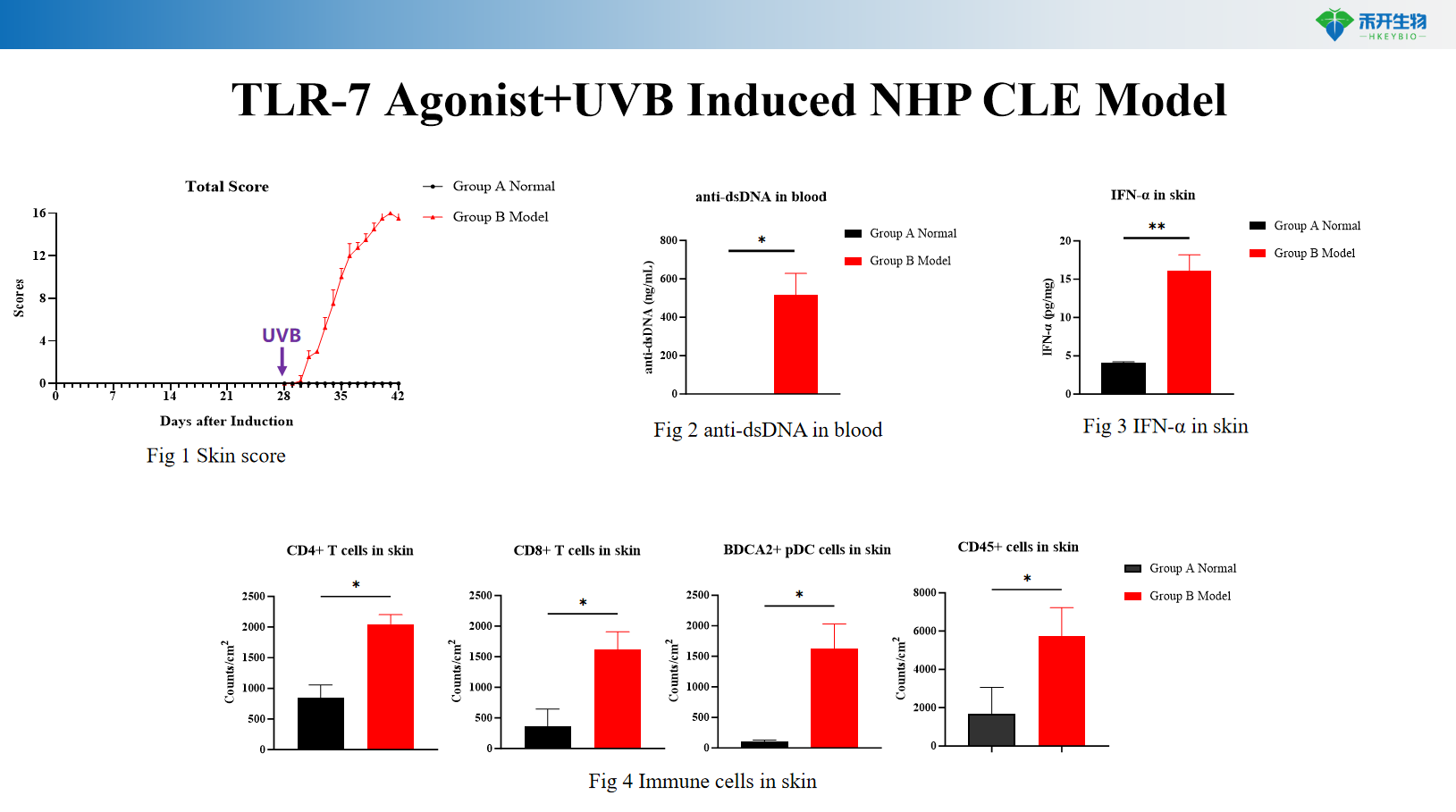
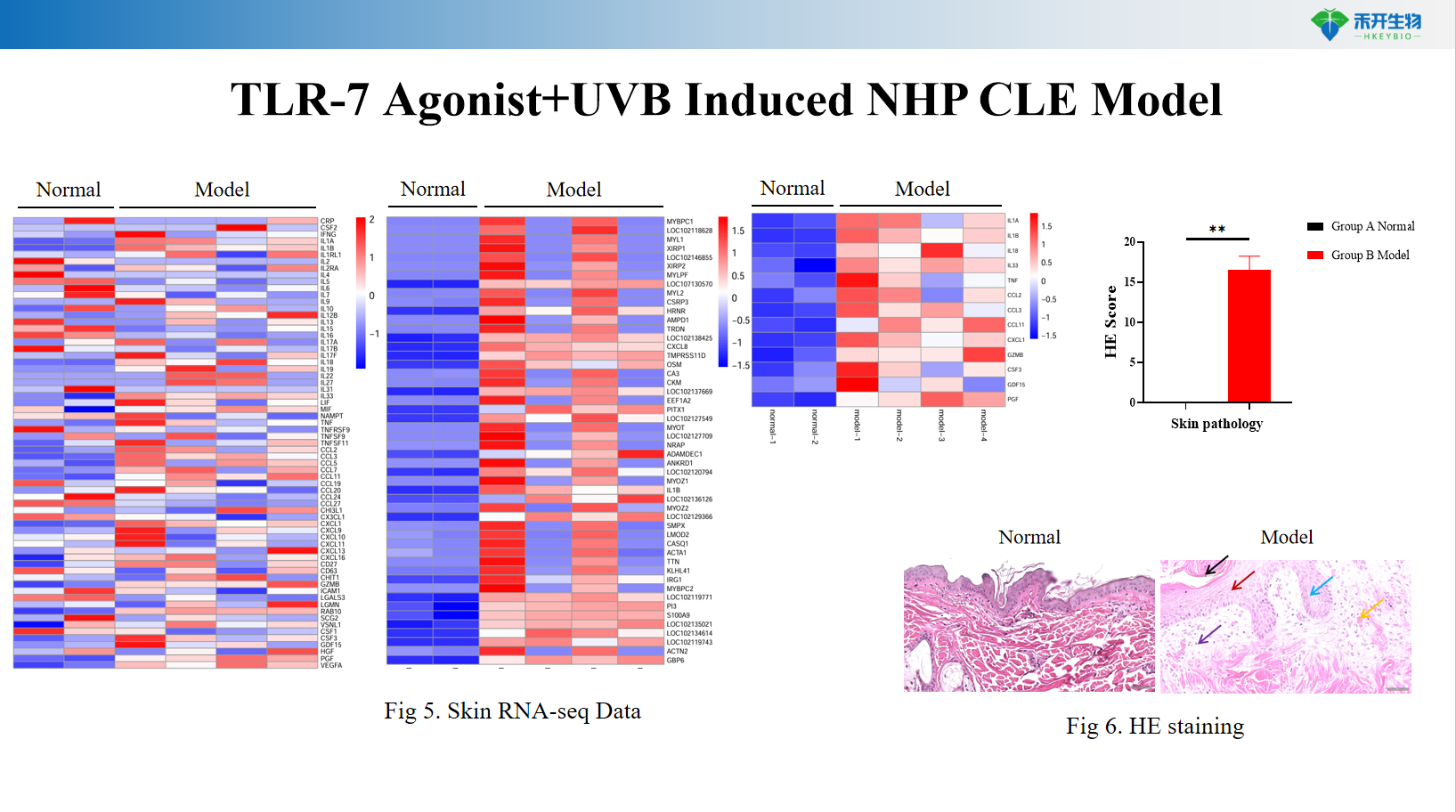
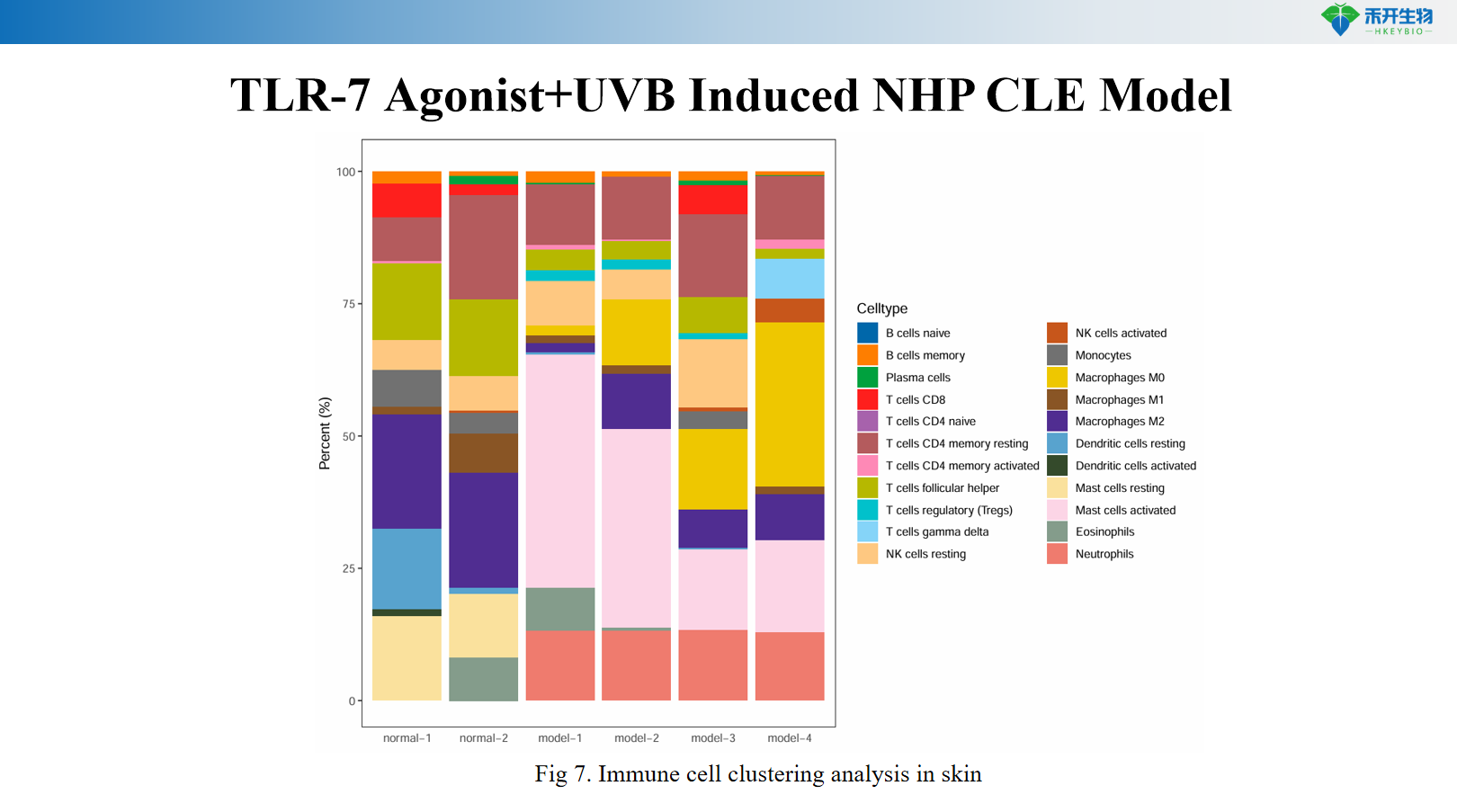
Applications
• Efficacy testing of topical and systemic immunomodulators (corticosteroids, calcineurin inhibitors, JAK inhibitors)
• Evaluation of biologics targeting type I interferons (anifrolumab), TLR7/8 pathways, and B cells (rituximab)
• Target validation for photosensitive autoimmune pathways
• Biomarker discovery (anti-dsDNA, IFN-α, skin transcriptomic signatures)
• IND-enabling pharmacology and toxicology studies
Model Specifications
Parameter | Specification |
Species/Strain | Cynomolgus macaque (Macaca fascicularis) |
Induction method | Topical TLR-7 agonist (e.g., imiquimod) application on shaved back skin + UVB irradiation (312 nm, multiple exposures) |
Study duration | 2–4 weeks (induction + treatment phase) |
Key endpoints | Skin clinical score (erythema, scaling, thickening), serum anti-dsDNA antibodies (ELISA), skin IFN-α levels (ELISA/qPCR), skin histopathology (HE scoring), skin RNA-seq transcriptomics, immune cell clustering analysis (flow cytometry/scRNA-seq) |
Data package | Raw data, analysis reports, clinical photographs, histology slides, RNA-seq data, bioinformatics analysis |
❓ Frequently Asked Questions
Q1: Why choose your NHP CLE model over rodent lupus models for cutaneous lupus drug development?
A1: This model delivers irreplaceable translational value for late-stage preclinical development, with two core differentiators:
High species homology: The skin structure, immune cell composition and type I interferon pathway of cynomolgus macaques are highly consistent with humans. It provides far more reliable efficacy prediction for biologics and targeted therapies than rodent models, effectively reducing the risk of clinical trial failure.
Dual-pathway induction design: Combining TLR-7 agonist application and UVB irradiation, it simultaneously recapitulates innate immune activation and photosensitive disease flares, which better mimics the complex pathogenesis of human CLE than single-induction rodent models, and produces more complete and stable disease phenotypes.
Q2: What is the pathological mechanism of your TLR-7 agonist + UVB co-induced NHP CLE model?
A2: The model drives CLE-like pathology through synergistic activation of two key pathogenic pathways, highly aligned with clinical disease mechanisms:
TLR-7 pathway activation: Topical application of TLR-7 agonist activates plasmacytoid dendritic cells and innate immune responses in the skin, triggering IFN-α secretion and initiating autoimmune cascades, which reproduces the core immunological features of CLE.
UVB-driven tissue damage: Repeated 312 nm UVB irradiation induces keratinocyte DNA damage and autoantigen release, which amplifies local inflammation and mimics the real-world scenario where UV exposure triggers or exacerbates CLE lesions in patients. Under the dual-pathway synergy, the model presents both typical cutaneous lesions (erythema, scaling, thickening) and systemic autoimmune manifestations such as elevated anti-dsDNA antibodies.
Q3: Beyond routine endpoints, what advanced detection capabilities do you provide for this NHP CLE model?
A3: We offer a full-spectrum detection system from clinical phenotype to multi-omics mechanism analysis, supporting in-depth drug development research:
Standard endpoints: Skin clinical scoring, histopathological HE scoring for interface dermatitis, and serum quantification of anti-dsDNA antibodies and IFN-α.
Advanced molecular & cellular assays: Skin RNA-seq transcriptomic profiling for interferon signature analysis, and flow cytometry / single-cell RNA sequencing (scRNA-seq) for fine immune cell clustering in skin and peripheral blood.
Customized options: Immunofluorescence staining for immune complex deposition, multiplex cytokine panel detection and biomarker discovery assays are available on demand.
Q4: What types of therapeutics and R&D stages is this NHP CLE model applicable to?
A4: This model supports the full preclinical development pipeline for anti-CLE therapies, and is particularly valuable for critical translational research:
Applicable drug modalities: Topical and systemic immunomodulators, JAK inhibitors, anti-IFNAR biologics (e.g. anifrolumab), TLR pathway inhibitors, and B-cell targeting therapies.
Applicable R&D stages: From early target validation and lead compound potency comparison, to IND-enabling pivotal pharmacology studies. Thanks to the high clinical relevance of NHP models, the generated data can effectively bridge preclinical findings to clinical trials, and provide robust supporting evidence for investigational new drug applications.
Q5: Do you support customized study protocols, and can the data support IND submissions?
Flexible customization: Our scientific team can tailor the TLR-7 agonist dosage, UVB irradiation intensity/frequency, administration route and dosing schedule, and endpoint assay panel according to your drug’s mechanism of action and research objectives.
Regulatory compliance: Studies can be conducted in strict accordance with GLP principles, and the deliverables fully meet the regulatory requirements of the FDA, EMA and NMPA.
Standard data package: Raw data, formal analysis reports, clinical skin photographs, histology slides, ELISA results, and full sequencing data with bioinformatics analysis (for omics studies). All data are fully traceable and audit-ready for IND submission.


