Key Features & Benefits
Clinically relevant – Both models closely mimic human neuropathic pain with mechanical allodynia, rapid onset, and chronic persistence.
Complementary mechanisms – SNI model lacks thermal hyperalgesia, useful for isolating mechanical pain pathways; SNL model produces both mechanical and thermal hypersensitivity.
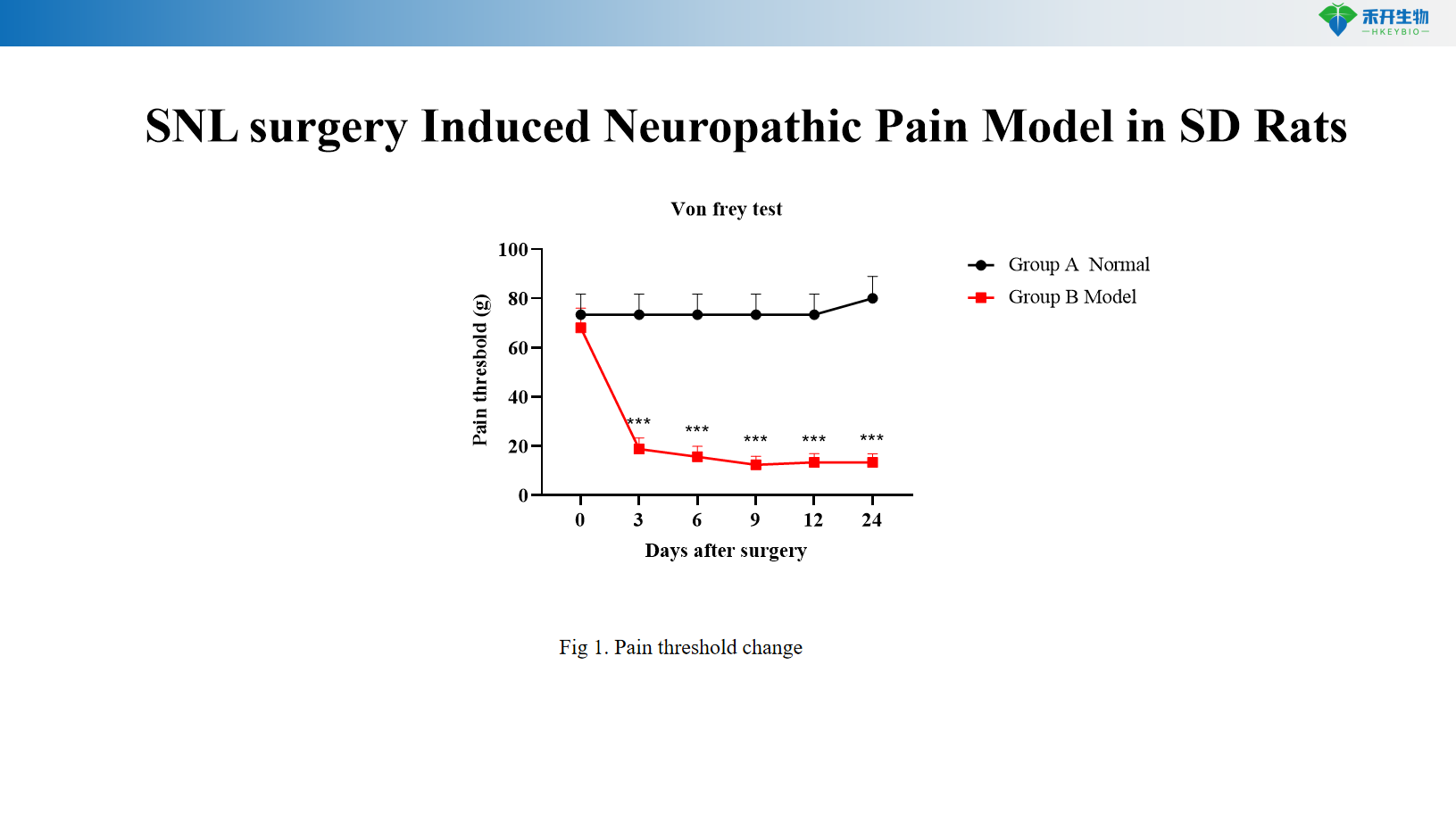
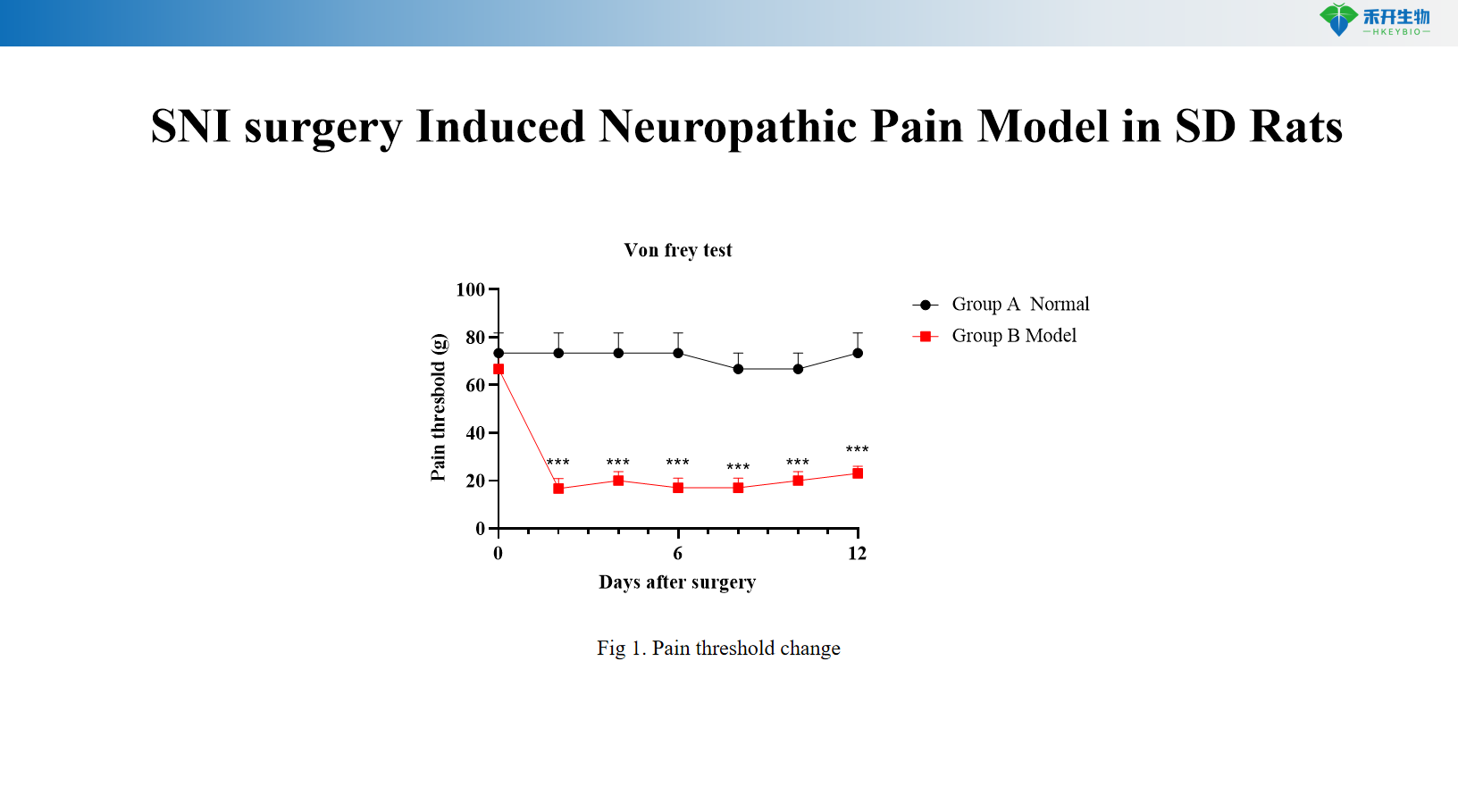
Quantifiable endpoints – Mechanical withdrawal threshold (von Frey filaments), thermal withdrawal latency (Hargreaves test, SNL only).
Well-characterized and reproducible – Widely used models with established protocols and high inter-laboratory reproducibility.
Translational value – Ideal for testing gabapentinoids (gabapentin, pregabalin), sodium channel blockers (lidocaine, carbamazepine), and novel pain therapeutics.
IND-ready data packages – Studies can be conducted in accordance with GLP principles.
Technical Data & Validation
SNL surgery Induced Neuropathic Pain Model in SD Rats
SNI surgery Induced Neuropathic Pain Model in SD Rats
Applications
• Efficacy testing of gabapentinoids (gabapentin, pregabalin), sodium channel blockers (lidocaine, carbamazepine, oxcarbazepine), and tricyclic antidepressants (amitriptyline, nortriptyline)
• Evaluation of novel analgesics targeting TRPV1, P2X3, and other pain pathways
• Target validation for peripheral and central sensitization mechanisms
• Biomarker discovery (pain-related neuropeptides, inflammatory mediators)
• IND-enabling pharmacology and toxicology studies
Model Specifications
Parameter | SNI Model | SNL Model |
Species/Strain | Sprague-Dawley rat |
Induction method | Ligation and transection of tibial and common peroneal branches of sciatic nerve | Tight ligation of L5 and/or L6 spinal nerves |
Onset & duration | Rapid onset (within 24h), persistence >2 months |
Sensory symptoms | Mechanical allodynia (no thermal hyperalgesia) | Mechanical allodynia and thermal hyperalgesia |
Key endpoints | Mechanical withdrawal threshold (von Frey) | Mechanical withdrawal threshold (von Frey), thermal withdrawal latency (Hargreaves) |
| Positive control | Gabapentin or pregabalin available as reference compounds |
| Data package | Raw data, analysis reports, behavioral data (von Frey, Hargreaves), bioinformatics (optional) |
❓ Frequently Asked Questions
Q: What are the differences between SNI and SNL models?
A: SNI involves ligation/transection of peripheral nerve branches, producing mechanical allodynia without thermal hyperalgesia. SNL involves ligation of spinal nerves, producing both mechanical allodynia and thermal hyperalgesia. Choose SNI for pure mechanical pain studies; choose SNL for combined mechanical/thermal pain mechanisms.
Q: How is mechanical allodynia measured?
A: Using von Frey filaments, calibrated monofilaments are applied to the plantar surface of the hind paw to determine the threshold force (grams) that elicits a withdrawal response. A lower threshold indicates mechanical allodynia.
Q: Can these models be used for IND-enabling studies?
A: Yes. Studies can be conducted in accordance with GLP principles for regulatory submissions (FDA, EMA).
Q: Do you offer customized study protocols (e.g., prophylactic vs. therapeutic dosing, combination therapies)?
A: Absolutely. Our scientific team tailors surgical protocols, treatment schedules, and endpoint analyses to your specific drug candidate.
Q: What is the typical timeline for a pilot efficacy study?
A: Behavioral assessments typically start 7–14 days post-surgery (after recovery) and continue for 2–4 weeks for acute studies; chronic studies may extend to 8 weeks.


