Key Features & Benefits
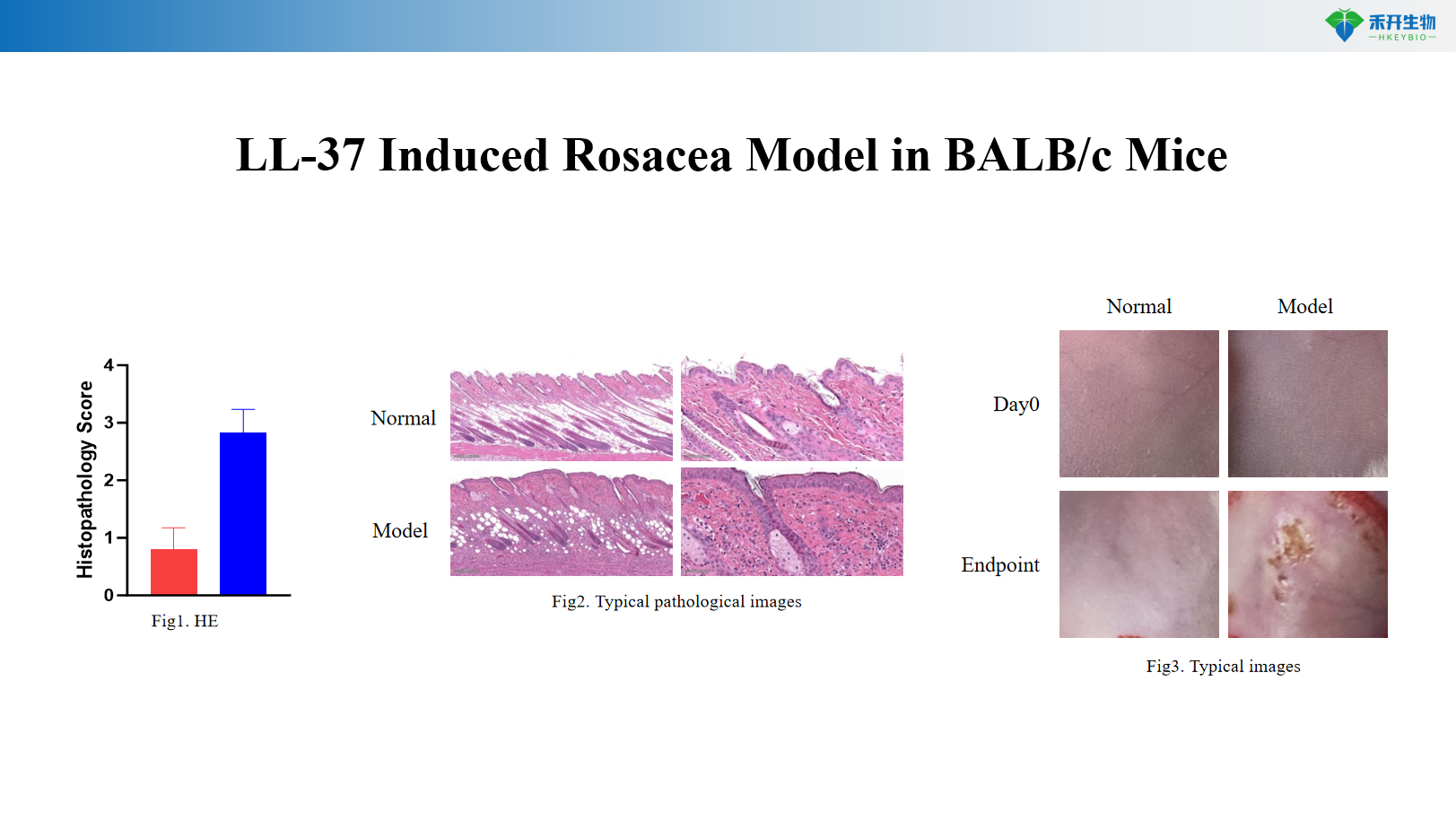
Clinically relevant – LL-37 is a key effector molecule in human rosacea; its injection induces erythema, inflammation, and histopathology resembling the disease.
Mechanism-driven – Direct activation of innate immune pathways, mimicking the neurovascular and inflammatory aspects of rosacea.
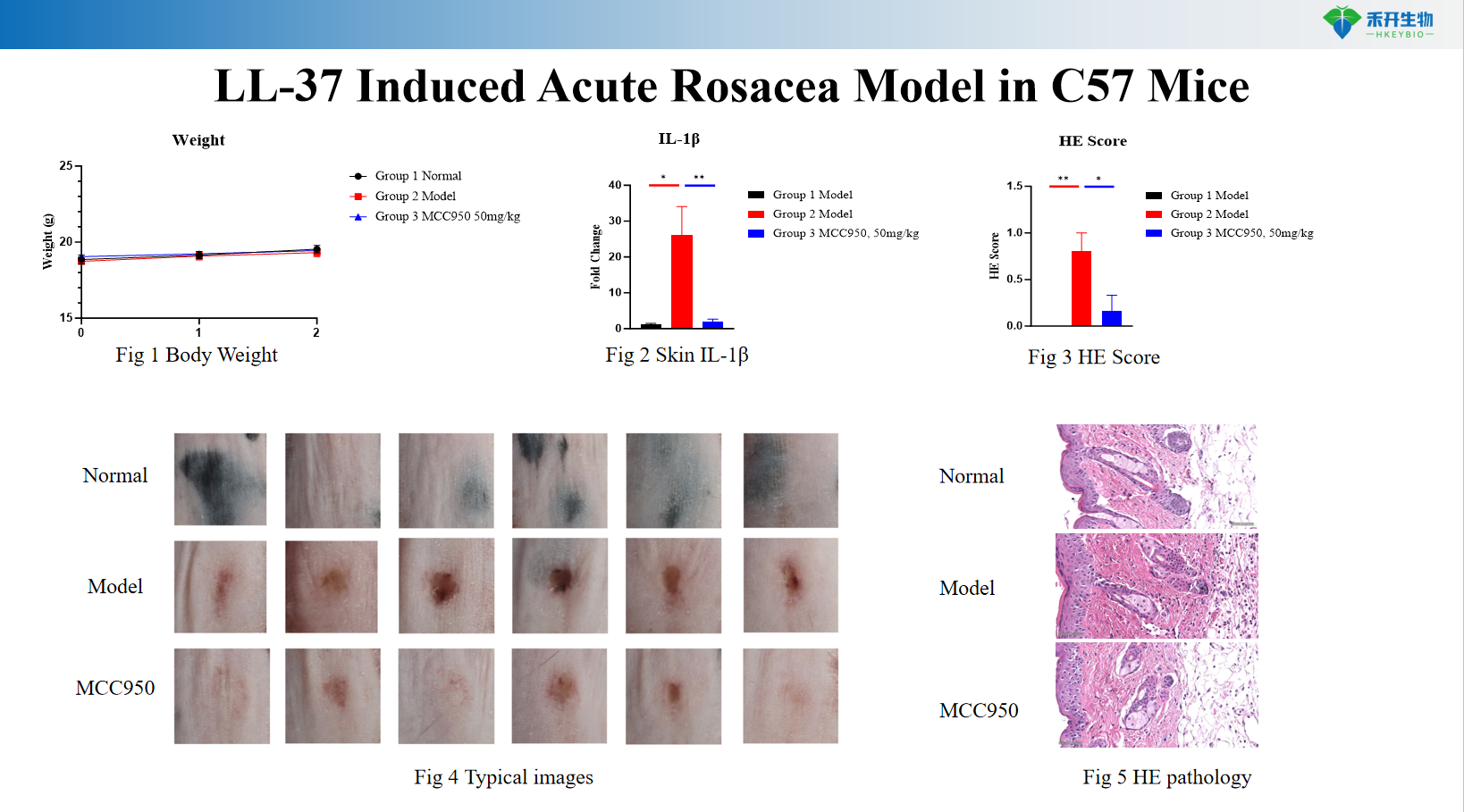
Comprehensive endpoints – Body weight, skin IL-1β levels, histopathology (HE score), typical pathological images.
Translational value – Ideal for testing anti-inflammatory agents (corticosteroids), vasoconstrictors (brimonidine), and immunomodulators (doxycycline, JAK inhibitors).
IND-ready data packages – Studies can be conducted in accordance with GLP principles.
Technical Data & Validation
LL-37 Induced Rosacea Model in BALB/c Mice
LL-37 Induced Acute Rosacea Model in C57 Mice
Applications
• Efficacy testing of topical and systemic anti-inflammatory agents (corticosteroids, calcineurin inhibitors)
• Evaluation of vasoconstrictors (brimonidine, oxymetazoline), antibiotics (doxycycline, minocycline), and JAK inhibitors
• Target validation for innate immune pathways (cathelicidin, TLR2, inflammasome) and neurovascular regulation
• Biomarker discovery (IL-1β, inflammatory cytokines)
• IND-enabling pharmacology and toxicology studies
Model Specifications
Parameter | Specification |
Species/Strain | BALB/c mouse |
Induction method | ntradermal injection of synthetic LL-37 peptide (cathelicidin) into shaved back skin (single or repeated doses) |
Study duration | 1–7 days (acute) or up to 14 days (subacute) |
Key endpoints | Body weight, skin IL-1β levels (ELISA), histopathology (HE score for inflammation, epidermal thickness), clinical photographs, optional: erythema scoring, immunohistochemistry (cathelicidin, TLR2), cytokine profiling (TNF-α, IL-6) |
| Positive control | Doxycycline or corticosteroids available as reference compounds |
Data package | Raw data, analysis reports, ELISA results, histology slides, clinical photographs, bioinformatics (optional) |
❓ Frequently Asked Questions
Q1: What rosacea models do you provide? A1: We offer LL-37-induced acute and chronic rosacea models using BALB/c and C57 mice for preclinical research on this inflammatory skin disease.
Q2: What is the modeling mechanism? A2: LL-37 peptide induces skin inflammation, erythema, papules and pustules. It simulates neurovascular and innate immune dysregulation, which is consistent with the pathogenesis of human rosacea.
Q3: What evaluation indicators are used for assessment? A3: We observe clinical skin manifestations, detect inflammatory cytokines such as IL-1β, and perform HE staining to analyze skin pathological changes and inflammation scores.
Q4: What are the modeling cycles and administration schedules? A4: The acute model is completed within 48 hours with twice-daily LL-37 treatment. The chronic model adopts once-daily administration and lasts for 28 days.
Q5: What are the advantages and application scenarios? A5: The models show typical rosacea-like lesions with stable and repeatable results. They are ideal for efficacy screening and mechanism study of topical and systemic drugs for rosacea treatment.


