Key Features & Benefits
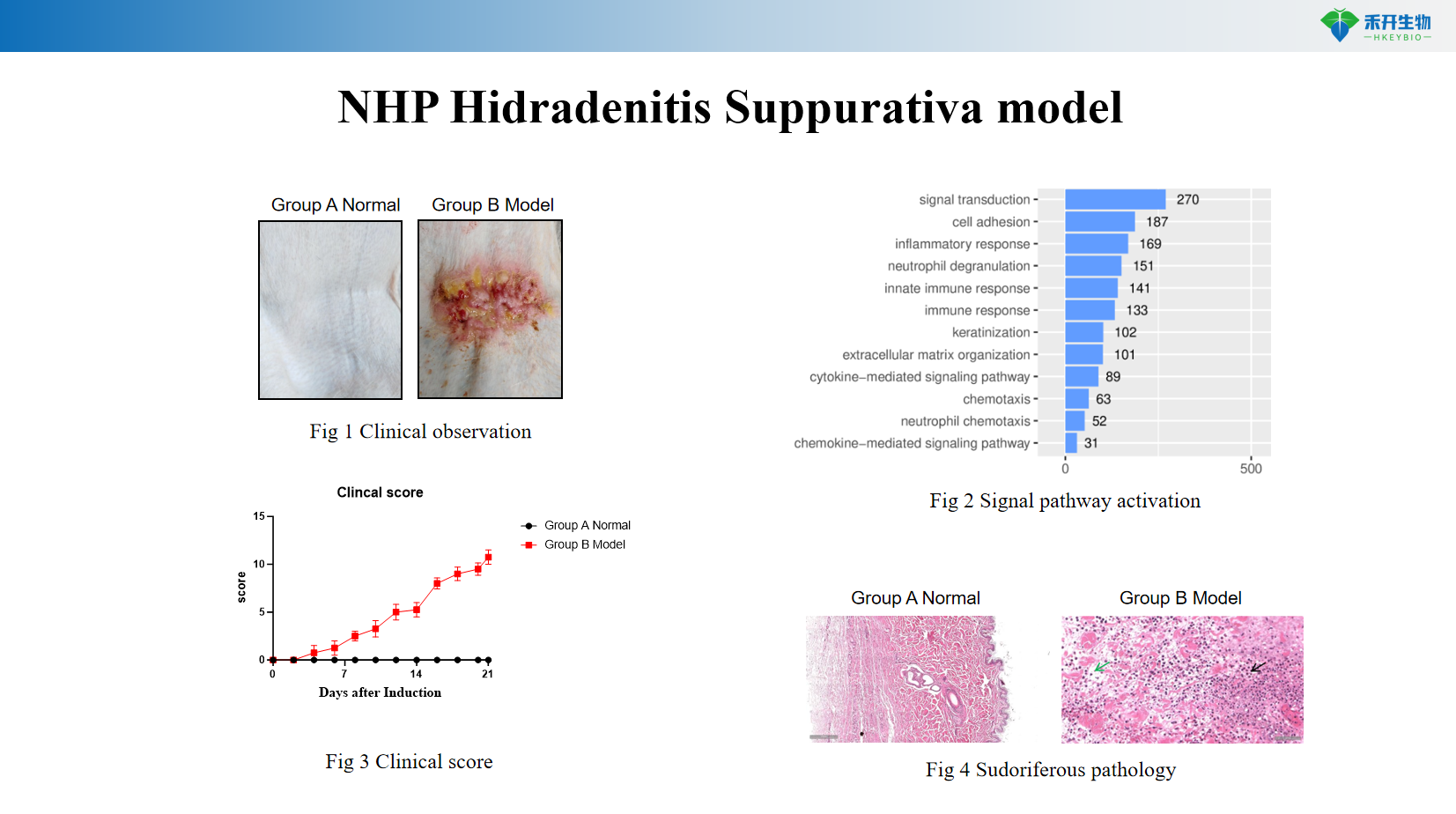
Clinically relevant – Mimics human HS: dermal tunnels, neutrophilic infiltration, chronic inflammatory skin lesions.
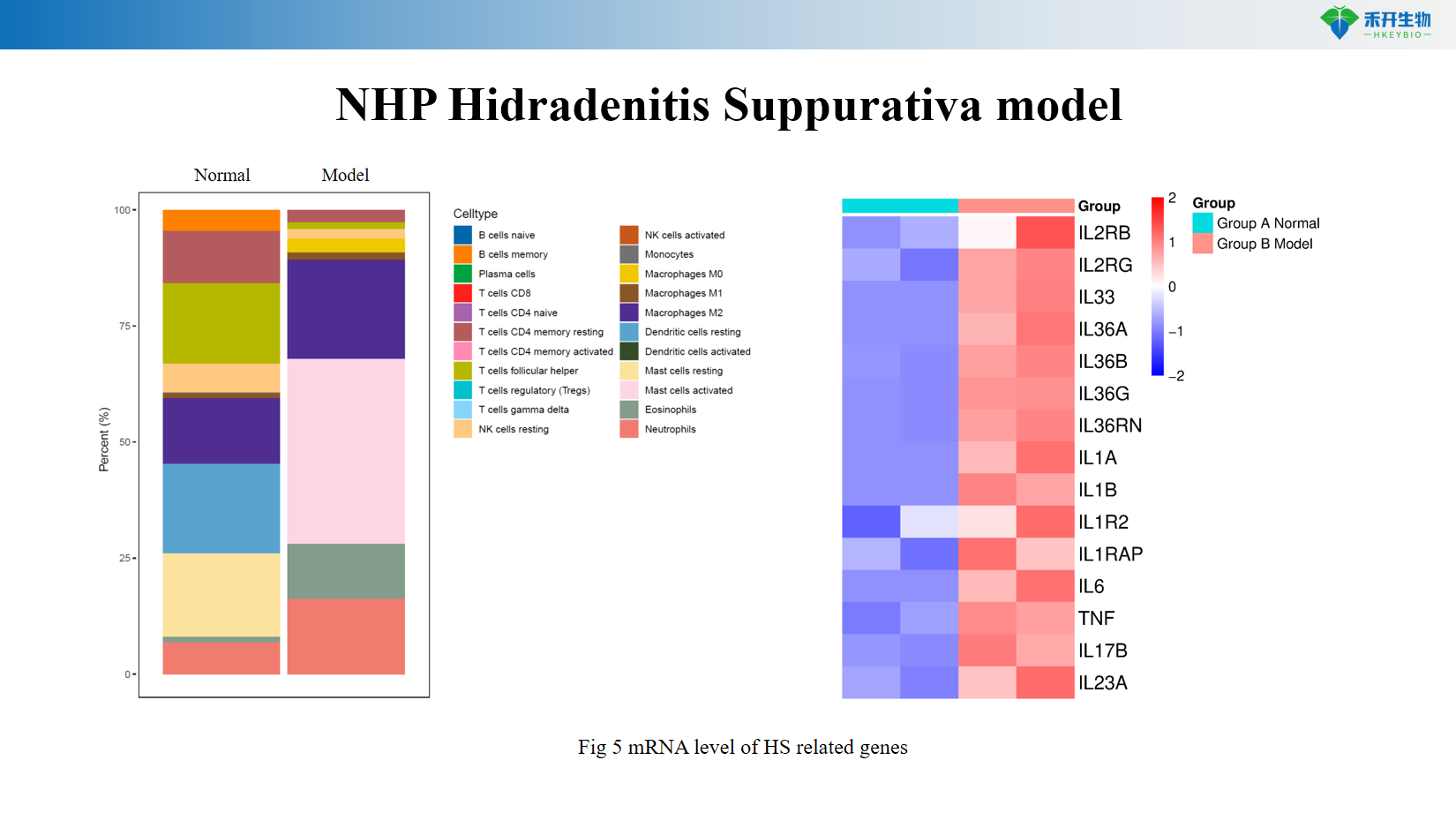
Multi-mechanism engagement – Recapitulates innate (IL-1β, TNF-α, neutrophils) and adaptive (Th1/Th17, B-cell) immune components.
Comprehensive endpoints – Clinical observation, histopathology, mRNA expression of HS-related genes (IL-1β, TNF-α, CXCL1, CXCL8, Th17 markers).
Translational value – Ideal for testing biologics (anti-TNF, anti-IL-1, anti-IL-17), JAK inhibitors, and small molecules.
IND-ready data packages – Studies can be conducted in accordance with GLP principles.
Technical Data & Validation
Representative data from our NHP HS model:
NHP Hidradenitis Suppurativa model
Applications
• Efficacy testing of biologics (anti-TNF, anti-IL-1, anti-IL-17/23), JAK inhibitors, and small molecule anti-inflammatory drugs
• Target validation for innate and Th1/Th17 pathways in HS
• Biomarker discovery (gene signatures, soluble mediators)
• Mechanism of action (MOA) studies
• IND-enabling toxicology and safety pharmacology studies
Model Specifications
Parameter | Specification |
Species | Cynomolgus macaque (Macaca fascicularis) |
Induction method | Proprietary multi-step protocol (combination of mechanical/chemical/immunological stimuli) – details available under CDA |
Study duration | 6–10 weeks (induction + treatment phase) |
Key endpoints | Clinical score (erythema, nodules, tunnels), histopathology (dermal tunnels, inflammatory infiltrates), mRNA expression of IL-1β, TNF-α, CXCL1, CXCL8, Th17 markers, immunohistochemistry |
Data package | Raw data, analysis reports, histology slides, gene expression data, bioinformatics (optional) |
❓ Frequently Asked Questions
Q1: What preclinical model do you provide for hidradenitis suppurativa? A1: We offer a mature non-human primate (NHP) model of hidradenitis suppurativa for relevant disease research and drug evaluation.
Q2: What is the pathogenesis of this HS model? A2: Model induction triggers strong innate and adaptive immune responses. It activates multiple inflammatory pathways and elevates key cytokines such as IL-1β, TNF-α and IL-17, reproducing typical pathological changes of human HS.
Q3: What evaluation criteria are adopted? A3: We assess clinical lesion scores, perform pathological examination of sweat glands, and detect the expression levels of HS-related inflammatory genes.
Q4: What is the modeling cycle? A4: The whole model construction period lasts 21 days from Day 0 to the experimental endpoint for observation and sample detection.
Q5: What are the model advantages and applications? A5: This NHP model highly mimics the clinical symptoms and immune characteristics of human HS with stable phenotypes. It is ideal for efficacy screening and mechanism research of targeted anti-inflammatory drugs for hidradenitis suppurativa.


