Key Features & Benefits
Clinically relevant – Two complementary models cover allergen-induced urticaria and passive IgE-mediated anaphylaxis, closely mimicking human disease.
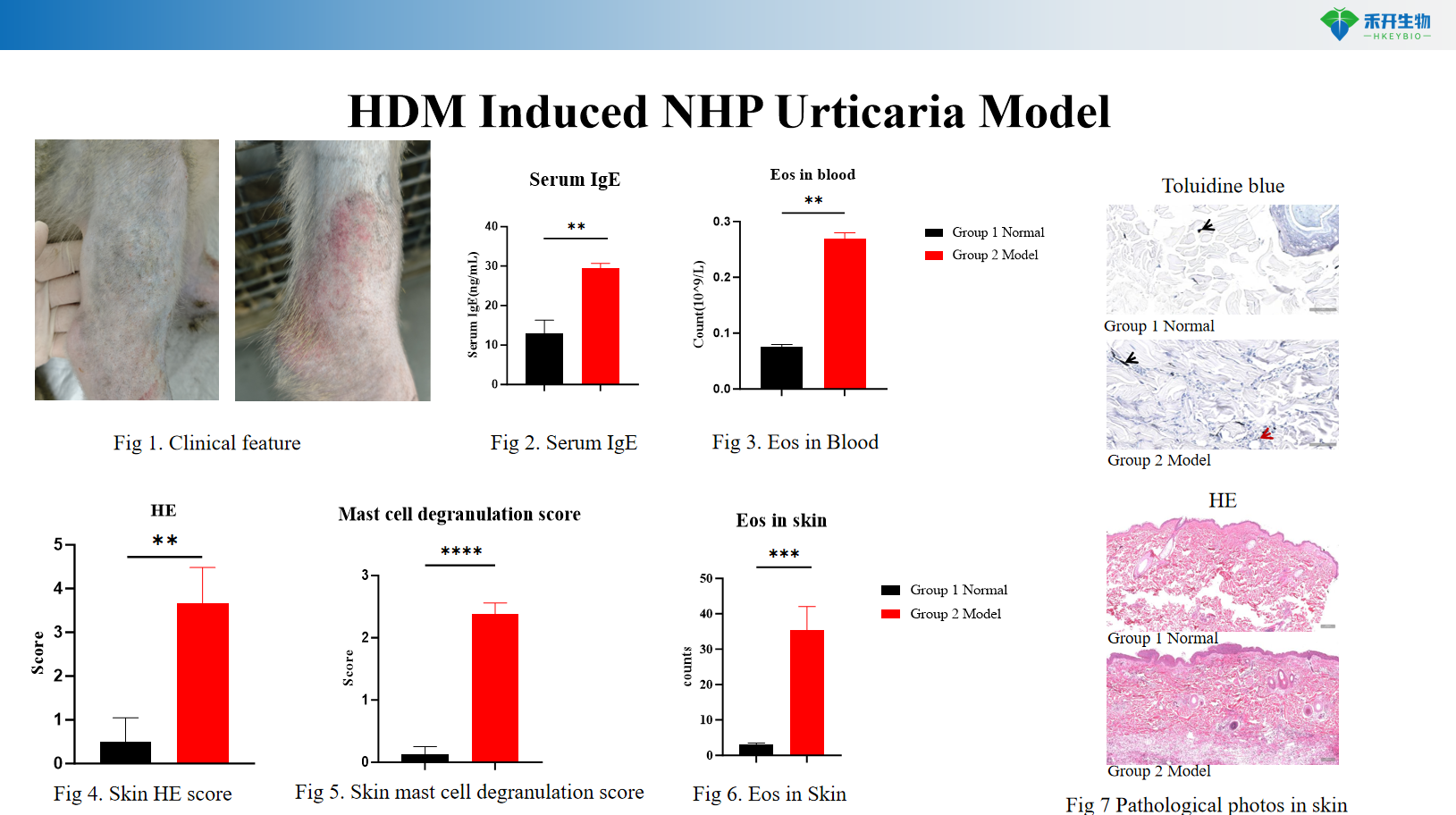
Quantifiable endpoints – Clinical scores, wheal size, serum IgE, blood eosinophils, skin histopathology (HE, toluidine blue), mast cell degranulation.
Mechanism-driven – HDM model reflects environmental allergen sensitization; PCA model isolates IgE/mast cell axis.
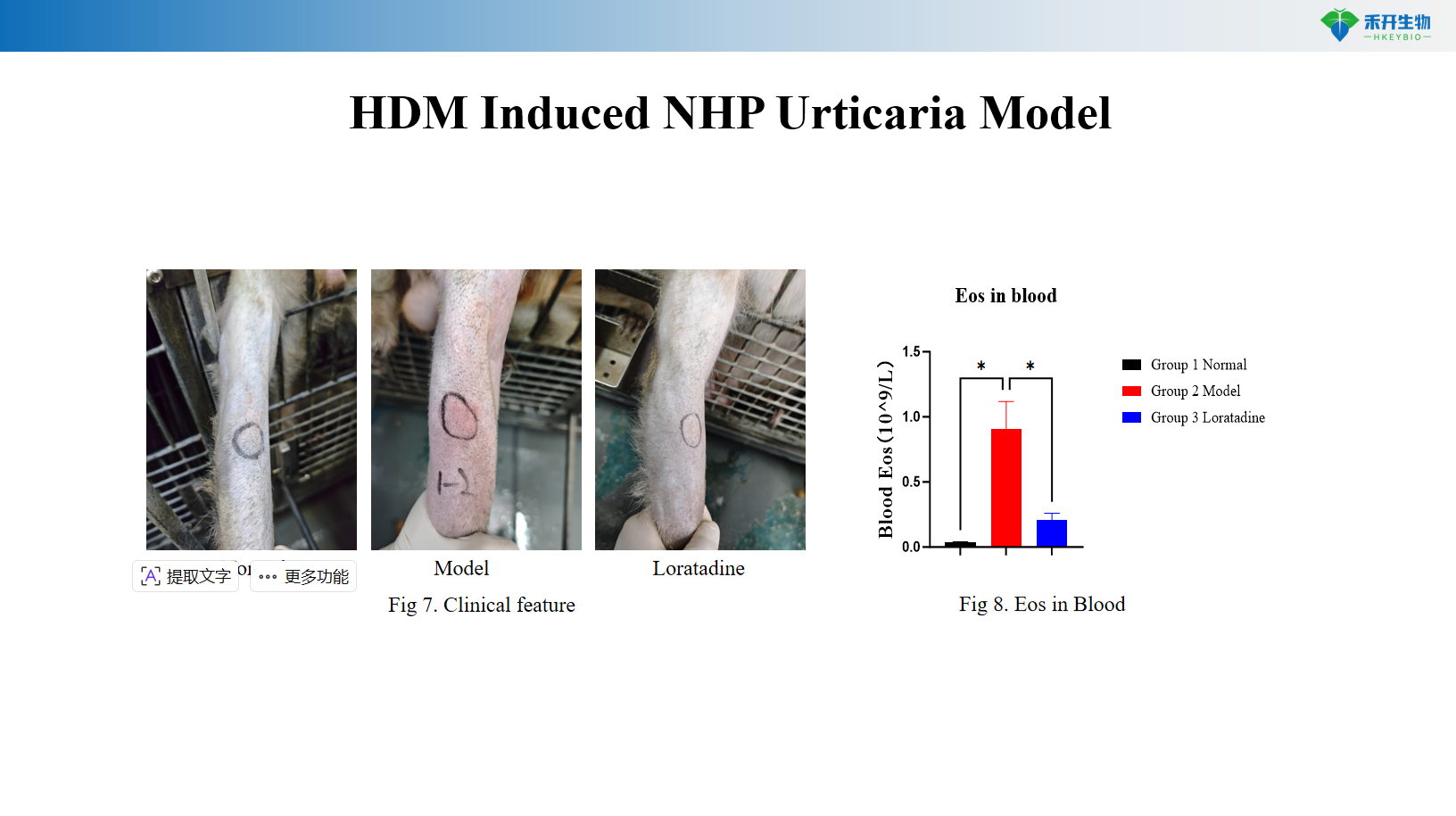
Translational value – Ideal for testing anti-IgE biologics, mast cell stabilizers, H1-antihistamines, and anti-inflammatory agents.
IND-ready data packages – Studies can be conducted in accordance with GLP principles.
Technical Data & Validation
Representative data from our NHP Urticaria Model:
HDM Induced NHP Urticaria Model
•
HDM Induced NHP Urticaria Model
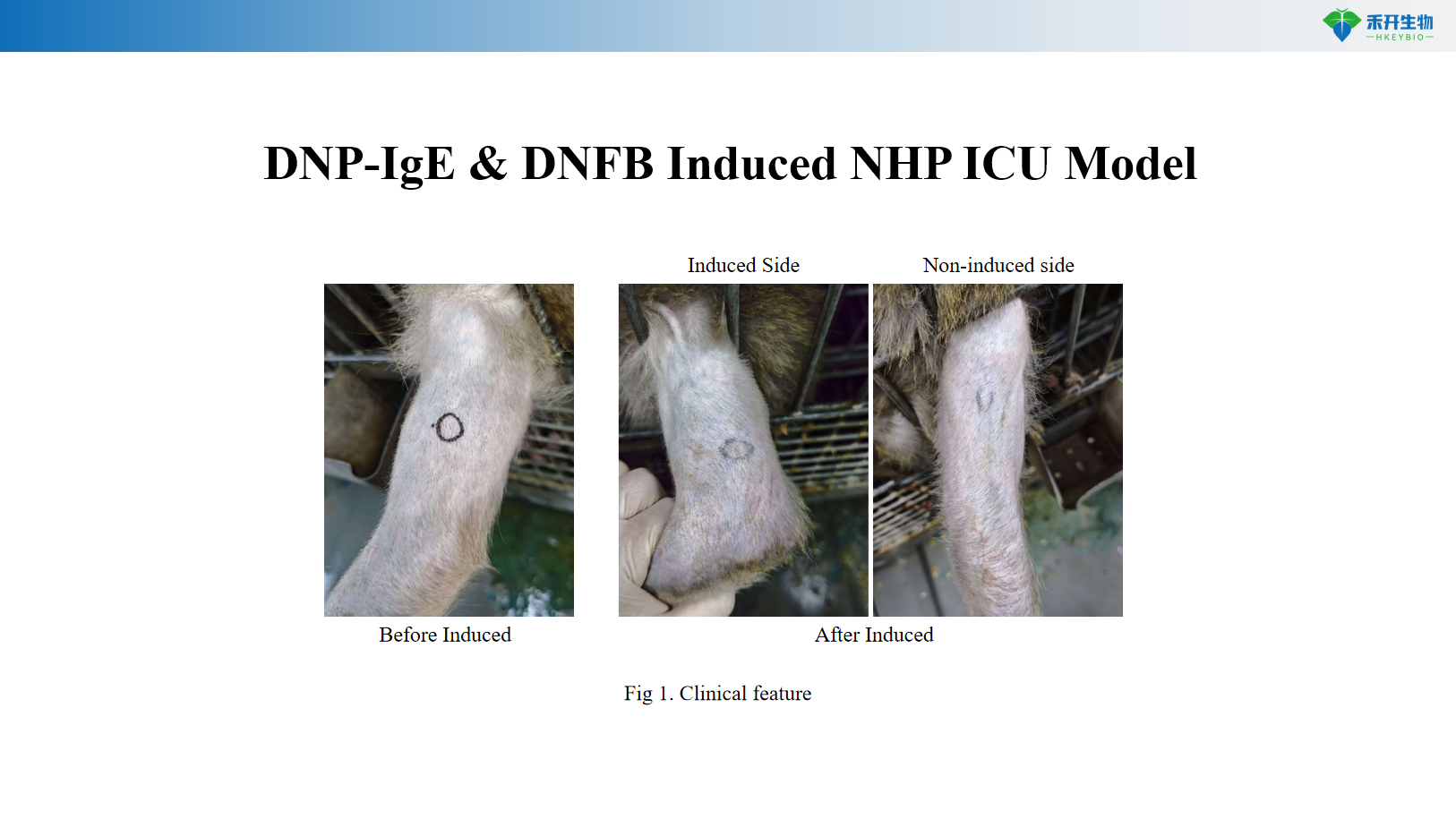
Applications
• Efficacy testing of anti-IgE biologics (omalizumab, ligelizumab), mast cell stabilizers (cromolyn), H1-antihistamines, and anti-inflammatory agents
• Target validation for IgE/FcεRI pathway and mast cell biology
• Biomarker discovery (IgE, eosinophils, mast cell mediators)
• Mechanism of action (MOA) studies for anti-allergic compounds
• IND-enabling safety pharmacology studies
Model Specifications
Parameter | HDM Induced Urticaria Model | DNP-IgE & DNFB Induced PCA Model |
Species | Cynomolgus macaque (Macaca fascicularis) | Cynomolgus macaque (Macaca fascicularis) |
Induction method | Repeated epicutaneous or intradermal HDM extract sensitization | Intradermal injection of DNP-IgE followed by DNFB challenge (topical or intradermal) |
Study duration | 4–6 weeks (sensitization + challenge) | 1–2 weeks (passive sensitization + acute challenge) |
Key endpoints | Clinical score (wheal/flare), serum IgE, blood eosinophils, skin H&E score, toluidine blue (mast cell degranulation), eosinophil infiltration | Wheal size, clinical feature, blood eosinophils (optional), mast cell degranulation |
Data package | Raw data, analysis reports, clinical photographs, histology slides (HE, toluidine blue), bioinformatics (optional) |
❓ Frequently Asked Questions
Q1: What urticaria models do you provide? A1: We offer two non-human primate (NHP) models: HDM-induced urticaria model and DNP-IgE & DNFB-induced passive cutaneous anaphylaxis (PCA) model.
Q2: What are the modeling mechanisms? A2: HDM acts as an allergen to trigger sensitization and challenge, causing typical wheal-and-flare skin reactions and mast cell degranulation. The PCA model induces type I hypersensitivity via IgE-mediated allergic responses.
Q3: What evaluation indicators are adopted? A3: We observe clinical urticaria and PCA symptoms. We test eosinophils and mast cells, detect serum IgE, and conduct HE and toluidine blue staining for pathological analysis.
Q4: What are the modeling procedures and cycles? A4: The HDM model includes sensitization and challenge phases, lasting 28 days in total. The PCA model completes IgE injection on Day 0 and DNFB stimulation on Day 1 for immediate reaction observation.
Q5: What are the advantages and applications? A5: NHP models share high similarity with human skin and immune systems. They are ideal for efficacy evaluation and mechanism research of anti-urticaria and anti-allergic drugs.


