Main features and benefits
Clinical relevance – Overview of human asthma pathophysiology: airway hyperresponsiveness, eosinophilic inflammation, elevated Th2 cytokines.
Multiple allergen options – A.Suum protein and HDM induction models available.
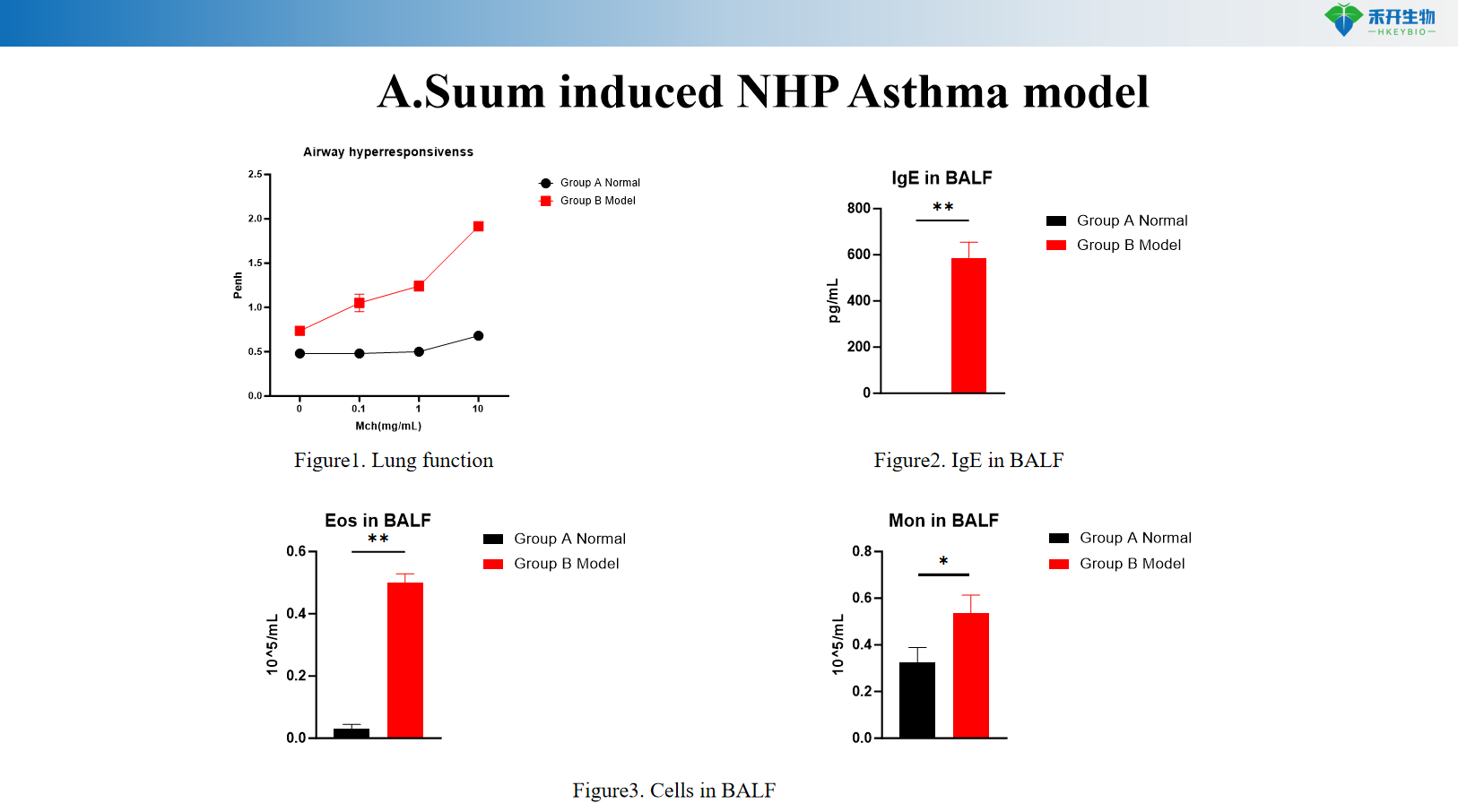
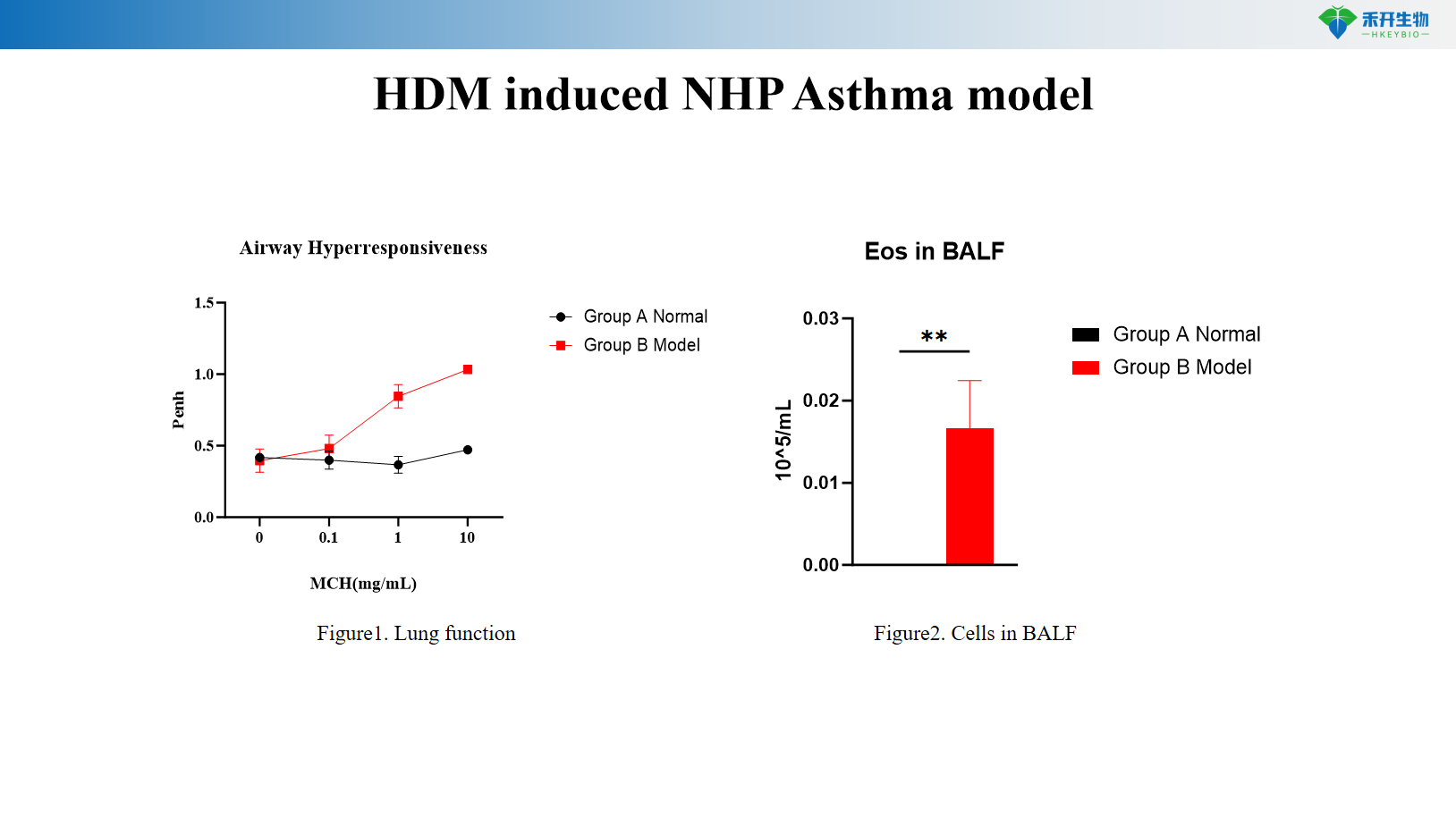
Composite endpoint – includes lung function (airway resistance), BALF cell count, IgE/IgG1 levels, histopathology and cytokine analysis.
IND Ready Packet – Research can be conducted according to GLP principles.
Customizable protocols – Tailor sensitization protocols, challenge plans and endpoint analyzes to your drug candidates.
Technical data and verification
Representative data from our NHP asthma model:
A. Suum-induced NHP asthma model
•
HDM-induced NHP asthma model
Application areas
• Efficacy testing of asthma treatments (biologics, small molecules, inhaled drugs)
• Validation of targets in Th2-driven inflammation
• Biomarker discovery and validation (eosinophils, IgE, cytokines)
• Toxicology and safety pharmacology studies to support IND
• Mechanism of action (MOA) investigation
Model specifications
scope | A.Suum induction model | HDM induced model |
Species | Macaca fascicularis | Macaca fascicularis |
induction method | A.Suum protein + alum adjuvant (systemic sensitization) + A.Suum aerosol challenge | House dust mite (HDM) extract, intratracheal or aerosol sensitization and challenge |
study time | 8–12 weeks | 6–10 weeks |
critical endpoint | Airway hyperresponsiveness, BALF eosinophils, IgE, IL-4/5/13, lung histopathology | Airway hyperresponsiveness, BALF eosinophils, total IgE and HDM-specific IgE, Th2 cytokines, lung histopathology |
packet | Raw data, analysis reports, histology slides, bioinformatics (optional) |
|
❓ FAQ
Q: How is the NHP asthma model induced?
A: There are two models available: A.Suum protein with alum adjuvant (systemic sensitization followed by aerosol challenge) and HDM (intratracheal or aerosol sensitization/challenge). Both induce eosinophilic airway inflammation and hyperresponsiveness.
Q: Can these models be used for IND support studies?
Answer: Yes. We can conduct studies in compliance with GLP principles; data packages are designed to support regulatory submissions (FDA, EMA).
Q: Do you offer customized research plans?
Answer: Of course. Our scientific team customizes sensitization protocols, dosing regimens, and endpoint analyzes for your drug candidate and MOA.
Q: What is the typical timeline for a pilot efficacy study?
A: Pilot studies (n=4-6/group) can be completed in 10-12 weeks and include sensitization, challenge, treatment and endpoint analysis.


