


| Quantity: | |
|---|---|


Multiple susceptible strains – C57BL/6, DBA/1 mice and Wistar rats available to suit different genetic backgrounds and experimental needs.
Clinically relevant – Recapitulates human anti-GBM disease with acute crescentic glomerulonephritis, renal dysfunction, and characteristic histopathology.
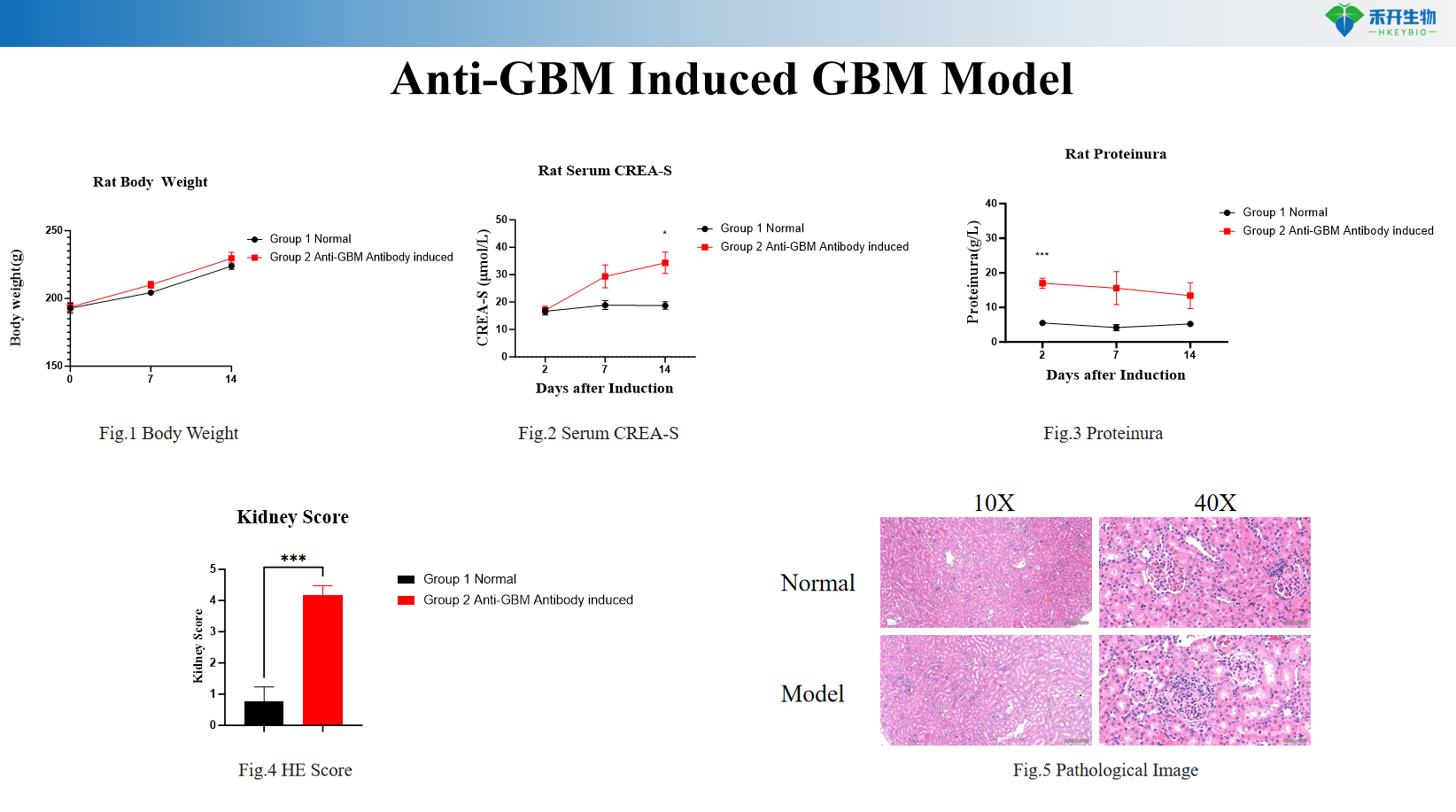
Comprehensive endpoints – Body weight, serum CREA-S, proteinuria, UACR, renal histopathology (HE scoring and crescent quantification).
Mechanism-driven – Direct antibody-mediated injury to glomerular basement membrane triggers complement activation and inflammatory cascade.
Translational value – Ideal for testing immunosuppressants (cyclophosphamide, glucocorticoids), biologics (rituximab, anti-CD20), complement inhibitors, and plasma exchange mimetics.
IND-ready data packages – Studies can be conducted in accordance with GLP principles.
Anti-GBM Induced GBM Model
• Efficacy testing of immunosuppressants (cyclophosphamide, glucocorticoids, mycophenolate)
• Evaluation of biologics (rituximab, anti-CD20, anti-CD19) and plasma exchange mimetics
• Testing of complement inhibitors (anti-C5, C5aR antagonists)
• Target validation for antibody-mediated glomerulonephritis
• IND-enabling pharmacology and toxicology studies
Parameter |
Specification |
Species/Strain |
Sprague-Dawley (SD) rat |
Induction method |
Intravenous injection of heterologous anti-GBM serum (nephrotoxic serum) |
Study duration |
7–21 days (acute phase) |
Key endpoints |
Body weight, serum creatinine (CREA-S), proteinuria, urinary albumin-to-creatinine ratio (UACR), blood urea nitrogen (BUN), renal histopathology (HE staining with crescent scoring, glomerulonephritis assessment), optional: complement deposition (C3 immunofluorescence), lung histopathology for alveolar hemorrhage |
Data package |
Raw data, analysis reports, clinical chemistry, urine analysis, histology slides, bioinformatics (optional) |
A1: We offer the anti-GBM serum induced model using SD rats, which is a classic animal model for studying anti-glomerular basement membrane disease.
A2: Heterologous anti-GBM antibodies are administered to induce typical crescentic glomerulonephritis. The model features acute onset, severe renal lesions and excellent reproducibility, simulating the pathological process of human anti-GBM disease.
A3: We monitor body weight clinically. Key biochemical indicators include UACR, CREA, UREA and proteinuria. HE staining is also performed to observe renal pathological changes.
A4: Anti-GBM antibody is injected on Day 0. All animals are sacrificed on Day 14 to complete sample collection and relevant detections.


